


The 15 Fastest-Growing Cities in the U.S. in 2026


 FACT-CHECKEDFACT-CHECKED
America's fastest-growing cities are no longer well-known. Most are found in the outskirts of larger cities in the South and West, including Celina, Texas, which has grown by 24.6% in a single year. This guide lists all 15, explains what draws individuals, and shows how the growth will affect first-time home buyers.
Key Takeaways
- With a population of 64,427, a 24.6% rise in only one year, Celina, Texas, is the fastest-growing city in the United States.
- Ten of the 15 fastest-growing towns are in the South, and Texas towns hold the top five positions on the list.
- The majority of these locations are minor towns on the outskirts of bigger cities rather than actual huge cities.
- The disparity between the most populous and fastest-growing cities worries buyers.
- The nation added around 1.4 million new homes in a single year, while the states with the greatest rates of construction rose twice as quickly.
- With a median buyer age of 40, first-time buyers now account for 21% of the market, the lowest percentage ever.
- Low down payment schemes are provided at 3% down to prevent a first-time home buyer from being priced out by a rapid market.

Where the Country Is Moving, One Town at a Time
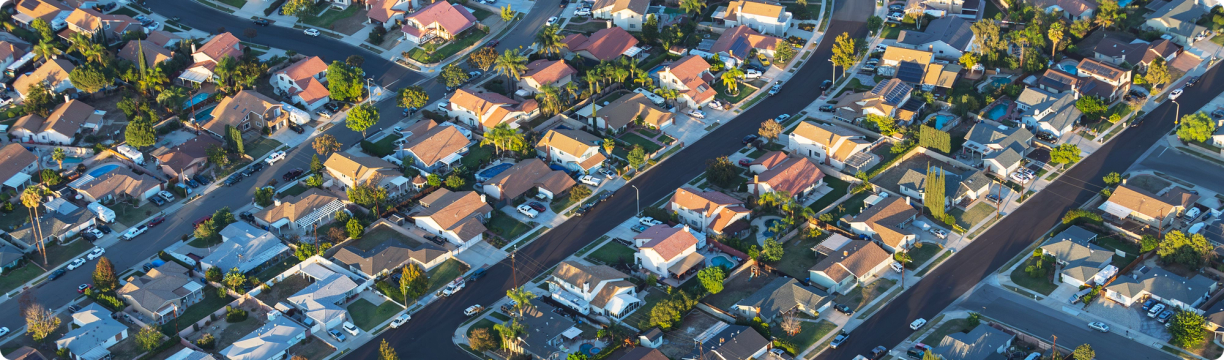
Ask people to name a booming city and you’ll hear the usual suspects: Austin, Phoenix, Nashville. Reasonable guesses, and wrong ones. The fastest population growth in America right now is happening in towns most people couldn’t place on a map. Almost all of them sit 30 to 45 minutes outside a major city, where land is cheaper and builders can actually build.
I’ve spent 26 years in this industry, and I’ve watched this pattern repeat in metro after metro. Families don’t chase skylines. They chase a payment they can carry, a yard, and a school they trust, and right now those three things live on the edges.
This article counts down the 15 fastest-growing cities in the country using the Census Bureau’s newest population estimates, then digs into what the growth means if you’re thinking about buying in one of them. Here’s the short version: fast-growing towns reward buyers who get their financing in order before they fall in love with a floor plan, and an AmeriSave loan officer can have that part ready before your first showing.

Where These Numbers Come From
Let's be clear about this: any ranking is only as good as its yardstick. The Census Bureau's most recent annual population estimates for cities and towns, which track changes over the most recent one-year period, are the source of the numbers below. Every spring, the bureau releases these estimates, which cover all of the nation's incorporated places. The percentage rankings shown here include places with a population of at least 20,000. That cutoff is important. Without it, a town of 900 residents that builds one apartment building would be at the top of every list, and the ranking would be useless.
Raw growth and percentage growth provide different answers. A large metropolis that adds the same 12,000 residents hardly changes its percentage at all, yet a suburb that grows from 52,000 to 64,000 shows an astonishing growth rate. Both gains are genuine. This article examines the percentage leaders first and the largest numerical gainers separately, farther down, because they just feel different on the ground.
Here are two sincere disclaimers. First off, they are approximations rather than complete counts. A city's statistics may vary significantly from one publication to the next since the bureau creates them using birth, death, and migration records and updates the figures as new information becomes available. Secondly, a ranking for a single year is a snapshot. Treat the list as a reading of where the momentum is at the moment rather than a promise of where it will remain, as some towns maintain their position for years while others only show up once before disappearing.
One other thing: I think it should be possible for a reader to verify the math behind anything that a lender posts. The complete release is included in the references at the end, and all population figures in this article may be traced back to the bureau's public tables. Get it up and arrange it yourself. Check to see whether your town was included. Giving trust is simpler when no one asks you to believe them.
Additionally, be explicit about what this ranking is not. It is not a price forecast, a school ranking, or a quality-of-life score. A town may grow quickly for reasons unrelated to whether or not you would be content there, and it may be a great place to live while falling far short of this list. Momentum is measured by growth. Fit is not measured by it. Use the list to choose locations that merit further investigation, then evaluate the locations based on factors that will genuinely influence your years there, such as the people, the commute, the schools, and the salary. A ranking can provide you with a shortlist. It cannot provide you a house.
The 15 Fastest-Growing Cities in America
Here’s the countdown, from 15 up to the fastest-growing city in the country. Watch for the pattern as you read. Nearly every town on this list rides the edge of a major metro, the South and the West dominate, and one state shows up so often it practically owns the ranking. Growth rates and populations reflect the most recent one-year estimates.
One housekeeping note before the Texas entries start piling up. Texas has no state income tax, and the state funds itself differently than most, so newcomers are often surprised by the property tax line on their first escrow statement. Ask early. Whatever town you price in this countdown, get the full payment with taxes and insurance included, not just principal and interest. No other tip here will save you more.
15. Greenville, Texas
Greenville opens the list, and it sets the template for almost everything that follows. The town sits about an hour northeast of Dallas, far enough out that land stays affordable, close enough that the metro’s jobs remain easily within reach. Population grew 7.5% in a single year, reaching 37,069 residents. That’s the slowest pace on this entire list, and it would still rank among the fastest in the country in any normal decade.
Simple arithmetic pulls people here. A family priced out of the close-in suburbs drives east until the payment works, and lately the payment works here. Builders have responded with new subdivisions. Fresh inventory keeps coming in a way the inner suburbs can’t match. For a buyer, that combination means more choices and a little more negotiating room than the metro’s hotter ZIP codes allow. The trade is the commute, and only you can price what an hour in the car costs your family. Run that math honestly. A cheaper house that burns 10 hours a week on the road isn’t cheap. It’s just billed differently.
One more tip for smaller markets like this one. Don’t limit your rate shopping to the lenders with a branch on the square. Mortgage pricing is national, competition is a phone away, and a town’s size says nothing about the rate its residents should accept. Get at least two or three quotes. Compare them line by line. The savings from one good comparison can outrun a year of clipping coupons.
14. Foley, Alabama
Not every town here orbits a giant metro. Foley sits in Baldwin County near Alabama’s Gulf Coast, and it grew 7.8% in the latest estimates to reach 30,354 residents. The draw here mixes coastal lifestyle with coastal prices that still undercut much of Florida, plus a steady tourism economy feeding year-round jobs.
Coastal growth carries a cost that inland buyers never think about, and I want you thinking about it before you shop here: insurance. A Government Accountability Office review found homeowners insurance premiums nationally rose about 3% above inflation over a recent six-year stretch, while disaster-prone southern coastal areas saw real increases topping 25%. A Treasury Department study covering more than 246 million policies told the same story from a different angle. Homeowners in the highest-risk ZIP codes paid $2,321 a year on average, about 82% more than those in the lowest-risk areas. None of that makes Foley a bad buy. It makes Foley a buy where the insurance quote belongs in your budget before the offer, not after. It’s why we ask AmeriSave borrowers in coastal markets to bring a real premium quote to the very first budget conversation.
13. Hutto, Texas
Back to Texas, and we won’t stay away long. Hutto grew 7.9% to 46,048 residents, riding the wave that has rolled through the entire Austin orbit for years. As Austin proper crossed the million-resident mark, the affordability pressure pushed outward, and Hutto caught a large share of the families who wanted the region’s job market without the region’s core prices.
Towns like this one move fast in two senses. The population grows fast. So do the listings, because demand keeps arriving from the bigger city next door. Buyers who show up with a verified preapproval letter consistently beat buyers who show up with a phone-screen prequalification. In a market where good homes draw multiple offers in the first weekend, that difference is the whole ballgame. I’ll come back to that later in this article. It’s the single most fixable advantage a first-time buyer has. For now, just file away the lesson Hutto teaches: in a fast suburb, the financing race starts before the house hunt does.
Visit twice before you commit anywhere in a corridor like this. Once at weekday rush hour, once on a weekend. Fast-growing towns are construction zones by definition, and the road network usually trails the rooftops by a few years. The drive you test is the drive you’ll live, so make sure you’re comfortable living it. Schools deserve the same double-check, since enrollment booms can mean portable classrooms and rezoning while new campuses catch up. None of that is disqualifying. It’s just the truth of a town in motion, and you should buy it with the truth in hand.
12. Queen Creek, Arizona
Queen Creek is the heavyweight of this list. At 89,770 residents after 8.2% growth, it carries the largest population of any city in the top 15. It sits in the East Valley of the Phoenix metro, one of the most active homebuilding regions in the country. Maricopa County added roughly 42,000 housing units in the latest count, more than any county in America for the second straight year, and a meaningful slice of that construction is happening in and around Queen Creek.
For buyers, scale changes the experience. A town pushing 90,000 residents has the retail, the medical offices, and the school capacity that a 25,000-person upstart is still waiting on, so the daily-life trade-offs shrink. The competition doesn’t, though. Plenty of demand chases those new rooftops, and builder contracts come with their own timelines, deposits, and financing decision points that differ from a resale purchase. AmeriSave loan officers walk buyers through both paths side by side. Often the right answer in a town like this is whichever one gets you a locked payment you’re comfortable carrying, not whichever model home had the better kitchen.
11. Kuna, Idaho
Kuna tells you how far the growth story has spread. This is a town on the southern edge of the Boise area, and it grew 8.4% in a year to 31,525 residents. Idaho isn’t an accident on this list. The state has expanded its housing stock at 2.1% a year, the fastest rate in the nation, and it has led the country on that measure every year this decade. People follow houses, and Idaho keeps building them.
The Boise region’s run has been going long enough that the early bargain prices are gone, but the edge towns like Kuna still offer the regional discount, and the construction pipeline keeps supply arriving. Here’s the practical read for a buyer: in a state building this fast, new construction deserves a place on your shopping list alongside resales, because builders compete for buyers in ways individual sellers don’t. Ask what incentives are on the table. Sometimes the answer moves your monthly payment more than a price cut would, and the only way to know is to compare both offers as full payments, not sticker prices.
Relocation buyers make up a real share of demand here, and moving across state lines adds a layer to the financing homework. Tax treatment changes. Insurance pricing changes. Even closing customs differ from state to state. AmeriSave operates across the country, so a household comparing a move to Idaho against staying put can see both full payments built side by side instead of piecing the answer together from two sets of strangers. Compare the whole life, not just the list price.
10. Johnstown, Colorado
Smallest town on the list, same story underneath. Johnstown grew 8.4% to 22,433 residents, just clearing the 20,000-resident line that qualifies a place for this ranking. It sits in northern Colorado’s Front Range corridor, in the wide band of towns between Denver and Fort Collins where the region’s growth has been spilling for years.
A town this size moving this fast changes character quickly, and buyers should walk in with eyes open about what that means. The fields around today’s subdivisions become tomorrow’s subdivisions. Roads get widened, schools get built, and the quiet edge-of-town feel that drew the first wave of residents gives way to something busier. None of that is a complaint. It’s just the deal, and the buyers who do best in towns like Johnstown are the ones who buy for where the town is heading rather than the snapshot they toured. Drive the growth corridors, look at what’s permitted near the lot you love, and decide with the future version of the street in mind. The present version won’t be available for long.
Here’s how to do that homework without a planning degree. Most towns publish their development pipeline online, and a front desk clerk at town hall can usually point you to the map in five minutes. Look up what’s approved within a mile of any lot you’re serious about. Empty fields have futures. Knowing the future before you buy beside it is the cheapest insurance in real estate, and it costs you one lunch hour.
9. Eagle Mountain, Utah
Eagle Mountain has been one of Utah’s growth machines for years, and the latest estimates show it expanding another 8.5% to 66,557 residents. The town sits on the far side of the mountains from the Provo and Salt Lake City corridor, where master-planned communities turned open valley into one of the fastest-growing places in the West.
Utah’s growth runs on families, and Eagle Mountain is built for them, with big lots, new schools, and a population skewing young. I raised five kids, so I can tell you exactly what those families are weighing: bedrooms, yard, schools, and the monthly payment that makes the other three possible. In a master-planned town, a lot of the homes are new builds with options and upgrades that quietly inflate the final number. The gap between the advertised base price and the price people actually pay can run wide. Get the full picture in writing first. Have an AmeriSave loan officer price the real configuration, because the payment on the home you’d actually order is the only payment that matters.
Resales deserve a look here too, even in a town this new. A house built a handful of years ago often comes with the blinds, the backyard, and the finished basement the builder would charge dearly for, and the seller’s price already reflects the neighborhood as it actually turned out. Newer doesn’t mean skip the inspection, though. Fast construction eras produce fast mistakes. Inspect everything, new or used, and let the report do the negotiating for you.


8. Forney, Texas
East of Dallas, Forney grew 8.5% in the latest estimates to reach 41,658 residents. The town markets itself around its location on the metro’s eastern flank. Its growth pattern matches Greenville’s from earlier in this list: families trading commute time for square footage, and builders meeting them with new rooftops at prices the inner ring stopped offering years ago.
When two towns in the same metro both make a national top-15 list, that’s not coincidence. That’s a regional engine running. The Dallas area’s job growth keeps pulling households in, and the affordable edges keep catching them, which is why you’ll see this metro appear again and again before the countdown ends. For a buyer comparing towns like Forney and Greenville against each other, the deciding factors usually come down to commute direction, school fit, and which town’s new inventory matches your budget in the month you’re shopping. Those answers change block by block and month by month. The regional story doesn’t. People keep coming, and building towns keep growing.
Two-earner households should map both commutes before picking an edge town, not just the longer one. A home east of Dallas can be perfect for a job downtown and brutal for a job on the far west side. Plot both drives at the hours you’d actually make them. Sometimes the right answer is the town that’s second-best for each commute and first-best for the household, and you only find that answer with a map and an honest conversation.
7. Waukee, Iowa
Now for the outlier. Waukee, a suburb on the west side of Des Moines, grew 9.3% to 34,890 residents, making it the rare Midwestern entry on a list the South and West otherwise own. One northern city cracking the top 15 doesn’t make a trend all by itself, but it does make a point: the formula works anywhere it’s allowed to. Affordable land, short commutes to a healthy job base, and room to build will pull families in Iowa just as surely as in Texas.
Waukee’s buyers get something the Sun Belt entries on this list mostly can’t offer, which is Midwest pricing paired with big-metro-suburb growth. Insurance sits far below Foley’s coastal numbers. Property taxes are predictable, and new construction has kept pace with demand well enough to keep bidding wars from becoming the default. If your work or your family ties point toward the middle of the country, towns like this one are quietly making the strongest affordability case in America. The list’s geography says go south. The math says check the middle first.
A practical note on timing in northern markets. Inventory in the Midwest breathes with the seasons, swelling in spring and thinning in winter, and buyers willing to tour in January often face less competition for the homes that are listed. Sellers who list in winter usually need to sell. That’s leverage. Wear the boots, walk the icy driveway, and you may buy the same house for less than the spring crowd would pay.
6. Haines City, Florida
My family vacations in Florida every year, so I’ve watched the Interstate 4 corridor between Orlando and Tampa fill in with my own eyes, trip after trip. Haines City is what that filling-in looks like in the numbers: 10.0% growth in a single year, pushing the Polk County town to 45,973 residents. Sitting between two major metros gives residents a choice of two job markets, and the price of admission still runs below either core.
Florida buying comes with Florida homework. The insurance picture we walked through at Foley applies double here, because central Florida’s carriers price for wind. The spread between quotes on similar homes can be wide enough to swing a purchase decision on its own. Shop the policy as hard as the house. Beyond that, fast-growth Florida towns lean heavily on new construction, with the same builder-contract wrinkles we covered at Queen Creek. Your playbook stays consistent: full payment comparisons, real insurance quotes early, and financing verified before you tour. An AmeriSave loan officer can stage all three before your first weekend of showings, which matters in a town where the good listings don’t wait for stragglers.
5. Anna, Texas
The top five opens in Texas and stays there. Anna sits on the US 75 corridor north of McKinney in Collin County, and it grew 10.2% in the latest one-year estimates to reach 35,245 residents. If you drew a line north out of Dallas and marked where the affordable new construction starts, the pin would land close to here.
Collin County deserves its own paragraph, because the rest of this countdown practically lives there. This county has become the main release valve for the Dallas area’s growth, with farm towns along the highway corridors turning into commuter cities one subdivision at a time. Anna is the farthest out of the county’s big four growers, which historically means it offers the lowest entry prices and the longest drive. Buyers here are making a classic frontier trade, getting in early on a town that the metro is visibly growing toward. The reward is appreciation if the pattern holds. The risk is that nobody can promise you it will, and anyone who does promise is selling something. Buy the house because the payment works today. Let tomorrow’s growth be the bonus rather than the plan.
If you do shop new construction here, learn how phase pricing works before you fall for phase one. Builders release lots in batches and typically raise prices with each release, which means the brochure price has a shelf life. Ask for the release schedule. Ask what the last three phases sold for. A buyer who knows the trajectory can decide with open eyes whether to act now or wait, instead of being rushed by a sales office countdown clock that resets for every visitor.
4. Melissa, Texas
Melissa makes it back-to-back Collin County entries, growing 14.5% in a year to 29,969 residents. Notice the jump. Anna grew 10.2%, and Melissa cleared it by more than four percentage points. That gap separates a fast town from a town in full sprint. Schools carry a lot of the story here, with the district’s reputation pulling in families who could have landed in any of a half-dozen towns along the corridor.
A sprinting town does strange things to a home search. Inventory turns over quickly, new phases of subdivisions open and sell in waves, and the price you researched in March may be a memory by June. Two habits protect a buyer in that environment. First, get your price ceiling from your own budget math, not from what the market is doing, because a hot market will happily talk you past your number if you let it set the terms. Second, shorten the distance between seeing a home and being able to act on it, which is a financing problem more than a house-hunting problem. The buyers who lose homes in towns like Melissa usually didn’t lose on price. They lost on readiness.
Build yourself a backup list while you’re at it. In a sprinting market, the healthiest mindset treats any single house as one of several good outcomes rather than the only one. Pick two or three towns along the corridor that work for your life, keep saved searches running in each, and let the market tell you where your moment opens up. Buyers with options negotiate calmly. Buyers without options pay for their attachment, usually at the closing table.
3. Princeton, Texas
Princeton grew 18.1% in a single year. Sit with that number for a second, because it means nearly one resident in six is brand new, and it pushed the Collin County town east of McKinney to 43,524 residents. Growth at that pace transforms a place in real time, with new schools, new retail, and new roads all racing to catch up to rooftops that arrived first.
For buyers, a town moving this fast concentrates everything we’ve covered so far into one ZIP code. New construction dominates the inventory, builder incentives shift month to month, and resale sellers price against whatever the builders announced last week. Competition for the well-priced listings is real. Speed wins ties. This is exactly the environment where AmeriSave’s Certified Approval earns its keep. Having your income and credit verified upfront turns your offer letter from a polite statement of intention into a document a seller can actually bank on. In a town adding residents at Princeton’s pace, sellers see plenty of offers. The verified ones read different, and on a Saturday with three bids on the table, different is what wins.
One wrinkle of towns that grow this fast deserves its own warning: appraisals. An appraiser values a home against recent comparable sales, and in a market where prices moved between contract and closing, the comparables can lag the deal. When an appraisal lands below the contract price, somebody covers the gap or renegotiates. Talk through that scenario with your loan officer before you offer, decide your ceiling in advance, and you’ll never be forced to make a five-figure decision in a 24-hour window.
2. Fulshear, Texas
Fulshear breaks the Collin County streak but not the Texas one. The Fort Bend County city on Houston’s western edge grew 21.0% in the latest estimates, reaching 64,630 residents. It also pulled off something only one other city in America managed. Fulshear ranked among the fastest-growing cities by percentage while also cracking the top 10 for raw numeric gain, adding 11,196 people in a single year. Percentage lists usually belong to small towns and numeric lists to big cities. Fulshear gate-crashed both.
That double ranking tells a buyer two useful things. The growth is large in absolute terms, so the infrastructure investment tends to follow faster than it does in smaller boomtowns, and the demand is broad rather than a single subdivision’s hot streak. Master-planned communities anchor much of the development here, with the price points running notably higher than the Dallas-area towns earlier in this countdown. Whatever the price tier, the buyer’s discipline doesn’t change. Know your full monthly payment before you shop. Compare builder offers and resales on equal footing, and let an AmeriSave loan officer pressure-test the numbers before you sign anything with a deposit attached. Fast and expensive is a combination that punishes guesswork.
A higher-priced market also tests your discipline in a particular way. The homes around you set an anchor, and the anchor drifts upward with every showing. Set your full-payment ceiling before the first tour. Write it down. Not the price ceiling, the payment ceiling, with taxes and insurance riding along. When a beautiful house asks you to break it, the note in your pocket outvotes the kitchen. A payment you’re comfortable with on a Tuesday in February beats a kitchen you loved on a Saturday in May. That’s the whole trick, and almost nobody does it.
1. Celina, Texas
And the fastest-growing city in America is Celina, Texas, up 24.6% in a single year to 64,427 residents. The crown is no fluke. Celina has held the No. 1 spot before, and like Fulshear it pulled the rare double, posting the nation’s top growth rate while also adding 12,710 people, the fourth-largest numeric gain of any city in the country. Celina straddles the line between Collin and Denton counties on the Dallas metro’s northern arc. It’s the purest expression of the pattern this whole list keeps drawing. The country’s growth is pouring into the edge towns of big southern metros, and no edge is catching more of it than this one.
Not long ago, Celina was a farm town. Today the water towers compete with construction cranes, and the town added more than 12,000 residents in a single year. Buying here means buying into motion, with everything that implies. Prices have climbed with the demand, new phases open constantly, and the town you close in will not be the town you’re living in five years later. Some buyers find that thrilling. Some find it exhausting. Both reactions are valid. Knowing which camp you’re in matters more than any statistic in this article, because the best market in the country is still the wrong market if it doesn’t fit the way your family wants to live.
So before you chase the crown, spend a normal Tuesday there. Drive the school run at 7:30 in the morning. Buy groceries at 5:30 in the evening. Sit in the traffic the rankings never mention, and picture your actual week unfolding on those streets. If the picture works, Celina offers something rare, a front-row seat to a town building itself in real time, with new schools, parks, and employers arriving on a schedule most American towns will never experience. If the picture doesn’t work, there are 14 other names on this list. The crown belongs to Celina. The decision belongs to you.
Why New Construction Helps the Buyer
Housing growth subtly determines whether or not the headlines become painful, while population increase grabs the headlines. Prices and rents rise when more people move in than there are available homes, and eventually someone gets squeezed out, typically a first-time buyer. Growth remains livable as long as development keeps up. Therefore, it is worthwhile to examine the building side of the ledger, as it provides valuable insight into the reasons behind the operations of the towns on this list.
The country's housing stock is estimated by the Census Bureau to be 148.3 million units, up 1.4 million in the most recent year, or 1.0%. The nation has grown by 5.5% since the beginning of the decade, adding 7.8 million units. Examine the building's focal points now. Idaho's housing stock increased at the quickest rate in the country, 2.1% in a year, followed closely by Arizona's 2.0% and South Carolina's 1.9%. Every community on or close to our list, from Kuna to Queen Creek, is fed by those three states, which are developing at a rate that is about twice as fast as the national average. At the county level, Jasper County, South Carolina, recorded the fastest county growth rate at 8.3%, while Maricopa County, Arizona, gained over 42,000 units, the highest in the nation for the second year in a row.
Here's why any of this matters to a buyer. Your pal is supply. Whether you ever buy new or not, you have options in a place where builders are actively delivering homes, and options are negotiating power. Compared to a ZIP code with little supply, resale vendors in high-construction areas price against the builder down the road, keeping the entire market more honest. Every week, AmeriSave loan agents witness this in borrower files, when a building town's budget is substantially larger than that of a built-out community.
I wouldn't be doing you any favors by claiming that there isn't homework associated with new building. Builder pricing begins at a base price, from which choices and lot prices rapidly rise. The only way to distinguish between builder-affiliated lenders' sometimes legitimately strong and sometimes only well-dressed incentives is to compare whole loan offers side by side, including fees, rates, and payments. Ask an outside loan officer to compare the incentive sheet honestly. Be confident if the builder's deal is successful. If it doesn't, you just used one phone call to pay for your due diligence.
As with a resale, see the inspection as non-negotiable for new construction. No one has lived in a new house, so it hasn't experienced a genuine summer, a real winter, or a real Thanksgiving with the oven and both showers running. Walk the punch list before closing, not after, and hire your own inspector, independent of whomever the builder suggests. While you're at it, get written information regarding the warranty, including what it covers, how long it lasts, and who will answer the phone in the second year. The majority of builders produce good work. The homes that appear fine during a sunny walkthrough are the exceptions that are being inspected.
The Cities Adding the Most People Are Not the Fastest-Growing
The other list, which is based on bodies rather than percentages, presents a very different picture of the same nation. With the exception of the two Texas double-listers, not a single city in our top 15 is among the highest numerical gainers, and the biggest gainers are well-known.
According to the most recent estimates, Charlotte, North Carolina, added 20,731 residents—the most of any American city—making it the 14th largest city in the country with a population of 964,784. Fort Worth added 19,512 new residents, bringing its total population to 1,028,117.
Houston added 11,515, San Antonio added 14,359, and Seattle added 11,572 to reach 784,777. Along the journey, milestones were reached. Raleigh surpassed 500,000, one of 39 cities currently above that threshold, while Austin surpassed one million, joining the select group of roughly a dozen American cities of that size. Additionally, the traffic flowed in the opposite direction: New York metropolis, which is still by far the largest metropolis in the nation with 8,584,629 residents, saw the biggest numerical loss, down 12,196.
When you compare the two lists, the geography becomes clear. Ten of the fifteen fastest-growing cities and eleven of the twelve biggest numerical advances, according to both counts, are in the South. Fort Mill, South Carolina, grew 6.8% to 38,673 persons, barely outside our top 15, but even the bottom ends of the percentage ranking remain on point. Additionally, the Census Bureau's own study of the data revealed that the Celinas and Fulshears, two major metropolitan areas, had the greatest development concentrated on their periphery rather than in their centers. The few rapid risers fit the frame even in the slower-growing Northeast, where the major hubs nearby shrank or stagnated and outer-edge communities like Port Chester, New York, reported 4.1% growth.
Which list, then, should a buyer believe? Both, for distinct occupations. Because 20,000 people don't relocate to Charlotte by mistake and a buyer there is buying into deep, liquid demand, numerical gainers tell you where the jobs and gravity are. The front edge of affordability-driven migration, where fresh supply and entry prices converge, is indicated by the percentage leaders. Even Charlotte's own metro area exhibits this trend; according to the Census research, the city itself was placed seventh for growth rate within its own metro area, trailing only its surrounding towns. People are drawn to the area by the center. They reside on the outskirts. You can choose which portion of that machine you wish to live in once you see it operating, and neither response is incorrect. At AmeriSave, we would prefer to show you both sets of data rather than recommend one over the other. They are just different payments, different commutes, and different five-year pictures.
A remark regarding the decrease column: people are often alarmed by New York's number. With 12,196 people leaving, an 8.6 million-person metropolis has lost roughly one-seventh of 1% of its population—a rounding error in a place of size, not an exodus. Large-city housing markets are driven by supply and demand, so a slight fall in estimates tells you very little about the price of a Queens condo in the coming year. Examine population figures at the scale used to measure them. A tidal chart has never once advised a family on which home to purchase; they describe tides, not your street.
What Rapid Growth Means for a First-Time Home Buyer
The first-time buyer attempting to establish a presence in a constantly shifting market is ultimately the target of every trend discussed in this essay. Since the figures indicate that the rise has gotten steeper, let's be honest about how that buyer is performing nationally.
First-time home buyers account for just 21% of the market, the lowest percentage ever. The oldest first-time buyer age ever recorded is 40. When you combine the two figures, the narrative becomes clear. Compared to the previous generation, it takes longer to enter the market, and fewer homes are handling it at all. Nowadays, the average first-time home buyer puts down roughly 10%, the largest amount in decades, and 92% of the purchase is financed by savings. All of this is sharpened in fast-growing communities because the admission fee keeps rising as you save for it due to increased demand. The target shifts. At AmeriSave, we create first-time buyer programs based on that shifting goal, beginning with the amount a household can afford rather than the asking price.
This is what the depressing statistics fail to mention: the down payment wall is not as high as most tenants think. Borrowers who make up to 80% of the median income in their area can apply for conventional financing through Fannie Mae's HomeReady program with a 3% down payment. FHA loans require a down payment of 3.5% for credit scores of 580 or higher and 10% for scores between 500 and 579. The majority of programs accept documented gift monies from family members, and many states, counties, and towns add down payment help on top. The 20% wall is not necessary; it is an option.
Calculate the cost of a $350,000 house, which is a reasonable amount in a number of the places on our list. The wall that keeps people renting for ten years is a 20% down payment of $70,000. For the same house, the FHA minimum is $12,250. $10,500 is HomeReady's 3%. These are still significant amounts, and achieving them requires self-control, but they are car-purchase amounts rather than ten years of savings, and that distinction is the difference between purchasing in a developing town and seeing it flourish without you.
The cost of waiting is the cruelest math in a fast-paced city, and it's the math that no flier mentions. I have explained this to all five of my children in the same way. When you save for a shifting goal, the goal moves as well; in a town, it can grow 10% year more quickly than a disciplined savings plan. Panic buying is not implied by that. This means that the purchase vs. wait debate should be supported by actual numbers on both sides: what it will cost to wait if prices continue to rise, what it will cost to buy if they don't, and how much your family can afford in each scenario. The only incorrect approach is guesswork.
There is a cost associated with low down payments, and you should be aware of it before closing. If you put down less than 20% on a traditional loan, private mortgage insurance will be added to your payment. A helpful planning range is provided by Freddie Mac's consumer advice, which states that "you can expect to pay between $30 and $70 per month for every $100,000 borrowed." Call it between $100 and $240 per month on a $339,500 debt. PMI is also not permanent. After the balance drops to 80% of the home's initial value, you can request cancellation. You might get there sooner than the amortization schedule alone in a community with rapid growth and appreciation. FHA has its own insurance rates and regulations. In any case, you should ask your loan officer a straightforward question: is it better to pay insurance now rather than rent later? That math needs actual numbers, not conjecture, in a town that is growing by 10% annually.
How to Buy in a Fast-Moving Market
Let me tell you what I think is going to happen. I don't know what town will grow next and nobody else knows either. What I can tell you is prepared buyers always beat unprepared buyers in a fast-paced market. This is where the preparation pays off.
I mean it, applications and open houses are secondary to financing. The well-priced property in the locations we have reviewed gets a lot of bids quickly, and the seller’s agent analyzes those offers based on the likelihood that each one will close. That two week process is condensed into a head start for a buyer that walks in already verified. And that head start wins houses. Get in touch with the loan officer, submit your paperwork and know your total payment ceiling including taxes and insurance before you know your preferred floor plan before your first showing.
Make that verification legit, not just for show. In the listing agent’s inbox, a phone call prequalification and a documentation-verified approval look the same. They don’t work the same way under pressure. Because AmeriSave’s Certified Approval guarantees income and credit ahead of time, the letter of support for your offer is an underwriting evaluation, not a quote. During my early days as a loan officer, I saw verified purchasers beat bigger offers more times than I can count, as the seller's side couldn't trust the number. In fast towns sellers have been burnt by deals that fell through in the third week. If you show them proof you'll calm their worst fear before they even ask.
Fix forward if your credit isn’t where it should be, rather than waiting passively. Closing old cards might negatively impact your credit score at the wrong time. Shop around, keep your current accounts open, pay all of your accounts on time, and keep your revolving balances well below their limitations. The higher the score the lower the rate. In a rising market, however, you need to sit down with a loan officer and strategize a plan that takes into account the months you are working on strengthening your file and the months the market is moving. Sometimes the answer is to buy now at the price you qualify for today. Sometimes the file has to be tightened for 6 months. The right answer is subjective and deserves more than a guess.
Here's the current situation with rates and what should be done with it. The average 30-year fixed is in the mid-6% level, Freddie Mac’s weekly Primary Mortgage Market Survey says. If you're looking for a realistic look at current rates, you can download the full history of the survey. The handy tool is not a prediction. The trouble is the rate lock. Locking guarantees the rate you signed for is the rate you got by holding the offered rate until closing. “It’s just good housekeeping to get rid of the one variable you can in a market where prices change monthly.” If interest rates drop later, refinancing is still an option. You don't have to make the house decision and the rate decision on the same day. They are not the same decision.
Don’t let your debt picture be in view while you shop. Lenders compare your monthly obligations to your income. A new car payment or financed furniture set can overnight cut into your available limit. The long-standing 28/36 rule limits housing to about 28% of gross monthly income and all debt to about 36%. There's time for the truck. The home cannot -- not in Princeton, at least.
Also prepare yourself for your weekend, because readiness is beyond paperwork. Be clear about what your non-negotiables are, who has to see the house before you can make an offer, and how you will view on short notice. In a fast-moving community a listing that goes on Thursday is usually under contract by Monday. Write the list when you are comfortable. Read it when you are in love. Good decisions are made at the kitchen table weeks ahead of time, so a family that already knows what it needs can take a house on Saturday morning and make an offer on Saturday night without feeling irresponsible.
The market moves so quickly that it’s easy to get swept along, but keep in mind what you really can affect along the way. Whatever the town does, you have three things. Your decision-making process, your time and work that you put into making your decision, and your willingness to learn on the fly. mentality, method, and work. Those three factors are what buyers focus on and what the market determines how it acts, and in that they find themselves in affordable, comfortable homes. And remember that you are likely not buying your last house first, so keep some perspective around you on the days when the bidding wars are painful. It can just be the right next step, in a place you’ve thought out, and at a cost that allows your family to live comfortably.
The Bottom Line
The fastest-growing cities in America are mostly edge towns orbiting big southern and western metros, led by Celina, Texas at 24.6% and swept by Texas across the top five. The biggest people-gainers are a different list, led by Charlotte and Fort Worth, and a smart buyer reads both before choosing a lane. Growth rewards preparation. Get the full payment picture early, price the insurance before the offer, compare new construction against resale on equal footing, and walk in verified rather than hopeful. When you’re ready to put real numbers behind a move to one of these towns, visit amerisave.com and let an AmeriSave loan officer build the plan with you. Fast markets favor the ready, and ready is a thing you can simply decide to be.
Fastest-Growing Cities Are Still in the South and West (Vintage 2025 City and Town Population Estimates press release).
U.S. Census Bureau · 2026 · census.gov

Movin’ Out: Major Cities Saw Slower Growth While Outer Edges of Metro Areas Boomed.
U.S. Census Bureau · 2026 · census.gov
Vintage 2025 City and Town Population Estimates Press Kit.
U.S. Census Bureau · 2026 · census.gov
County and Metro Area Population and Housing Unit Estimates.
U.S. Census Bureau · 2026 · census.gov
First-Time Home Buyer Share Falls to Historic Low of 21%; Median Age Rises to 40.
National Association of REALTORS® · 2025 · nar.realtor
Existing-Home Sales.
National Association of REALTORS® · 2026 · nar.realtor
Single Family Housing Policy Handbook 4000.1.
U.S. Department of Housing and Urban Development · 2026 · hud.gov
Let FHA Loans Help You.
U.S. Department of Housing and Urban Development · 2026 · hud.gov
HomeReady Mortgage.
Fannie Mae · 2026 · singlefamily.fanniemae.com
Primary Mortgage Market Survey.
Freddie Mac · 2026 · freddiemac.com
Primary Mortgage Market Survey Historical Weekly Data.
Freddie Mac · 2026 · freddiemac.com
Breaking Down PMI.
Freddie Mac · 2025 · myhome.freddiemac.com
What is a debt-to-income ratio?
Consumer Financial Protection Bureau · 2023 · consumerfinance.gov
What is private mortgage insurance?
Consumer Financial Protection Bureau · 2023 · consumerfinance.gov
Analyses of U.S. Homeowners Insurance Markets, 2018-2022.
U.S. Department of the Treasury, Federal Insurance Office · 2025 · home.treasury.gov
Homeowners Insurance: Premiums Generally Tracked Inflation but Rose More in Disaster-Prone Areas (GAO-26-107867).
U.S. Government Accountability Office · 2026 · gao.gov

Carl leads sales operations at AmeriSave, where he has served since August 2015. He holds a BBA in Business Administration & Management from the University of Kentucky and previously served as Director of Sales at Discover Financial Services. Based in Louisville, KY with his family, Carl brings a practical, solution-focused approach to mortgage sales that emphasizes transparency and reducing buyer anxiety.
Frequently Asked Questions
The Census Bureau's most recent one-year estimates show that the population of Celina, Texas, has increased by 24.6% to 64,427. Celina, which is situated on the northern outskirts of the Dallas metro area in the counties of Collin and Denton, has previously held the top spot. Additionally, the town saw a raw population increase of 12,710, which is the fourth-largest increase of any city in the nation. Since percentage leaders are typically tiny towns with modest raw improvements, this is rare. Consider the yardstick when you come across rankings like this one. The numbers pertain to regions with a population of 20,000 or more. On a technicality, however, a small town with a single large new development cannot claim the title. The nation's fastest-growing established city is Celina.
Texas's top five rankings and eight of the top 15 rankings can be attributed to numerous factors. The biggest cities in the state, particularly Dallas and Houston, keep adding jobs that draw households from all over the nation. There is still land available for construction along the metro's perimeter. Working families will be able to afford entry prices thanks to the new supply, which will also enable builders to satisfy demand rather than choking on it. Four cities in Collin County alone, north of Dallas, made the list. Growth was rolling along the highway corridors from McKinney toward the vast area beyond. In order to make the next subdivision easier to sell, each new one constructs roads, stores, and schools. Other states share certain constituents. At the metro level, Texas integrates them all simultaneously across several areas.
Not as much as the majority of tenants think. Conventional choices include FHA financing with a 3.5% down payment for credit scores of 580 or above and Fannie Mae's HomeReady with a 3% down payment (for those who fulfill the program's income restrictions). These initiatives are effective anywhere, including in a fast-paced city. Instead of $60,000 for a traditional 20% down payment on a $300,000 home, that would be $10,500 for FHA or $9,000 for a 3% down payment. Private mortgage insurance is raised each month if the down payment on a traditional loan is less than 20%. According to consumer behemoth Freddie Mac, you will typically pay between $30 and $70 a month for every $100,000 you borrow. You can cancel it when your balance drops to 80% of the initial value of the house. The majority of programs will permit properly documented family presents, and many states, counties, and municipalities also offer down payment help.
No. The two lists hardly overlap at all. The smallest cities in large metro regions, such Celina, Fulshear, and Princeton, Texas, had the highest percentage growth. In a town of 40,000, improvements that a large city might not even notice can manifest as double-digit growth. In general, large, well-known cities are seeing the greatest population growth. With 20,731 new residents, Fort Worth, San Antonio, Seattle, Houston, and Charlotte are the top cities in the nation. The only two cities with high scores on both categories in the same year were Celina and Fulshear. A buyer can see where we are stacking new supply and entry prices in the percentage list. Long-term demand hotspots and deep job markets are shown by the numerical list. Both signals are useful. Just respond to a few questions regarding your finances and commute.
Imagine two purchasers squabbling over the same listing on a Saturday in Princeton, Texas. The first is arranging to speak with a lender on Monday. On Thursday, she fell in love with the house after finding it online. The second individual spoke with a loan representative a month ago, completed the necessary papers, was approved, and had their credit and income examined. The home is reasonably priced. On Sunday night, the seller's representative ranks three offers. The seller's representative supports the second buyer, even though the original buyer's offer is marginally higher. A confirmed file has a significantly lesser chance of failing underwriting three weeks later. In the rapidly expanding communities, the same tale is told every weekend. The majority of the significant changes are related to financial homework. Keep your debts under wraps, get your approval before you shop, be prepared to lock in a rate when the math works, and be aware of your total payment maximum, which includes insurance and taxes.