


Your Complete Guide to Contemporary Houses in 2026


 FACT-CHECKEDFACT-CHECKED
A contemporary home follows current design trends rather than a fixed historical style, setting it apart from mid-century modern architecture in ways that matter when you're shopping or financing. This guide covers the defining features, what it costs to build or buy, and the loan options that can make a contemporary home purchase or renovation work.
Key Takeaways
- "Modern" homes are built in a style that was popular in the middle of the 20th century. "Contemporary" homes, on the other hand, change to fit people's tastes and show what's popular in design right now.
- Clean lines, open floor plans, big windows, a mix of materials, and a growing focus on energy efficiency and sustainability are all hallmarks of contemporary architecture.
- Depending on where it is, what materials are used, and how complicated the design is, the cost of building a modern home can be anywhere from $150 to $400 per square foot.
- The neutral colors, natural light, smart home technology, and mix of natural materials like stone and wood are some of the most important things about the inside.
- Glass, concrete, metal, and reclaimed wood are some of the eco-friendly materials that are often used in modern buildings. Their fronts aren't straight, and their roofs are either flat or sloped.
- More and more people are looking for homes that are made to order and save energy, so it might be easy to sell a modern home.
- Adding bigger windows, open floor plans, LED lights, and simple furniture can make any house feel more up-to-date.
- AmeriSave has a number of loan options that can help you buy a new home or fix up the one you already own so that it looks the way you want it to.

What Makes a Home “Contemporary”
Okay, so here’s the thing about the word “contemporary” when it comes to houses. It literally means “of the present time.” That sounds simple enough, but it trips a lot of people up because they assume contemporary and modern mean the same thing. They don’t. A contemporary home borrows from whatever design ideas are popular right now, and that means it’s always shifting. What counted as contemporary in the early 2000s looks very different from what buyers are drawn to today.
If you’re shopping for a home and you keep seeing listings described as “contemporary style,” this guide will help you understand exactly what that means, what features to look for, how much it costs, and whether it’s the right fit for your family. I’ve worked in mortgage project management long enough to know that understanding the home you want is just as important as understanding the loan that pays for it. So let’s walk through this together.

Defining Features of Contemporary Home Design
Contemporary design pulls from a handful of guiding principles. The biggest ones right now are sustainability, individuality, and a connection between indoor and outdoor living spaces. Homes built in this style tend to feel open and airy, with an emphasis on letting natural light do the heavy lifting rather than relying on heavy window treatments or artificial lighting alone.
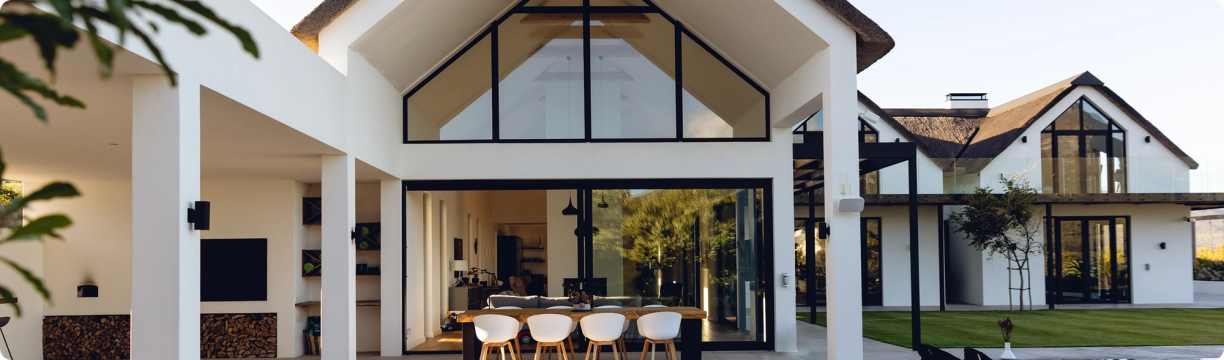
One reason contemporary homes stand out on the market is that they tend to use a mix of materials you wouldn’t normally see paired together. Stone next to steel. Reclaimed wood alongside poured concrete. Glass panels beside brick. That combination of organic and industrial textures is a signature look. According to GBD Magazine, contemporary style homes are often recognizable by their large, tall windows and an unusual mix of materials like stone, brick, wood, and glass. That material variety lets homeowners get the structural benefits of different building products while keeping the overall feel grounded and livable.
Interior Design Elements
Walk inside a contemporary home and you’ll probably notice a few things right away. The floor plan is likely open, with the kitchen flowing into the living area and possibly straight out to a patio or deck through oversized glass doors. Walls tend to be painted in neutral tones, like warm whites, soft grays, and earthy beiges, which act as a canvas for natural textures and statement furniture pieces.
Natural light is a priority. Floor-to-ceiling windows, skylights, and clerestory windows are common. According to the U.S. Department of Energy, the average household saves about $225 per year by using LED lighting, and contemporary homes lean heavily into energy-efficient lighting choices to complement all that sunlight. Smart home technology also plays a growing role, with programmable thermostats, automated blinds, and voice-controlled lighting systems becoming standard features rather than luxury add-ons.
Texture matters too. You’ll see a lot of raw wood, natural stone countertops, woven textiles, and matte metal fixtures. The goal is creating warmth without clutter. Sustainability-minded buyers are also driving demand for low-VOC paints, bamboo cabinetry, and recycled materials throughout the interior.
Exterior Design Elements
From the outside, contemporary homes tend to break away from the perfectly symmetrical boxes you see in Colonial or Cape Cod styles. Asymmetrical facades are a hallmark. So are flat or low-pitched rooflines, though gabled roofs with exposed beams have carved out their own niche within the contemporary category.
Mixed materials dominate the exterior just like the interior. Concrete, brick, wood siding, metal panels, and expansive glass all share space on the same facade. Many newer contemporary builds incorporate green architecture features like vegetated roofs, rainwater harvesting systems, and solar panel integration. According to the Sotheby’s International Realty design trends report, passive house principles are now being applied at ambitious scales, including in luxury residences over 15,000 square feet. That tells you sustainability in contemporary design isn’t just for modest builds anymore.
The relationship between the house and its surrounding landscape also gets a lot of attention. You’ll often find outdoor living areas that feel like natural extensions of the interior, connected by sliding glass walls or retractable doors. If you’re exploring financing for a new contemporary home purchase, AmeriSave can help you evaluate loan options that fit the property type and your budget.
Contemporary vs. Modern: Clearing Up the Confusion
This is probably the most common question I hear when our team discusses home style classifications during project reviews. People use “modern” and “contemporary” interchangeably, but they refer to different things in architecture.
Modern architecture refers to a specific design movement that took root in the early to mid-1900s. Think Frank Lloyd Wright, the Bauhaus school, and those iconic midcentury homes built between roughly 1950 and 1970. Modern homes emphasize clean horizontal lines, flat roofs, large glass expanses, and a philosophy of “form follows function.” The style itself is fixed. It doesn’t change because it refers to a finished historical period.
Contemporary architecture, on the other hand, is fluid. It absorbs whatever is happening in design right now. In the current moment, that means sustainable materials, smart technology integration, biophilic design that connects people with nature, and flexible floor plans that adapt to how families actually live. Contemporary homes might borrow certain elements from midcentury modern design, like an open floor plan or a flat roof, but they’re not locked into that era’s aesthetic rules.


Here’s one practical way to keep them straight: if the house looks like it could have been built in 1960 and fits right in, that’s modern. If it feels current and might look different ten years from now because trends will have shifted, that’s contemporary.
How Much Does It Cost to Build a Contemporary Home
Let’s talk numbers, because this is where things get real. Contemporary homes tend to sit on the higher end of residential construction costs because of their custom elements, specialized materials, and the engineering that goes into features like cantilevered spaces or walls of glass.
According to HomeAdvisor, building a modern-style home costs an average of $900,000, with a typical range of $350,000 to $1,200,000 depending on size, location, and finishes. The cost per square foot generally falls between $150 and $400. Materials alone account for roughly 75% of the total, which makes sense when you consider the premium products that define contemporary construction. Custom glazing, metal roof systems, and engineered hardwood all fall into that category.
Where you build matters a lot. Construction costs in the Midwest might run $150 to $190 per square foot, while the West Coast can push well past $220 per square foot just for standard construction according to industry cost data. A contemporary custom build in a high-demand metro area could easily reach $300 to $500 per square foot.
The good news? You don’t have to build from scratch to own a contemporary home. Plenty of existing contemporary properties come on the market every year, and buying an existing home can sometimes save money compared to a ground-up build. AmeriSave’s fixed-rate loan products can work well for purchasing an existing contemporary home, giving you predictable monthly payments while you settle in.
If you’re considering building, factor in these cost categories: site preparation and foundation work (typically 15 to 20% of the budget), framing and exterior finishes (20 to 25%), interior finishes (25 to 30%), and major systems like HVAC, plumbing, and electrical. Don’t forget landscaping, permits, and a contingency buffer of 10 to 20% for unexpected expenses.
Pros and Cons of Owning a Contemporary Home
No home style is perfect for every family, and I think being honest about the trade-offs actually helps you make a stronger decision. In my Master’s of Social Work (MSW) program, one concept that stuck with me is the idea that people make their best choices when they have clear, balanced information rather than a sales pitch. So here’s the honest breakdown.
What Works Well
Personalization is one of the biggest draws. Contemporary design practically invites you to put your own stamp on the space. Because the style doesn’t follow rigid rules the way Colonial or Tudor homes do, you have a lot of creative freedom with finishes, layouts, and decorative choices.
Energy efficiency is another major advantage. Many contemporary homes are built with sustainability in mind from the ground up. Triple-pane windows, solar-ready roofing, high-performance insulation, and energy-efficient HVAC systems all contribute to lower utility costs over time. The U.S. Department of Energy reports that LED lighting alone uses at least 75% less energy than incandescent options and lasts up to 25 times longer, and contemporary homes tend to incorporate these efficient systems throughout.
Maintenance can also be easier than you’d expect. Clean lines and minimalist layouts mean fewer nooks and crannies where dust and wear accumulate. Open floor plans are simpler to clean and maintain than homes with lots of small, separated rooms.
What to Consider Carefully
Cost is the biggest hurdle. Between specialized materials, custom engineering, and premium finishes, contemporary homes carry a higher price tag than many traditional styles. If budget flexibility is limited, AmeriSave’s FHA loan options can help make homeownership more accessible by offering lower down payment requirements.
Style blending can be tricky. If you love mixing farmhouse decor with your contemporary shell, you might find that the two aesthetics clash rather than complement each other. Contemporary spaces tend to look best when the furnishings and decor stay within a consistent design language.
Resale considerations also come into play. While contemporary homes are growing in popularity, some buyers in certain markets still gravitate toward more traditional styles. Location matters here. A contemporary home in an urban or suburban market with younger buyers may sell faster than one in a rural area where traditional architecture dominates.
Simple Ways to Add Contemporary Style to Your Current Home
You don’t need to tear your house down and start over to get a contemporary feel. Some changes are surprisingly affordable, and they can make a real difference in how your home looks and functions.
Start with light. If your home feels dark and closed off, consider replacing smaller windows with larger ones or adding a skylight. Even swapping heavy curtains for sheer panels or plantation shutters can open up a room dramatically. Pair that with LED lighting in warm tones and you’ve already shifted the ambiance toward contemporary.
Color palette is another easy win. Repaint rooms in warm neutrals like soft whites, warm grays, or sandy tones, and let your furniture and art provide the pops of color. This creates the clean backdrop that contemporary design relies on.
Furniture swaps go a long way too. Look for pieces with clean lines and minimal ornamentation. A simple, low-profile sofa. A dining table with a live-edge wood top and metal legs. Convertible or modular furniture can also maximize your space, which is a core contemporary principle.
Flooring updates can transform a room fast. Hardwood, large-format tile, or luxury vinyl plank all work well in contemporary spaces. Layer in a few well-chosen area rugs for warmth and texture.
Think about your floor plan too. Removing a non-load-bearing wall between the kitchen and living room can create that open flow that defines contemporary homes. If a full wall removal feels like too much, even widening a doorway or adding a pass-through window between rooms can help. For larger renovation projects like these, an AmeriSave cash-out refinance or home equity loan could provide the funds you need to make those upgrades without draining your savings.
Financing Your Contemporary Home Purchase
Financing is a big part of the equation, whether you're buying a modern home that already exists, building one from scratch, or remodeling your current home to match the style. And to be honest, this is where it really matters to work with a lender who knows what they're doing.
A conventional fixed-rate mortgage from AmeriSave gives you stable monthly payments and makes it easy to plan your budget for a simple purchase. If the modern home you want is more expensive than most homes, AmeriSave's jumbo loan products are made for homes that are more expensive than normal loan limits.
People who are buying their first home also have choices. The National Association of REALTORS® says that first-time buyers only made up 21% of all home purchases in their most recent survey. Many of these buyers used FHA loans, which require a lower down payment, to buy their first home. If you're just starting out, AmeriSave has FHA loan products that can help you buy a modern home.
If you own a home and want to update it with modern features, you can borrow against the equity you've built up with a home equity loan or HELOC from AmeriSave. That could pay for anything from new windows and an open floor plan to a full exterior makeover with new landscaping and mixed materials.
If you're building a new home, make sure you know how the draw schedule works and how the loan turns into a permanent mortgage once the building is done. This is because construction loans are different from regular mortgages. AmeriSave can help you understand those choices so you know what to expect at each step.
How Easy Is It to Sell a Contemporary Home
The short answer is that it depends on your market, but the trend is good. People who care about energy efficiency, custom design, and low maintenance are very interested in modern homes. Those priorities are becoming more and more common, especially among younger buyers who are just starting to look for a home.
American Home Shield says that contemporary is one of the four architectural styles that have consistently ruled the U.S. housing market for the past five years, along with ranch, neo-eclectic, and Colonial designs. That staying power shows that the demand is real and not just a passing trend.
People who like modern homes often like that the style lets them show off their own tastes. Because the design language is so flexible, your home can stand out from all the other cookie-cutter listings. That being said, it's just as important to set the right price for your modern home as it is for any other style. If you think the design is worth more than it is, you might charge too much if local comparables don't back up the number.
When you're ready to sell, having a clean, well-documented record of your home's energy-efficient features, smart home systems, and the quality of the materials can help you get the price you want. People who are buying want to know what they're getting, especially if the build uses special materials or engineering. AmeriSave can also help buyers who are interested in your home by giving them a choice of mortgage products that work for their financial situation.
Bringing It All Together
One of the few types of residential real estate that never really goes out of style is contemporary homes. This is because they are meant to change with the times. What makes them modern now—things like sustainability, smart technology, mixed materials, and open layouts—might not look the same in ten years, and that's what makes them so appealing.
The most important thing is to find a home that fits your life and your budget, whether you like the clean lines and natural light or the eco-friendly building methods that are common in modern homes. AmeriSave can help you find the right loan for your needs, from traditional and FHA loans to jumbo loans and home equity solutions. Don't rush, do your research, and have faith in the process. You can do this.
Department of Energy. “LED Lighting.” Energy.gov.
U.S · energy.gov

Department of Energy. “Lighting Choices to Save You Money.” Energy.gov.
U.S · energy.gov
“How Much Does It Cost to Build a Modern-Style Home in 2025?”
HomeAdvisor · homeadvisor.com
“The Most Popular Home Architecture Styles in 2025.”
GBD Magazine · gbdmagazine.com
“The Design Trends to Look Forward to in 2026.”
Sotheby’s International Realty · sothebysrealty.com
“2025 Profile of Home Buyers and Sellers.”
National Association of REALTORS® · nar.realtor
“The Top 10 House Plan Trends for 2026.”
Houseplans.com · houseplans.com
“These Are the Home Design Trends That Will Rule 2026.” December 2025.
Dwell · dwell.com
“Houzz Reveals 11 of the Top Home Design Predictions for 2026.” February 2026.
Houzz · pro.houzz.com

Casey brings extensive mortgage industry experience spanning banking, underwriting, and technology development at AmeriSave. Currently pursuing a Master's of Social Work (MSW) while managing project delivery in digital lending, she specializes in creating consumer-forward mortgage content, calculators, and educational tools for first-time home buyers. Based in Louisville, KY with her husband, two children, two dogs, and two cats, she combines technical expertise with an empathetic, educational approach to home financing.
Frequently Asked Questions
Modern homes are based on a style of architecture from the middle of the 1900s that is known for its clean horizontal lines, flat roofs, and focus on function. Modern homes are always changing because they follow the latest design trends. Today's modern homes take ideas from modern design, but they also use smart technology, eco-friendly materials, and mixed materials that weren't around decades ago. AmeriSave's fixed-rate loan options (amerisave.com/loan/fixed-rate-loan) can help you make steady monthly payments while you get used to your new home, no matter what style you choose.
The cost of building a modern home is usually between $150 and $400 per square foot. The total cost of the project can be anywhere from $350,000 to more than $1,200,000, depending on the size, location, and quality of the finish. Costs go up when you add custom features like floor-to-ceiling glass, flat roof systems, and mixed-material facades. Location is the biggest factor in pricing, with the Midwest being cheaper and coastal markets charging more. AmeriSave's jumbo loans (amerisave.com/loan/jumbo-loan) are for buying things that cost more than the normal conforming loan limit.
Energy efficiency is a top priority for many modern homes. Newer homes often have features like triple-pane windows, roofs that are ready for solar panels, high-performance insulation, and LED lighting systems. The U.S. Department of Energy says that LED lights for homes use at least 75% less energy than incandescent lights and last up to 25 times longer. These systems are energy-efficient, which means they can lower your utility bills and may even make you eligible for some tax credits related to energy. If you want to buy a house with these features, check out AmeriSave's conventional loan options (amerisave.com/loan/fixed-rate-loan) for good rates and terms that work for you.
You can definitely update an old home to make it look more modern without tearing it down. To let in more natural light, start with bigger windows or skylights. Then, paint the walls in warm neutrals, replace heavy furniture with modern pieces with clean lines, and update the flooring with hardwood or large-format tile. A cash-out refinance from AmeriSave (amerisave.com/loan/cash-out-refinance) can help pay for big changes like taking down walls to make an open floor plan or changing the outside of your home with different materials. This is because it lets you use your home's equity.
People who care about energy efficiency, personalized design, and modern functionality tend to buy contemporary homes. American Home Shield's industry data shows that contemporary is one of the four most popular architectural styles in the U.S. housing market. It's important to price the home right based on similar homes in the area. It's also important to list the home's energy-efficient features and high-quality materials. AmeriSave's FHA loans (amerisave.com/loan/fha-loan) offer lower down payment options that make it easier for buyers who want to buy a modern home to get into the market.
Your financial situation and the price of the home will determine which loan is best for you. Most people who buy things can use a conventional fixed-rate mortgage, which gives them predictable payments. If the property is worth more than the maximum amount for a conforming loan, you should get a jumbo loan. FHA loans with lower down payment requirements may be good for first-time buyers. A home equity loan or HELOC lets you borrow against the equity you already have in your home if you are remodeling it to make it more modern. AmeriSave has all of these products, and their staff can help you choose the best one for your needs.