


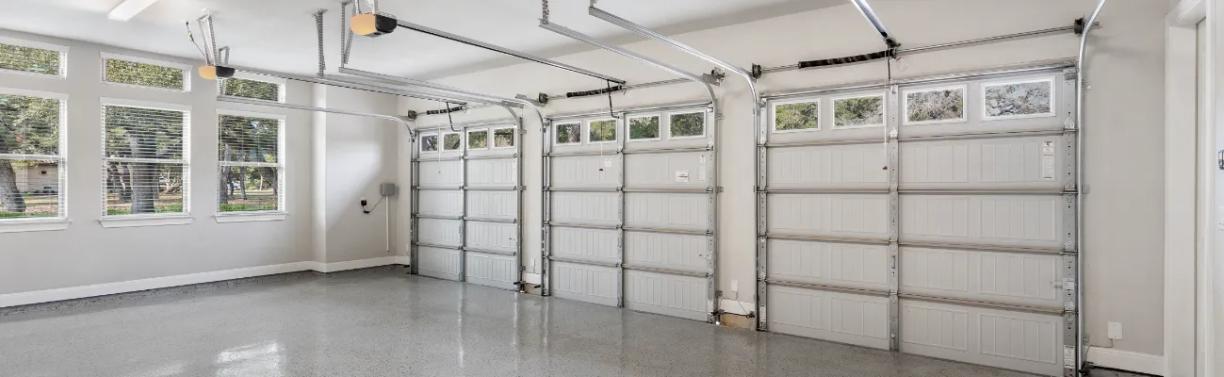
How to Finance a Garage Build: HELOC, Home Equity Loan, and Construction Loan Options in 2026


 FACT-CHECKEDFACT-CHECKED
A lot of homeowners think the only question that matters for a garage build is which product has the lowest rate. What actually decides HELOC versus home equity loan versus construction loan is whether the equity exists in your home today, or only once the garage is built, and whether the money is already spoken for.
Key Takeaways
- The worst starting point is rate shopping before you've answered the equity question.
- Four variables decide the structure: how much you need, what it's for, your first-mortgage balance, and any other debt you're carrying.
- Money already spent points toward a home equity loan; money not yet spent points toward a HELOC.
- A construction loan is the right tool when the equity doesn't exist until the garage does.
- Interest can be deductible when the loan funds a substantial home improvement.


The Four Variables That Actually Decide This
A lot of homeowners think the way to finance a garage build is to shop rates across a HELOC, a home equity loan, and a construction loan, and pick whichever number looks lowest that week. That's usually the wrong place to start, and it's the worst advice I hear repeated back to me most often. The rate can't tell you which product fits until you've answered a more basic question: is the equity you'd borrow against already sitting in your home today, or does it only exist once the garage is standing? And underneath that fork sits a second one that matters just as much: is the money for this project already spoken for, or is it still just an idea?
Borrowers I've worked with over the years tend to pick a structure based on whichever rate looked lowest that week, then find out the disbursement schedule doesn't match how their contractor actually gets paid. When I talked through a garage build with a borrower as a loan officer, I wasn't really asking "what rate do you want." I was working through four things: how much they planned to borrow, what the money was for, how much they already owed on the first mortgage, and what other debt they were carrying on credit cards, auto loans, or personal loans. A garage build is a good test case for this framework, since it usually has a firm quoted price, a defined scope, and a completion date. Walk through those four variables before you walk into a lender's office, and the right product stops being a guess.
Every garage-financing question collapses to the same four variables, in this order.
How much you need. A $15,000 detached garage and a $75,000 detached garage with a finished loft aren't the same decision, even before you get to rate.
What the money is for. A firm, quoted project is a different animal than a rough idea you're still pricing out. This variable decides more than the other three combined.
Your first-mortgage balance. A $600,000 first mortgage and a $150,000 first mortgage change the math on whether refinancing the whole thing to access a second draw makes sense at all.
Other debt you're carrying. If you're asking for $40,000 to build a garage without mentioning $30,000 in credit card debt, the question that actually needs answering is this: given your full financial picture, what structure gets you the garage, saves you the most money every month, and has you paying the least interest over time?
Underneath the first two variables is the diagnostic I used on every one of those calls: has the money already been spent, or not yet?

The Real Diagnostic: Money Already Spent, or Not Yet?
Start by asking whether you have enough usable equity in your home right now to cover the garage, independent of the build itself. Usable equity is the gap between what your home is worth and what you still owe on your primary mortgage. If that gap already covers the project cost, a HELOC or a home equity loan are both on the table. If it doesn't, you're really financing equity that'll exist only after the garage adds value to the property, and that points toward a construction loan instead.
This test matters because it changes what the lender underwrites. A HELOC or home equity loan is sized against your home's current appraised value; a construction loan is sized against the home's value once the garage is finished, so the lender is underwriting the property's future state. AmeriSave's loan officers walk you through this fork before recommending a structure.
Once you know you have enough usable equity today, "firm price versus phased scope" is the simple version people usually hear, but the question that actually separates a HELOC from a home equity loan comes down to whether the money's already been spent. If you've got a contractor locked in, a signed bid, and bills already coming due, you're probably going to want to start paying that balance back on a fixed schedule right away, and a home equity loan usually wins, because a fixed rate locks the payment on a balance you're committing to carry anyway instead of leaving it exposed to a variable HELOC rate. If you've got an idea for a garage but nothing finite yet, no contractor locked in, no work committed, a HELOC usually wins, because you only pay interest on what you actually draw. Think of a HELOC as the right tool for a rainy day fund or a project that's still just an idea, and a home equity loan or cash-out refinance as the right tool once the money's already walking out the door.

If the Equity Exists Today: HELOC or Home Equity Loan
A home equity loan is a lump-sum, closed-end loan: you receive the full amount at closing and repay it on a set schedule, fixed or adjustable, as a second mortgage alongside your existing one. That structure matches a build where a contractor has given you one firm number for materials, labor, and permits, and where the money's effectively already spent the moment you sign that bid.
A HELOC works differently: a revolving, open-end line of credit, closer to a credit card than a loan, that you draw from repeatedly up to a set limit during a draw period. That flexibility suits a project where the scope is still moving and the money hasn't been committed yet, so you draw only what each phase costs rather than borrowing a lump sum against a price that might change. One technical detail matters: most HELOCs carry a variable rate, while a home equity loan more often carries a fixed one. A HELOC also runs in two phases. During the draw period, often around 10 years, payments are frequently interest-only; once repayment begins, often for another 10 to 20 years, new draws stop and payments typically rise, sometimes sharply. If you drew heavily early, plan for that jump before it arrives, since minimizing that payment shock is a central goal of choosing the right structure upfront.
The firm-price-versus-phased-scope rule covers most cases, but one more layer sits underneath it: the size of the project against your first mortgage. If your first mortgage is large relative to what you need, say $600,000 against a $30,000 project, a HELOC can win over a cash-out refinance even when the money's already spent, since refinancing the entire first mortgage to reach a small second draw rarely pays for itself. A home equity loan works in that spot too, and the choice between the two seconds comes back to fixed versus variable rate. The larger the amount relative to your existing balance, the more the math tips back toward a cash-out refinance. I saw this exact scenario more than once as a loan officer: a homeowner with plenty of first-mortgage room and a modest, already-priced project ended up better served by a HELOC anyway, purely because of how small the second draw was relative to the first loan. The variables don't always point the same direction, and when they conflict, size usually breaks the tie.
If the Equity Doesn't Exist Yet: Construction Financing
If your usable equity today doesn't cover the project, the financing has to be built around the value the garage will add once it exists. Construction lending is typically disbursed in stages as the build progresses, rather than as a single payment at closing. Funds release as milestones are completed and verified, foundation poured, framing up, electrical roughed in, because the lender is extending credit against a project that isn't finished. Expect the lender to review the scope, cost, and completion timeline along with your income and credit, to ask for more documentation upfront, and to want a firmer contractor bid. One thing to know before you go down that road: construction loans aren't part of AmeriSave's lineup. If the four variables land you there, that piece comes from a construction lender, and a HELOC, home equity loan, or cash-out refinance with AmeriSave is the path once the equity exists.
If a construction-style structure feels heavier than your project needs, revisit the four variables. Trimming the scope, phasing the build so the first stage fits inside today's usable equity, or covering a modest gap from savings can shift a borderline case back toward a HELOC or home equity loan. A cash-out refinance can also work when the whole first mortgage is worth redoing, and a personal line of credit or even a credit card can bridge a small gap, though each carries its own cost tradeoff against full construction financing.
| Option | Best when | How the money arrives | Rate type | Sized against |
|---|---|---|---|---|
| HELOC | Equity exists today and the money isn't spent yet | Draws as needed during the draw period | Usually variable | Current appraised value |
| Home equity loan | Equity exists today and the money is already spent | One lump sum at closing | Usually fixed | Current appraised value |
| Construction loan | Equity only exists once the garage is built | Staged draws at verified milestones | Varies by lender | Value after completion |
The Tax Question That Should Shape Your Structure
Deductibility is a factor that should shape which structure you choose as much as how you use the funds afterward. Interest on a home equity loan or HELOC is deductible only when the proceeds buy, build, or substantially improve the home securing the loan. A new garage typically counts as a substantial improvement, since it adds value rather than qualifying as routine repair. Documented proof of where the money went, contracts, invoices, permits, and records tying the funds to the project, is what matters for the deduction, no matter what the lender calls the loan. A home equity loan or construction loan, both disbursed against a specific project, tend to produce that paper trail naturally. A HELOC can too, but only if you track which draws went to the garage versus anything else you use the line for. In my processing work, this documentation gap shows up most often when a HELOC has funded more than one project at once, and you can't separate which draws went where.
Sizing the Project and Knowing You Can Still Back Out
For a sense of scale, homeowners who reported an attached garage or carport improvement in a recent American Housing Survey cycle had a median expenditure of $4,500, up from roughly $3,404 in the cycle before it. That figure covers a broad mix of garage-related work, not a standardized cost to build a detached garage from scratch, so treat it as directional context rather than a quote for your project; a full detached build commonly runs well above that median once foundation, framing, electrical, and finishing are all accounted for.
Whichever product you choose, if you put your primary residence up as collateral for a HELOC or home equity loan, federal law gives you a window to change your mind: the right to cancel without owing anything, including finance charges, until midnight of the third business day after the account is opened. If required disclosures weren't provided correctly, that window can extend much further.
Bringing the Fork Back Together
Every version of this question collapses back to the same four variables: how much you need, what it's for, your first-mortgage balance, and what else you're carrying. Borrowers I've worked with rarely walk in thinking about it this way. They walk in with a rate they saw somewhere and a number they want to borrow, the same way homeowners mentally sort their mortgage, their car payment, and their credit cards into separate buckets instead of looking at what actually leaves the house every month. If the equity already exists in your home today, choose between a home equity loan for money that's already spent on a firm, quoted price and a HELOC for money that's not yet spent on a scope that's still moving, keeping the draw-to-repayment transition and the small-second-mortgage exception in mind. If the equity doesn't exist until the garage does, staged construction financing tied to build milestones is the structure built for that situation. Getting those variables right, before comparing a single rate, is what actually minimizes payment shock, the jump in what you owe every month once the dust settles. That's the frame an AmeriSave loan officer should start from when you call asking which garage loan is "best," because the best answer only exists once the four variables are answered first.
Consumer Financial Protection Bureau. What is the difference between a home equity loan and a home equity line of credit (HELOC)?
Consumer Financial Protection Bureau. What is a home equity line of credit (HELOC)?
Consumer Financial Protection Bureau. What other types of loans are similar to a HELOC?
Consumer Financial Protection Bureau. Can I ever waive my right to rescind on my mortgage loan?
Internal Revenue Service. Publication 936, Home Mortgage Interest Deduction.
U.S. Census Bureau. 2021 American Housing Survey, Home Improvements Infographic.


Jon brings extensive experience in loan origination, sales leadership, and operations to AmeriSave, based in Waikiki, HI. Starting as a Loan Originator, he was promoted to Manager after 13 months and to VP eight months later, eventually managing 330 direct reports and establishing AmeriSave's Spanish lending channel. Married with three children, he specializes in transparent, technology-enabled lending that prioritizes client relationships and consumer empowerment.
Frequently Asked Questions
The money-already-spent test decides it. A home equity loan is a lump sum disbursed at closing and repaid on a fixed schedule, which fits a garage build where a contractor has quoted one firm total and bills are already coming due. A HELOC is a revolving line you draw from as needed during a draw period, which fits a project that's still just an idea, with no contractor locked in yet. Both are typically second mortgages alongside your existing loan, and both require enough usable equity in your home today. The common exception: if your first mortgage is large relative to the amount you need, say $600,000 against $30,000, a HELOC usually beats a cash-out refinance even when the money's already spent, since redoing the whole first mortgage for a small draw rarely pays for itself.
Not necessarily. A construction loan becomes the right tool specifically when your home doesn't have enough usable equity today to cover the project, meaning the value being borrowed against will only exist once the garage is built. If you already have sufficient equity, a HELOC or home equity loan sized against your home's current value is typically simpler, since construction loans involve staged disbursements tied to build milestones and more upfront documentation of scope, cost, and timeline.
Construction financing is typically disbursed in stages as the project progresses, rather than as one lump sum at closing. Funds release as specific milestones are completed and verified, such as foundation work, framing, and electrical, instead of all at once. Lenders structure it this way because they're extending credit against a project that isn't finished, and they need to confirm the work funded at each stage actually happened before releasing the next disbursement.
Yes, in most cases, provided the funds are used to buy, build, or substantially improve the home securing the loan. A new garage typically qualifies as a substantial improvement, since it adds value to the property rather than counting as routine repair or maintenance. Documentation showing where the money went, including contracts, invoices, and permits tied specifically to the project, is what supports the deduction, regardless of what the lender named the loan.
Yes. Federal law gives you the right to cancel the transaction for any reason until midnight of the third business day after the account is opened, without owing any amount, including finance charges, if you put up your primary residence as collateral for a HELOC or home equity loan. If required disclosures weren't provided correctly at closing, that rescission window can extend considerably further. The same window generally applies to a cash-out refinance on your primary residence; the main carve-out is a loan that finances buying the home or its initial construction.
Treat it as a conversation with a loan officer rather than a default to construction financing. Three moves can shift a borderline case back toward a HELOC or home equity loan sized against today's value: trimming the scope, phasing the build so the first stage fits inside your current usable equity, or covering the small gap from savings. A HELOC or home equity loan can't be sized against value the garage hasn't added yet, so the appraisal won't rescue a shortfall on its own. A cash-out refinance, a personal line of credit, or in smaller cases a credit card can also bridge a modest gap, though each carries its own rate and cost tradeoffs worth weighing against full construction financing.
A cash-out refinance, a personal line of credit, and credit cards are the main alternatives, though "cheaper" depends on your situation. A cash-out refinance replaces your entire mortgage at a new rate and comes with new closing costs, which only pays off if that new rate is competitive with your current one. A personal line of credit is unsecured, so it typically carries a smaller limit and a higher rate than anything secured by home equity. Credit cards are usually the most expensive option for a project of this size and should generally be a last resort.