


Your Complete Final Walkthrough Checklist for 2026


 FACT-CHECKEDFACT-CHECKED
The last time you can check the condition of the home and make sure all the agreed-upon repairs were made is 24 to 48 hours before closing. Bring the inspection report, check every outlet and appliance, and look for water damage. After you sign, anything you forget becomes your problem.
Key Takeaways
- Before you close, the last inspection is your last chance to check that the house is still in good shape.
- Plan your visit 24 to 48 hours before you sign the closing documents.
- You need the purchase agreement, the home inspection report, a phone charger to check the outlets, and a camera to take pictures of the problems.
- Make sure the seller provides receipts and warranties for all completed repairs.
- Before you leave, check to see that the HVAC, plumbing, electrical outlets, and appliances are all working.
- Check the kitchens, bathrooms, and basements for mold, bugs, and water damage.
- Make sure that all of the goods, appliances, and fixtures you are selling are there and in good shape. Check that everything is there.
- If you see problems during the walkthrough, you can ask for a repair credit, a delay in closing, or a lower price.
- Most people don't back out of a contract after the walkthrough, but you might if you find a big problem that goes against the rules.
- AmeriSave will make closing easy by giving you information and help.

What a Final Walkthrough Actually Is and Why It Matters
You've found the home. Negotiated the price. Handled the inspection. Survived the underwriting process. Now there's just one more step before everything becomes official, and it's one that too many home buyers rush through or skip altogether. The final walkthrough.
I get it. By this point, you're tired. You've been juggling paperwork and phone calls for weeks, maybe months. The finish line is right there. But here's the thing. This walkthrough is not just a formality. It's your last opportunity to make sure the home you're paying for is actually in the shape the seller promised. I think about it the same way I think about risk evaluation in capital markets. Before money changes hands, you verify every detail. You don't sign off because someone told you everything looks fine. You confirm it yourself.
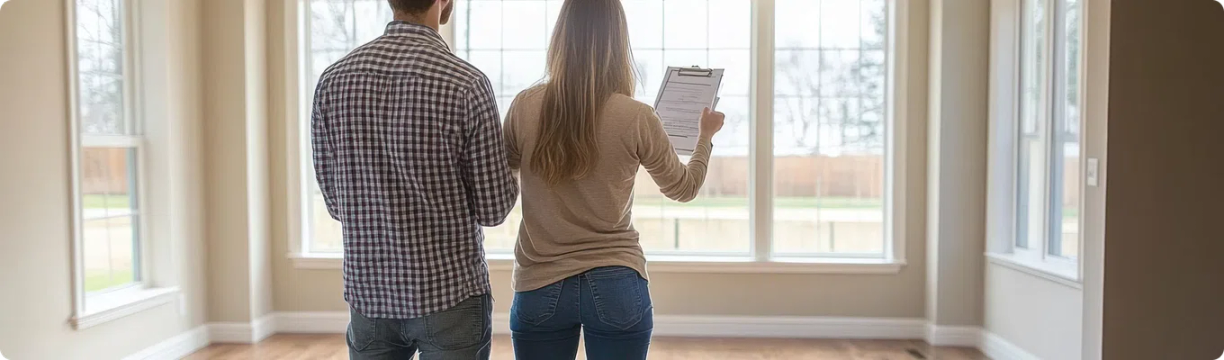
A final walkthrough is a visit to the property that typically happens within a day or two of closing. You walk through the home with your real estate agent to verify that the seller has met every obligation outlined in the purchase agreement. That means checking that requested repairs were completed, that nothing new broke since your last visit, and that anything included in the sale is still there.
Think of it this way. Once you sign those closing documents, whatever condition the house is in becomes your responsibility. The Consumer Financial Protection Bureau advises home buyers to confirm all agreed-upon repairs and conditions before signing. That recommendation exists for a reason. Surprises after closing can get expensive fast, and your leverage to get the seller to fix anything drops to basically zero.
At AmeriSave, we walk alongside our borrowers through every stage of the home buying process. The walkthrough is one of those stages that deserves your full attention, even when you're ready to just grab the keys and start unpacking.

When to Schedule Your Walkthrough and What to Bring
Timing matters here. The closer your walkthrough is to the actual closing, the better. Ideally, you want to be in the house within 24 hours of signing. Some buyers do their walkthrough the morning of closing day. Others schedule it a day or two before. Either approach works, but you don't want a week-long gap between your walkthrough and closing. A lot can change in seven days. Pipes freeze. Movers scratch walls. Appliances break down.
The seller should be completely moved out before your walkthrough. Walking through an empty home makes it much easier to spot damage that furniture might have been hiding. You might notice scratches across the hardwood floors, holes left behind from mounted TVs, or stains on the carpet that were tucked under a couch for months.
Coordinate with your real estate agent to pick a time that works. The buyer and the buyer's agent are the only people required to attend. The seller doesn't need to be there, and honestly, it's often easier without them. You want to feel free to inspect every closet, test every faucet, and take your time without pressure.
As for what to bring, preparation makes all the difference. Walking into a final walkthrough without a plan is how things get overlooked. You'll want your purchase agreement, which spells out exactly what the seller agreed to leave behind and what repairs they committed to. You'll also want your home inspection report, which serves as the reference guide for verifying that repair work was completed. Compare what the inspector noted against what you see now. Did they actually replace that water heater? Is the electrical panel up to code?
Bring a phone charger. This sounds oddly specific, but it's really useful. Plug it into outlets throughout the home to make sure every single one works. A phone charger lights up immediately when it detects a current, so you'll know right away whether an outlet is dead. Bring a camera or use your phone to take pictures of anything that looks off. And bring a notebook and pen. Jotting things down as you move room to room keeps you organized and prevents anything from slipping through the cracks.
If you're in a situation where the seller hasn't fully moved out yet, you might consider scheduling a second quick visit right before closing. It's not common, but it's not unreasonable either. You want peace of mind, and you deserve it.
How to Verify That Every Promised Repair Was Completed
Repair verification is one of the biggest reasons the final walkthrough exists. During the home inspection phase, you probably asked the seller to fix certain things. Maybe a cracked window. Maybe a leaking faucet. Maybe the inspector found a grounding issue with the electrical system. Whatever it was, the seller agreed in writing to take care of it.
Now you need to confirm that the work was actually done, and done properly. Don't just glance at a new faucet and assume it's fine. Turn it on. Run hot water. Check for leaks under the sink. If the seller promised to fix a light switch, flip it. Does the light come on and stay on? If they said they'd repair the deck railing, push on it. Is it solid, or does it wobble?
Ask the seller to provide receipts and warranties for all completed repairs. This matters more than people realize. If a contractor replaced your water heater and the unit fails six months from now, you'll want that warranty information. Many home repair companies offer warranties that include free follow-up service within a certain window. Don't leave that money on the table.
If you find that a repair wasn't made or wasn't done to an acceptable standard, don't panic. But also don't ignore it. Talk to your real estate agent immediately. You have options, and we'll get into those later in this piece. The important thing is to catch the problem now, not after you've signed your name twenty times at the closing table.
What this means for you is pretty direct. Borrowers don't need smoke and mirrors. They deserve clarity and fairness. The walkthrough is where that clarity starts, because it's the last time you can hold the seller accountable for their side of the deal. AmeriSave believes every home buyer deserves to close with confidence, knowing the property they're financing is in the shape they were promised.
Testing Every System in the Home From Top to Bottom
This is the part that takes the most time, and it's where you really can't afford to cut corners. You need to walk through every room and test the things that keep a home functioning.
HVAC and Climate Systems
Turn on the heating system, even if it's the middle of July. Then switch to air conditioning, even if it's December. You want to verify that both systems kick on and produce the expected output. Listen for unusual sounds. Rattling, grinding, or clicking can signal mechanical problems. Check that air flows from every vent in every room.
If the home has a smart thermostat, confirm that it responds to adjustments. Ask the seller whether the HVAC system was recently serviced and when the filters were last changed. This won't make or break the deal, but it gives you a sense of the system's condition.
Plumbing and Water Systems
Go to every sink, bathtub, and shower in the house. Turn on the hot water and the cold water separately. Check water pressure. Watch the drains to make sure water flows out at a reasonable speed. Look under sinks for signs of moisture or leaking. Open the cabinets beneath the kitchen and bathroom sinks and inspect the pipes.


Flush every toilet. Check around the base of each toilet for water stains or a rocking motion, which can indicate a failed wax seal. Run the dishwasher if one is included in the sale. Check the water heater's temperature setting and look for corrosion or pooling water near the unit.
Electrical Outlets and Fixtures
Grab that phone charger. Plug it into every outlet in every room. Your charger should immediately register a connection. If an outlet is dead, that could point to a wiring issue that affects other outlets on the same circuit. According to the National Association of REALTORS® (NAR) guidance on home inspections, a thorough examination should cover core structural elements including electrical systems. Electrical issues aren't minor. A single faulty outlet can indicate deeper problems.
Flip every light switch in the home. Test ceiling fans at multiple speeds. Check that garage door openers, doorbells, and any security system components are functional. If the home has outdoor lighting, test that too.
Spotting Water Damage, Mold, and Pest Problems Before They Become Yours
Water damage and mold are sneaky. They can develop in the days between when the seller moves out and when you take ownership. Mold can start growing in as few as 48 hours under the right conditions, so this isn't something to brush off.
Pay close attention to bathrooms, kitchens, basements, and laundry areas. Look around toilet bases, behind shower doors, and under sinks. Check the base of the refrigerator if one remains. Open cabinets and inspect the walls and flooring for discoloration, bubbling paint, or soft spots. These are all signs of moisture problems that you want to catch now, not later.
Sniff the air. Musty or earthy smells in a home that should smell like nothing are a red flag. Mold doesn't always announce itself visually. Sometimes the first sign is the smell. If you notice that kind of odor in a bathroom, a closet, or a basement corner, take it seriously. That smell is telling you something, and ignoring it won't make it go away.
While you're looking closely at walls and floors, keep an eye out for evidence of pests too. Droppings, gnaw marks on baseboards, small piles of sawdust near woodwork, or dead insects in windowsills can all point to an infestation. If you notice anything along these lines, don't write it off. Pest problems can escalate quickly and become very costly to treat once you own the property.
I've seen situations across my career where a home sat vacant for just a couple of weeks after the seller moved out, and by the time the buyer did the walkthrough, there was visible mold in the master bathroom. Nobody did anything wrong. It was just a humid stretch of weather combined with closed-up rooms and no air circulation. But the buyer caught it because they took the walkthrough seriously. That's risk management at its most basic. You look before you commit. The cost of finding a problem during the walkthrough is zero. The cost of finding it after closing could be thousands.
Verifying Fixtures, Appliances, and Everything Included in the Sale
Your purchase agreement should list exactly what stays with the home. That might include kitchen appliances, washer and dryer units, window treatments, light fixtures, built-in shelving, and outdoor structures like storage sheds or play equipment. During your walkthrough, confirm that every item on that list is actually present.
It sounds basic, but sellers sometimes take things they agreed to leave. The curtain rods they loved. The chandelier in the dining room. A shelving unit they decided they couldn't live without. It's not always intentional. Moving is chaotic and things get packed by mistake. But the result is the same. Something that was supposed to be part of your purchase is now gone.
Test every appliance. Open the oven and turn it on briefly. Run the garbage disposal. Start a quick cycle on the dishwasher. If the home includes a washer and dryer, run those too. Check that the garage door opener, all remotes, and spare keys are accounted for. If anything was supposed to come with manuals or warranty documents, confirm those are available.
Look at the condition of things that remain. Did the movers damage a doorframe while hauling out a couch? Are there new scratches on the kitchen countertops? Did they leave behind junk in the garage or basement? The seller is expected to leave the home in what's called "broom swept" condition. That means clean. Not spotless, but reasonably clean and free of debris. If the home looks like the movers left in a hurry and didn't care what got dinged on the way out, you need to document that.
AmeriSave encourages every borrower to treat this step like a business transaction, because that's exactly what it is. You're verifying that what you agreed to buy matches what you're about to receive.
Checking the Exterior and Outdoor Systems
Don't forget to walk the outside of the property too. Start at the front. Does the yard look the way it did when you made your offer? Sellers have been known to dig up plants and landscaping during the move. Check that all yard features that were included in the sale are still in place. Walk the perimeter slowly and look at the condition of things that are easy to overlook from the inside.
Look at the condition of the roof from ground level. You're not climbing up there, but you can look for obvious problems like missing shingles or sagging gutters. Walk the perimeter of the home and check the foundation for new cracks or settling. Look at the siding for any fresh damage. Check window seals from the outside to make sure nothing was cracked or broken during the move.
If the home has a deck, patio, fence, or outbuilding, give each one a look. Test outdoor faucets and sprinkler systems if they're part of the property. Check the mailbox, the driveway, and any gates or locks. If there's a pool or hot tub, confirm it's operational and that you have the relevant manuals and maintenance schedules. A pool that wasn't properly maintained during a vacant stretch can develop algae, equipment issues, or worse, so this isn't something to wave off.
Here in Texas, outdoor living space matters a lot. My husband and I spent years making our backyard exactly what we wanted it to be, and I spend most of my downtime on our enclosed back porch just watching the trees behind the house. So I understand the attachment people feel to outdoor features. Make sure the ones that are supposed to stay with the home actually stay.
What to Do If You Find Problems and Whether You Can Walk Away
First, take a breath. Finding an issue during the walkthrough doesn't mean the deal falls apart. It means the process is working the way it should. You caught something before it became your financial burden.
Start by documenting the problem with photos and notes. Then talk to your real estate agent right away. They'll contact the seller's agent and open a conversation about how to resolve it. Most of the time, these things get worked out.
The common resolutions usually fall into a few buckets. The seller might agree to complete the outstanding repair before closing. Or they might offer a financial credit at closing so you can handle the repair yourself after you move in. In some cases, the buyer and seller agree to delay closing until the issue is resolved. None of these options are unusual, and experienced agents deal with them regularly.
According to the NAR REALTORS® Confidence Index, inspection-related issues account for roughly 10 to 12% of deal cancellations. Financing and appraisal problems are far more common causes. So while walkthrough problems do happen, they're manageable more often than not.
AmeriSave's team understands how stressful last-minute problems can feel. If you're working with us and a walkthrough issue affects your closing timeline, we're going to help you figure out the best path forward.
Can You Actually Back Out After the Walkthrough?
Technically, yes. But practically, it's complicated. Backing out is rare and generally only possible if you can point to something that represents a material change in the property's condition from what was outlined in the contract.
What counts as material? Think along the lines of major new damage, undisclosed structural issues, or the seller removing items they contractually agreed to leave behind. A scuff on the wall from the movers probably doesn't qualify. A flooded basement that wasn't flooded when you signed the contract? That's a different story.
Whether you can legally walk away depends on the terms of your contract and the laws in your state. Some purchase agreements include specific contingencies that protect the buyer if conditions change. Others are more rigid. Talk to your agent and, if needed, a real estate attorney. They can tell you where you stand.
I always tell people the goal of the walkthrough isn't to find a reason to bail. It's to protect yourself. Show up, be thorough, and have courage. In my nearly three decades in this industry, I've seen how closing day can feel overwhelming. There's a lot of emotion wrapped up in buying a home. But staying calm and knowing your rights goes a long way. AmeriSave is here to support you through the entire closing process, so if you're feeling uncertain about any part of it, reach out to us online.
Common Mistakes Home Buyers Make During the Final Walkthrough
After close to three decades in mortgage operations and risk assessment, I've learned that certain patterns repeat. Home buyers, especially first-time home buyers, tend to make the same handful of mistakes during the walkthrough. And to be fair, most of them come from a good place. You're excited. You're overwhelmed. You just want to move in. I understand that. But this is one of those moments where slowing down pays off.
Rushing is the most common one. Spending 15 minutes in a 2,000-square-foot home isn't enough. Plan for at least 30 to 60 minutes. Larger properties with pools, detached structures, or multiple stories need even more. I know it feels like you're almost done, and you are. But those extra 20 minutes of careful attention could save you from a plumbing bill or a dispute with the seller that drags on for months.
Another common misstep is not testing things. Some buyers walk through, look around, nod, and leave. That's a missed opportunity. Turn things on. Open things. Flush things. Plug things in. If it has a switch, flip it. A home can look perfectly fine to the eye and still have a dead outlet, a faucet that won't produce hot water, or a garage door that won't open.
Some buyers also confuse the walkthrough with a second inspection. It's not. You're not looking for hidden defects behind drywall or evaluating the roof's remaining lifespan. You're confirming that what you agreed to purchase is what you're about to receive, that repairs were completed, and that nothing changed since you last saw the home. Whether you're a first-time buyer or someone who has been through this process before, that distinction matters.
And some home buyers skip the walkthrough entirely. Please don't do this. The CFPB is clear that buyers should confirm all conditions and repairs before signing closing documents. Skipping this step removes your last safety net. AmeriSave puts it simply. You wouldn't close a financial transaction without reviewing the terms. Don't close on a home without reviewing the property.
A Practical Walkthrough Example From Start to Finish
Let's walk through what this looks like in practice. Say you're buying a three-bedroom, two-bathroom home priced at $350,000. Your home inspection flagged three issues: a slow-draining bathtub in the master bathroom, a non-functional outlet in the kitchen, and a small roof leak above the garage. The seller agreed to fix all three.
Morning of the walkthrough. You arrive with your agent. Home is empty. Good start. You pull out the purchase agreement and inspection report.
Master bathroom first. Turn on the bathtub faucet. Water flows in and drains normally. Let it run for a full minute to be sure. Check. Kitchen next. Plug your phone charger into the outlet that was flagged. Starts charging immediately. Check. Garage. Look up at the ceiling above where the leak was reported. Drywall looks freshly patched and painted. No water stains. You ask your agent to request the repair receipt so you have the contractor's warranty on file.
Now the full sweep. Test every other outlet. Flush both toilets. Run the dishwasher. Flip every light switch. Turn on the HVAC and let it run for a few minutes in each mode. Check under the kitchen sink and the bathroom sinks for any moisture. Walk outside and look at the roof from the yard. Check that the fence gate still latches and the storage shed in the backyard is still there.
You sniff the air in each room. No musty smell. The basement is dry. The windows are intact. The garage floor has no new stains. You check the water heater and note the temperature setting. Everything looks consistent with what you expected.
Total time: about 45 minutes. No surprises. You head to the closing table with confidence. That's how it should go. And if you're working with AmeriSave, our team is right there with you to answer any last-minute questions about your loan documents, your payments, and what comes next.
The Bottom Line on Your Final Walkthrough
The final walkthrough is a small investment of time that can save you thousands of dollars and a tremendous amount of stress. It's your chance to make sure the home matches what was promised. Check repairs. Test systems. Verify that everything included in the sale is present and accounted for. Document anything that doesn't look right.
Don't rush it. Don't skip it. And don't treat it like a formality. The moment you close, the seller's obligations are done. What this means for you is that the walkthrough is your final layer of protection. It's the last time you have leverage, and it costs you nothing but a little time and attention.
I've spent my career thinking about how to protect people from the risks they can't always see coming. Whether that's in capital markets or in the home buying process, the principle is the same. You verify before you commit. AmeriSave believes every home buyer deserves to feel informed and confident at every stage, and the walkthrough is no exception. If you have questions about your loan, your closing, or anything else in the process, reach out to AmeriSave online to connect with our team.
Closing on Your New Home.
Consumer Financial Protection Bureau · 2025 · consumerfinance.gov

Close the Deal.
Consumer Financial Protection Bureau · 2025 · consumerfinance.gov
REALTORS® Confidence Index Report.
National Association of REALTORS® · 2025 · nar.realtor
Home Inspections.
National Association of REALTORS® · 2025 · nar.realtor
2025 Profile of Home Buyers and Sellers.
National Association of REALTORS® · 2025 · nar.realtor
Checklist: Your Final Walk-Through.
National Association of REALTORS® · 2015 · nar.realtor

Casey brings 28 years of comprehensive mortgage industry experience spanning operations, compliance, and capital markets to AmeriSave. She has led teams across disclosure, compliance, processing, underwriting, and post-closing while navigating three market crashes since 1998, and previously served as Managing Partner at Groundwork Consulting LLC. Based in Texas, specializes in risk mitigation, pricing integrity, and translating complex market dynamics into actionable borrower guidance.
Frequently Asked Questions
A final walkthrough of a normal single-family home takes 30 to 60 minutes. It could take 20 minutes for a smaller home or condo, but it could take more than an hour for a bigger property with more buildings, a pool, or more land. There is no set time limit, so don't feel like you have to rush.
The amount of time it takes depends a lot on how big the property is and how many repairs were agreed upon. You'll have to spend more time checking each of the five things that the seller agreed to fix against your inspection report. A checklist helps you stay on track and stops you from going back. AmeriSave says that you should plan on spending at least 45 minutes on any home that is more than 1,500 square feet. If you're still in the early stages, you can get prequalified with AmeriSave and start making your timeline long before the walkthrough.
It's a big problem if the seller's things are still in the house when you walk through it. Furniture and personal items can hide damage to walls, stains on floors, signs of pests, and repairs that aren't finished. You can still do the walkthrough, but you won't be able to look at everything in detail.
Most purchase agreements say that the seller must leave before the closing. If they haven't, your agent should get in touch with the seller's agent right away to fix the problem. You can either wait until the home is clear to do the walkthrough or negotiate a holdback in escrow to cover any possible damages. The REALTORS® Confidence Index from NAR says that about 20% of buyers don't need an inspection contingency at all, but skipping the walkthrough because the seller is late rarely makes sense financially. AmeriSave's home buying tools tell you what to expect at each stage of closing so you won't be surprised.
The final walkthrough is not a formal inspection, so you don't need to hire a licensed home inspector. You and your real estate agent will look at the home to make sure it is in the same condition as it was when you agreed to buy it. You're looking for obvious problems, repairs that have been made, and compliance with the contract.
That said, you can invite a professional if it makes you feel better, especially if big repairs have already been done. Some buyers hire a contractor or handyman to check the quality of the repairs. The AmeriSave Learning Center shows you what each step of the process looks like and how to get ready for it, from prequalification to closing. This is helpful if you're buying your first home.
The seller doesn't have to be there, and they usually aren't. The buyer can look at the property during the walkthrough, and most agents would rather the seller not be there so the buyer can move around and take their time without feeling watched or rushed.
In some cases, a buyer may ask the seller to be there to show them how certain systems work or to talk about repairs that have already been made. Both agents should also be there if that happens. The buyer's real estate agent is the most important person in the process, along with the buyer. They help the buyer know what to look for and how to write down their concerns. AmeriSave can help you with the closing process from locking in your rate to signing your final document if you're thinking about getting a conventional loan or another type of loan.
You won't be able to test electrical outlets, HVAC systems, water heaters, or plumbing if the utilities have been turned off. That's a big hole in your ability to check the condition of the house. Call your agent right away to tell the seller to turn the utilities back on before you move forward.
This is why most purchase agreements say that the seller must keep utilities on until the deal is done. Your agent can ask the seller to reconnect them before you finish the walkthrough if they disconnected them too soon. In some states, the buyer can set up the utilities to be in their name a day or two before closing to make sure they will work. You can't be sure that major systems are working if utilities aren't working. AmeriSave can help you plan your closing schedule so that there are no gaps between the walkthrough and the day you sign.
In most states, the final walkthrough is not required by law. It's a normal part of the real estate transaction process and is usually included in the purchase agreement. Most contracts say that the buyer can do a walkthrough right before the deal closes.
Even though this step isn't required by law, experts in the field and groups that protect consumers strongly recommend that you don't skip it. NAR says that 88% of people who bought a home recently used a real estate agent, and almost all of those agents recommend the walkthrough. It's the last step before you take on hundreds of thousands of dollars in financial responsibility. AmeriSave explains how each step of the closing works, so you won't be surprised, whether you're getting an FHA loan or a regular mortgage.
Yes, one of the most common ways to fix a problem that comes up during a walkthrough is to delay closing. If the seller hasn't finished a promised repair or the condition of the home has changed significantly, you and your agent can ask for a delay in closing until the issue is resolved.
You could also ask the seller to hire a contractor before the new closing date, negotiate a financial credit at closing, or put money in escrow to pay for future repairs. The NAR REALTORS® Confidence Index data shows that financing problems (37%) and appraisal concerns (18%) cause closings to be delayed much more often than walkthrough discoveries. AmeriSave will work with you to keep the loan on track if you need to move your closing date by a few days. You can always check the current mortgage rates to stay up to date while your schedule changes.