


Site-Built Homes: 7 Cost and Financing Realities to Weigh Before You Build or Buy


 FACT-CHECKEDFACT-CHECKED
A site-built home is a house built entirely on your lot from the ground up, which is also what qualifies it for the full menu of standard mortgage financing and normal appraisal treatment. The sections below cover what building or buying one actually costs right now, which loan options fit different situations, and the financing risks that catch buyers off guard.
Key Takeaways
- A site-built home is built from start to finish on your lot, which unlocks conventional, FHA, and VA financing and standard appraisals.
- Building has never cost more: the average new single-family home runs about $428,215 to construct, or roughly $162 per square foot.
- The gap between building and buying has nearly closed, so the better choice is genuinely situation-specific rather than automatic.
- A completed site-built home uses an ordinary mortgage; building from scratch usually means a construction loan that converts to a permanent one.
- A typical build takes around nine months, which exposes you to rate movement before your permanent rate is set.
- The current baseline conforming loan limit is $832,750 for a one-unit home in most of the country.
- Site-built homes tend to appraise and hold value well, which protects your equity and your future refinance options.
- The construction method matters less to your monthly payment than the financing decisions you make around it.

The Part of a Home Build Most Buyers Underestimate
Every borrower I work with who is thinking about a site-built home starts in the same place: the floor plan, the finishes, the lot. That part is the fun part, and it should be. But the decisions that actually shape what you pay every month for the next 30 years are not on the blueprint. They are in how you finance the home, when you lock your rate, and which loan program fits your situation.
A site-built home, a house built entirely on your land from the foundation up, gives you something the factory-built alternatives often cannot: access to the full range of standard mortgage financing and a normal appraisal. That single fact drives a lot of what follows. It is the reason a site-built home can be financed with a conventional, FHA, or VA loan, the reason it tends to appraise and hold value the way buyers expect, and the reason the financing conversation is the one worth getting right early.
The market makes that conversation more important than it was a few years ago. Building costs are at record highs, the math on building versus buying has tightened, and rates have settled into a range that punishes indecision during a long build. None of that should scare you off. It just means the money questions deserve as much attention as the cabinet hardware. The seven realities below walk through what matters most, with current numbers and where they come from, so you can make the call that fits your situation instead of someone else's.

1. What "Site-Built" Actually Means for Your Loan
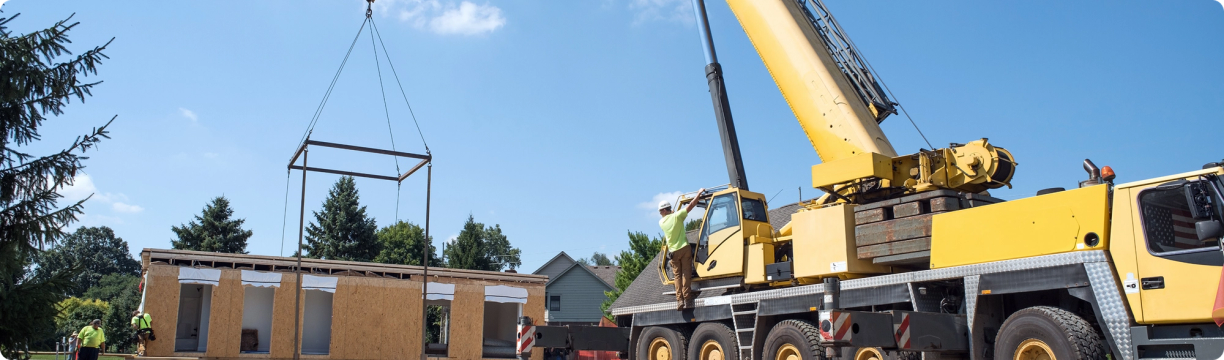
A site-built home, sometimes called a stick-built home, is constructed entirely at its permanent location. The framing, the roof, the plumbing, the wiring, all of it is assembled on your lot rather than produced in a factory and shipped in pieces. That is the whole definition, and on the surface it sounds like a detail about construction method. It is actually a detail about financing, and it is the first thing our team digs into when someone is planning a new build.
Here is why. Lenders, appraisers, and the agencies that back mortgages treat a home built to local code on a permanent foundation as standard real property. A site-built home qualifies for conventional financing, for loans backed by the Federal Housing Administration (FHA), and for loans guaranteed by the Department of Veterans Affairs (VA), with the same underwriting and the same appraisal process used for any existing home. Factory-built housing can carry extra conditions, narrower lender options, or financing that behaves differently, depending on how the home is classified and attached. When buyers ask me why the construction type matters for their loan, this is the short answer: site-built keeps the full menu of standard financing open, which is why the financing review for a new build is the first conversation worth having, not the last.
That matters more than it looks. The loan program you end up in drives your down payment, your monthly payment, your mortgage insurance, and how much room you have to refinance or tap equity later. A buyer who assumes every home finances the same way can walk into a much narrower set of options without realizing it. Getting clear on the financing path early is the single most useful thing a buyer can do, because that decision shapes everything that comes after it.
None of this means a site-built home is automatically the right call for every buyer. It means the construction method you choose quietly sets the terms of the financing conversation. Get clear on that early, and the rest of the decisions, what to build, where, and how much to spend, sit on a much steadier foundation. The sections that follow start with what that home actually costs to build today, then move through the loan options, the timeline risk, and the long-term equity picture, in the order they tend to come up when a real borrower sits down to plan.
2. What It Costs to Build a Site-Built Home Right Now
Building a home has never been more expensive. The average cost to construct a typical single-family home reached about $428,215 in the most recent National Association of Home Builders construction cost survey, which works out to roughly $162 per square foot of finished space for a home of around 2,647 square feet. That is the highest figure the association has recorded since it began tracking construction costs, and the climb has been steep: cost per square foot sat near $114 only a few survey cycles earlier.
Those numbers cover construction alone. They do not include the land, and they do not include the financing, overhead, and builder profit that get folded into the price of a finished home a builder sells you. When all of that is layered in, the construction piece now eats up roughly 64% of a new home's sale price in the builder survey, up from around 61% a couple of cycles ago. In plain terms, more of what you pay is going straight into materials and labor, and less into the lot.
It also helps to separate the build cost from the all-in price of a finished home. In the same builder survey, once you add the lot, financing, overhead, and profit, the average sale price of a newly built home lands far above the construction figure alone, which is why a number like $665,298 shows up as an average sale price even though the construction piece is closer to $428,215. The finished-lot share of that price has actually slipped, to around 14% from nearly 18% a few cycles back, so land is taking a smaller bite while construction takes a bigger one. For you, the takeaway is that a build budget needs three buckets, not one: the land, the hard construction cost, and the financing and soft costs that ride alongside both. Leave any of the three out, and the loan you apply for will not match the project you actually have.
Two forces are driving the cost climb. Labor is the larger one. Skilled construction trades remain in short supply, which keeps wages, and therefore build costs, elevated. Materials are the other. Prices for inputs like concrete, steel, and lumber have stayed volatile, so the same house can cost meaningfully more or less depending on when you build and where. Interior finishes carry the biggest share of construction cost in the builder survey at about 24%, with framing next at roughly 20%, so the choices you make on cabinets, flooring, and the size of the frame move your budget more than almost anything else.
Where you build matters as much as what you build. Construction costs swing widely by region, with higher-cost labor and stricter codes pushing per-square-foot prices up in parts of the Northeast and the West, while much of the South and Midwest comes in lower. In the Dallas-Fort Worth area where I work, build costs tend to land below much of the Northeast and the coastal West, a good reminder that the same floor plan can carry a meaningfully different price tag depending on the metro you build in. That is one more reason a budget borrowed from a friend in another part of the country can lead you astray.
What does this mean for you as a borrower. It means the budget you build your loan around has to be honest about today's costs, not a number you saw a few years ago. It also means cost control happens at the design stage, before permits, far more than during construction, when changes get expensive fast. When we help buyers plan financing for a build, the first push is to lock the scope and the budget early, because a realistic construction number is what every financing decision after it depends on. A loan sized to an optimistic budget is the fastest way to a cash crunch halfway through framing.
3. Building Versus Buying When the Numbers Are This Close
For years the pitch for building was simple: it was cheaper than buying. That pitch needs an update. The median sale price of a newly built home recently landed around $422,500 in the Census Bureau's New Residential Sales data, while the median existing home sold for about $417,800 in the National Association of REALTORS® figures. Those two numbers are close enough to call even. The premium for new construction that buyers used to weigh against has largely compressed.
So the honest answer to build or buy is the one I give borrowers about almost every mortgage question: it depends on your situation. There is no single winner anymore. Buying an existing home gets you in faster and lets you see exactly what you're paying for, with costs like inspections, an appraisal, and any negotiated repairs. Building gets you the floor plan, the finishes, and the energy efficiency you choose, but it asks you to carry a longer timeline, more decisions, and a financing structure that works differently from a standard purchase.


The current rate environment is part of why the math tightened. With the 30-year fixed-rate mortgage hovering around 6.5% in recent Freddie Mac Primary Mortgage Market Survey readings, financing is expensive for everyone, including builders. When builders pay more to finance construction, that cost flows into the price of the finished homes they sell, which is part of what pulled new and existing prices together. Higher rates squeeze the buyer and the builder at the same time.
Here is where buyers get into trouble. They hear that a neighbor built for a certain price, or that a coworker bought existing and came out ahead, and they treat that story as their answer. The problem is that you're not in your neighbor's situation. Your income, your down payment, your credit, your timeline, and the market you're buying in are all different. Borrowing someone else's conclusion is a quick way to end up in the wrong decision for your own finances. The build-or-buy call has to start from your numbers, not theirs.
That is what our team is built to work through. The right move depends on how long you can wait, how much certainty you need on price, whether you already own a lot, and which loan program your finances point toward. Walk through those variables before you fall in love with a specific house or a specific build, and you tend to make a decision you do not second-guess later. The goal is not to talk you into building or buying. It is to make sure the choice fits the person making it.
4. The Loan Options That Fit a Completed Site-Built Home
Once a site-built home is finished and standing, it finances like any other house. Three programs cover most buyers, and the right one comes out of your situation, not a ranking.
A conventional loan is the common path for buyers with solid credit and a down payment. The current baseline conforming loan limit for a one-unit home is $832,750 in most of the country, rising to $1,249,125 in high-cost areas, both set by the Federal Housing Finance Agency. Stay at or under that limit and you're in conforming territory, which generally means smoother underwriting and competitive pricing, and which is where most of our buyers land. Put down less than 20% and you'll carry private mortgage insurance until you build enough equity to drop it, which catches a lot of borrowers off guard.
An FHA loan opens the door for buyers with lower credit scores or smaller down payments. The FHA floor for a one-unit home is $541,287 in most counties, with a ceiling of $1,249,125 in the most expensive markets. The trade-off is mortgage insurance: FHA loans carry an upfront premium that usually rolls into the loan, plus an annual premium, and on many FHA loans that annual cost stays for the life of the loan. For a buyer with a 505 credit score and little equity, an FHA loan can be exactly right. For a buyer with strong credit and 20% down, it usually is not. Same product, opposite answer, depending on the file.
It helps to put a number on that mortgage insurance, because it is real money. On a conventional loan, private mortgage insurance usually costs somewhere around $1,500 to $3,000 a year on a $400,000 loan, until you reach about 20% equity and can request that it drop off. On an FHA loan, the upfront premium of 1.75% of the loan adds $7,000 on that same $400,000 balance, usually rolled in, plus an annual premium that on many FHA loans never goes away. That difference is exactly why the same buyer can come out ahead with FHA or with conventional depending on their credit and down payment. I would rather show a borrower those two numbers side by side than let them pick a program on reputation.
A VA loan is the strongest option for those who qualify: eligible veterans, active-duty service members, many National Guard and Reserve members, and some surviving spouses. For a borrower with full entitlement there is no loan limit and no required down payment or monthly mortgage insurance, though most pay a one-time funding fee. If you're eligible for a VA loan, it usually deserves a hard look before anything else.
This is the part of the process I care about most, because matching the program to the borrower is where money is won or lost. I've spent a good part of my career standardizing exactly these questions, since asking them the same way every time is what produces answers you can rely on instead of answers that shift with whoever picks up the phone. The questions that decide it are always the same: How much can you put down? Where does your credit sit? Are you eligible for VA financing? What do you want your monthly payment to be? The program falls out of the answers. That is also why getting verified early helps. AmeriSave's Certified Approval verifies your income and credit before you make an offer, so when you're competing for a finished site-built home, the seller sees a buyer whose financing is already backed rather than a maybe. In a market where new and existing prices have converged and inventory is tight, that certainty can be the difference between winning a home and watching it go to someone else.
5. Building From Scratch Usually Means Two Loans, Not One
Financing a home that already exists is one loan. Financing a home you're building from the ground up is usually two financing jobs, and understanding the difference upfront saves a lot of confusion.
During construction, you typically need a construction loan, which works differently from a standard mortgage. Instead of handing you the full amount at closing, the lender releases money in stages called draws as the build hits milestones such as foundation, framing, and dry-in. You generally pay interest only on the money that has actually been drawn, not the full loan amount, which keeps payments lower while the house is going up. Construction loans are considered higher risk than a mortgage on a finished home, so they tend to ask for stronger credit and more cash, and they usually carry a higher rate.
It is worth knowing how the draws actually work, because they shape your cash flow during the build. A lender and the builder agree on a draw schedule tied to inspections, so money is released only after a stage is verified complete, not on a promise that it will be. That protects you, but it also means you may need cash on hand to keep work moving between draws, and it means a delay at one stage can hold up funding for the next. Because you're paying interest only on what has been drawn, your carrying cost climbs as the house goes up rather than hitting all at once. For a borrower whose income or credit could change during a long build, the one-time-close structure has a quiet advantage here: you clear underwriting at the start, so a job change or a new debt midway through is far less likely to derail your permanent loan.
From there, buyers take one of two paths. A construction-only loan covers the build alone, often for about a year, and then you have to secure a separate permanent mortgage once the home is done, which means a second closing, a second set of costs, and a second round of qualifying. A construction-to-permanent loan, sometimes called a one-time-close loan, combines both stages into a single loan that starts as construction financing and then converts to a permanent mortgage when the home is finished. The appeal of the one-time-close structure is that you qualify once and pay closing costs once, and you're not exposed to whatever the market looks like at completion when you go to get your permanent loan.
That last point is not a small one, and it is where the next section picks up. The structure you choose changes how much rate risk you carry during the months the house is being built. It also changes how many times you have to clear underwriting, which matters if your income or credit could shift during a long project.
What I tell borrowers is to decide the financing structure before they pick a builder, not after. The construction path you're on affects your cash needs at each stage, the timing of your draws, and how your permanent rate gets set. Those are not details to sort out once the foundation is poured. They are the framework the whole project sits inside, and our team would rather map them with you at the start than untangle them in the middle. A build is stressful enough without surprises in how it is paid for.
6. The Rate-Risk Window Most Buyers Don't See Coming
Here is the risk almost no one budgets for. A home build takes time, and during that time, mortgage rates can move. If your permanent rate is not set until the home is finished, you're exposed to whatever the market does in between.
The timeline is real. The most recent Survey of Construction data from the Census Bureau puts the average single-family build at roughly nine months from authorization to completion. Homes built for sale by a production builder move fastest, around 7.6 months, while homes an owner has built on their own land run the longest, closer to 15 months. The build clock also varies by region: completion times have run longest in the Northeast and fastest in the South, with the Midwest and West in between. So depending on what and where you're building, your rate exposure window could be most of a year or longer.
Now put a number on it. Say you're financing a $500,000 permanent loan. At a 6.5% 30-year fixed rate, your principal and interest run about $3,161 a month. If rates drift up half a percentage point to 7% before your rate locks, that same loan costs about $3,327 a month. That is roughly $166 more every month, which adds up to close to $60,000 in extra interest over the life of the loan, all from a rate move during a build you could not control. Those rate figures track the weekly numbers Freddie Mac reports in its Primary Mortgage Market Survey, and the math is just an amortization calculation on a half-point move.
This is exactly why the loan structure from the last section matters. A construction-to-permanent, one-time-close loan can let you set your permanent rate at the start of the project rather than the end, which takes that nine-month guessing game off the table. Some of these programs also offer a one-time float-down, so if rates fall during construction you can capture the lower rate, while still being protected if they rise. A construction-only loan, by contrast, leaves your permanent rate fully exposed until the home is done and you go shopping for that second mortgage.
There are tools to manage that exposure even on a construction-only path. Some borrowers lock a rate with an extended lock that stretches across part of the build, paying a bit more for the longer guarantee. Others build a cushion into their budget so a higher permanent payment will not break the plan. The right move depends on how long your build will run and how much payment risk you can absorb, which is a trade-off worth pricing out before you break ground.
Rate-lock timing is one thing borrowers get expensive wrong, and on a long build the stakes are higher than on a normal purchase. When buyers plan a construction project with AmeriSave, mapping out how and when the permanent rate gets locked is part of the conversation from day one, not an afterthought at the finish line. You cannot control where rates go. You can control whether your loan structure leaves you exposed to them for the better part of a year. Knowing which risk you're taking, and choosing it on purpose, is the whole point.
7. Appraisal, Equity, and Why the Built Asset Protects You
The last reason the financing decision matters runs past closing and into how the home builds wealth for you over time. A site-built home, built to code on a permanent foundation, is treated as standard real property by appraisers and lenders, and it tends to hold and grow value the way buyers expect a home to. That stability is not just a resale talking point. It protects your equity, and your equity is what gives you options later.
Think about what equity does for you down the road. The more reliably your home holds value, the more cushion you have if you need to refinance into a better rate, and the more you can borrow against later through a home equity loan, a home equity line of credit, or a cash-out refinance if you want to consolidate debt, fund a renovation, or cover a major expense. Matching the right one of those to your actual goal is the product-matching our team helps with every day. A home that appraises predictably keeps all of those doors open. Of course, your actual appreciation depends on location, the condition you keep the home in, broader market trends, and where rates sit, so this is about tendencies, not guarantees.
Put that in concrete terms. Say you buy or build a site-built home and over a few years you pay down your balance while the home appreciates, so you now owe $300,000 on a home worth $450,000. That $150,000 in equity is what lets you refinance, open a home equity line of credit, or do a cash-out refinance if life calls for it. Most cash-out programs let you borrow up to around 80% of the home's value, which on a $450,000 home is $360,000, leaving room to pull roughly $60,000 in cash while keeping a 20% equity cushion. A home that appraises reliably is what makes that math work. A home whose value is shaky leaves you with fewer options exactly when you might need them most.
This is also where I steer borrowers away from a common trap. People hear what a neighbor or relative did with their home, the loan they used, the equity they pulled, the renovation they financed, and they assume the same move will work for them. The trouble is that the neighbor makes more or less money, has more or less equity, and bought in a different market. Borrowing a financial plan that was built for someone else's balance sheet is one of the surest ways to end up with the wrong loan for your own. What worked for them might be exactly wrong for you, and you would not know until the numbers stopped lining up.
The thread running through all seven of these realities is the same. The construction method gets the attention, but the financing decisions around it are what shape your monthly payment, your insurance, your timeline risk, and your long-term equity. A site-built home opens the full set of those financing options. Whether you use them well comes down to matching the loan to your actual situation. When buyers think through the whole picture with AmeriSave, covering the build budget, the permanent rate, and the equity they will hold years out, they make a decision that still looks smart long after the last finish goes in. The home is the visible part. The financing is the part that quietly decides what it costs you.
The Bottom Line
A site-built home gives you something real: a house built exactly the way you want, on your land, that finances and appraises like standard property and holds value over time. But the part of the decision that shapes your money is not the floor plan. It is the financing.
Building costs are at record highs, the gap between building and buying has nearly closed, and a long build leaves your rate exposed for the better part of a year unless you structure the loan to protect it. None of that is a reason to walk away. It is a reason to get the money questions answered before the fun ones.
So start with your numbers. Know your budget, your credit, your down payment, and your timeline before you commit to a builder or a house. Get your financing reviewed and your rate strategy set early. If you're weighing a site-built home, the AmeriSave team can walk you through the options and help you keep the path to closing clear, so you get there with no surprises. The home is worth getting right. The financing is what makes sure it stays that way.
Cost of Constructing a Home (2024 Survey).
National Association of Home Builders · 2025 · nahb.org

Survey of Construction: Characteristics of New Single-Family Houses.
U.S. Census Bureau · 2025 · census.gov
Single-Family Homes Are Built Faster in 2024 (Eye on Housing analysis of Census Survey of Construction data).
National Association of Home Builders · 2025 · eyeonhousing.org
Monthly New Residential Sales.
U.S. Census Bureau and U.S. Department of Housing and Urban Development · 2026 · census.gov
Existing-Home Sales.
National Association of REALTORS · 2026 · nar.realtor
Primary Mortgage Market Survey.
Freddie Mac · 2026 · freddiemac.com
FHFA Announces Conforming Loan Limit Values for 2026.
Federal Housing Finance Agency · 2025 · fhfa.gov
FHA Announces 2026 Loan Limits.
U.S. Department of Housing and Urban Development · 2025 · hud.gov
VA Home Loans.
U.S. Department of Veterans Affairs · 2026 · va.gov

Jerrie leads sales operations in the Dallas-Fort Worth region for AmeriSave, where his entire mortgage career has been spent since being recruited into the industry at age 18. Licensed as a Mortgage Loan Originator in 37 states, he specializes in making complicated loan options accessible and helping borrowers understand what matters most in their individual situations. He brings deep regulatory knowledge and a client-centric approach honed through progression from entry-level to upper management, including successfully onboarding and training 70 people from a closed Cleveland office.
Frequently Asked Questions
A site-built home, also called a stick-built home, is a house constructed entirely at its permanent location on your lot, with the framing, roofing, plumbing, and wiring all assembled on site rather than built in a factory and shipped in. It sits on a permanent foundation and is treated as standard real property.
Because it is built to local code on a permanent foundation, a site-built home qualifies for the full range of standard financing, including conventional loans up to the current conforming limit of $832,750 for a one-unit home in most areas, the figure set by the Federal Housing Finance Agency, along with FHA and VA loans. That standard treatment is a big part of why the construction type matters: it keeps your loan options open. If you're planning a build, AmeriSave can help you sort out which financing path fits before you finalize the design.
Say you're deciding between building a new home on a lot and buying an existing house in the same area, and you've heard that building is the cheaper route.
That used to be a safe assumption, but the numbers have converged. The median new home recently sold for about $422,500 in the Census Bureau's New Residential Sales data, while the median existing home sold for roughly $417,800 in National Association of REALTORS® figures, close enough to call even. Construction costs are also at record highs, averaging about $162 per square foot in the most recent National Association of Home Builders survey, before land is added. Whether building or buying wins now depends on your timeline, your budget, whether you already own a lot, and which loan fits your situation, so the honest answer is that it is genuinely case by case.
Imagine you're mapping out your timeline so you know how long you'll be paying for a build before you can move in.
On average, a single-family home takes around nine months from authorization to completion, based on the most recent Survey of Construction data from the Census Bureau. Homes built by a production builder for sale move fastest, near 7.6 months, while homes an owner builds on their own land take the longest, closer to 15 months. Build times also run longer in the Northeast and shorter in the South. That timeline is not just about patience: a longer build leaves your mortgage rate exposed to market movement before your permanent rate locks, which is why the loan structure you choose for a construction project matters as much as the schedule.
Yes. Once a site-built home is finished, it qualifies for both FHA loans, backed by the Federal Housing Administration, and VA loans, guaranteed by the Department of Veterans Affairs, just like any existing home. Some lenders also offer FHA and VA construction financing for building from the ground up.
The FHA floor for a one-unit home is $541,287 in most counties, with a ceiling of $1,249,125 in high-cost areas. VA loans require no down payment and no monthly mortgage insurance for eligible borrowers with full entitlement, though most pay a one-time funding fee. Which program fits depends on your credit, your down payment, and your eligibility. AmeriSave can review your situation and point you toward the option that matches your numbers.
A construction-only loan covers just the building phase, usually for about a year, after which you must qualify for and close a separate permanent mortgage. A construction-to-permanent loan, or one-time-close loan, combines both stages into a single loan that converts to a permanent mortgage when the home is finished.
The practical difference is how many times you qualify and pay closing costs, and how much rate risk you carry. With a one-time-close loan you qualify once, pay closing costs once, and can often set your permanent rate at the start instead of gambling on where rates sit at completion. With the 30-year fixed near 6.5% in recent Freddie Mac survey readings, locking your structure early can protect you from a costly rate move during a long build.
Generally, yes. Site-built homes on permanent foundations tend to appreciate steadily and are appraised as standard real property, which supports resale value and refinancing.
Appreciation is never guaranteed, though. Your home's value still depends on location, condition, market trends, and where mortgage rates sit at the time.
Consider why this matters for your finances. If you build a home that appraises reliably, you keep more options open later, including refinancing into a better rate or borrowing against your equity through a home equity loan or a cash-out refinance. With the median existing home around $417,800 in recent National Association of REALTORS® data, a home that holds its value protects a meaningful share of your net worth. That long-term equity is part of why matching the right financing to a site-built home pays off well beyond closing day.