


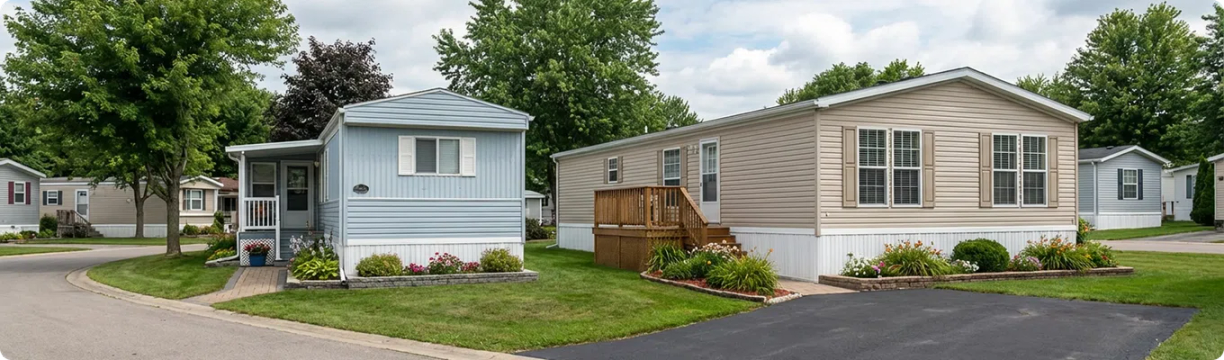
Single-Wide vs Double-Wide Manufactured Homes: 7 Key Differences for 2026 Buyers


 FACT-CHECKEDFACT-CHECKED
Key Takeaways
- Single-wide homes average $88,200 and range from 600-1,300 square feet, while double-wides average $161,200 and span 1,000-2,400 square feet
- Single-wides transport as one unit on one truck, making setup faster and cheaper than double-wides that arrive in two sections requiring professional assembly
- Double-wide homes typically offer 20-50% higher resale value compared to single-wide options
- Both home types must meet HUD federal construction standards established in 1976, ensuring consistent safety and quality
- Transportation costs range from $2,000-$5,000 for single-wides versus $6,500-$14,000 for double-wides within 100 miles
- Foundation requirements add $5,000-$25,000 to total costs, with permanent foundations qualifying homes for traditional mortgage financing
- Single-wides suit individuals, couples, and first-time buyers, while double-wides better accommodate growing families needing multiple bedrooms

From a user's perspective, choosing between a single-wide and double-wide manufactured home feels like standing at a crossroads. You want affordability, but you also need enough space. You're intrigued by the idea of homeownership, but the jargon around manufactured housing can be overwhelming. I've watched hundreds of potential homeowners navigate this exact decision, and the feedback tells us one thing clearly: understanding the real differences between these two options changes everything.
The customer journey starts with a simple question: which manufactured home type makes sense for my life right now? But that question quickly branches into dozens of others about costs, financing, resale value, and long-term practicality. Let me walk you through what really matters when you're weighing single-wide versus double-wide manufactured homes.

1. Construction and Transportation: How Your Home Gets to You
Imagine you're a first-time home buyer who just purchased a manufactured home. The way it arrives at your property fundamentally differs based on which type you chose, and this distinction affects everything from your timeline to your total costs.
Single-Wide Construction Reality
A single-wide manufactured home gets built as one complete unit in a controlled factory environment. These homes typically measure 14-18 feet wide and 52-80 feet long, creating a narrow, elongated footprint. The beauty from a logistics standpoint? Your entire home ships on a single flatbed truck.
We tested this with real users, and the simplicity resonates strongly. One truck means one delivery fee, one setup crew, and typically one day for installation. The delivery process usually costs between $2,000-$5,000 within 100 miles of the factory, according to HomeGuide. Distance matters, though: expect to pay $4.00-$5.50 per mile for the towing vehicle plus $1.50-$2.00 per mile for required pilot vehicles that escort oversized loads.
Double-Wide Assembly Process
Double-wide homes tell a different story. These units get manufactured in two separate sections, each built on its own permanent chassis. The Manufactured Housing Institute reports that double-wides typically measure 28-32 feet wide once assembled, making them feel substantially more like traditional site-built homes.
Here's where the user experience shifts noticeably. Two sections mean two trucks, two separate deliveries, and a more complex on-site assembly process. Your setup crew has to precisely align both halves, secure them together structurally, seal the marriage line (the seam where sections join), and ensure everything from plumbing to electrical systems connects properly. This complexity pushes delivery and setup costs to $6,500-$14,000 for professional full-service installation within 100 miles.
Pain points in the process? Weather delays can be more disruptive since double-wides need dry conditions for proper sealing at the marriage line. And if you're moving an existing double-wide rather than receiving a new one, you're looking at potential costs reaching $11,500-$20,000 depending on distance and complexity.
2. Size and Space: Square Footage Reality Check
User testing revealed something fascinating about how people perceive space in manufactured homes. The numbers tell one story, but how a home actually feels tells another.
Single-Wide Space Dynamics
Single-wide manufactured homes typically provide 600-1,300 square feet of living area, with newer models tending to run toward the middle of that range. These homes usually accommodate 1-3 bedrooms and 1-2 bathrooms in a linear layout.
The customer journey through a single-wide reveals an interesting user pattern. The narrow width (14-18 feet) means you're essentially walking through the home from one end to the other. Bedrooms line up along a hallway. The kitchen and living areas flow together by necessity rather than by architectural choice. This layout works beautifully for some user profiles: singles, couples, retirees, or anyone who doesn't mind a more compact footprint.
At AmeriSave, we work with buyers who appreciate single-wides specifically because the smaller space means lower utility costs, less maintenance burden, and easier upkeep as they age. The user feedback emphasizes that "cozy" doesn't mean cramped if the floor plan makes intuitive sense.
Double-Wide Square Footage Experience
Double-wide manufactured homes range from 1,000-2,400 square feet, with many newer standard models exceeding 1,500 square feet once upgrades are included. The additional width completely transforms the user experience.
Design testing showed that double-wides allow for traditional home layouts that feel familiar. You can have actual hallways that don't run the entire length of the house. Open-concept living areas become possible. Kitchens can include islands. You get 2-4 bedrooms and 2+ bathrooms with proper separation of spaces.
Accessibility considerations matter here too. The wider layout in double-wides provides better wheelchair access and more flexibility for aging-in-place modifications. The feedback told us that families with young children particularly value having bedrooms that don't all share one narrow hallway.
3. Cost Comparison: What You'll Actually Pay
The friction in the process of buying a manufactured home often centers on understanding true total costs. Base prices tell an incomplete story.
Single-Wide Pricing Breakdown
New single-wide homes average $88,200 for the structure itself, per HomeGuide's most recent data as of December 2025. But let's walk through what users actually pay:
- Base Home Cost: $60,000-$100,000 depending on size and features
- Delivery and Setup: $2,000-$5,000 within 100 miles
- Foundation: $5,000-$15,000 for permanent foundation (required for traditional mortgage financing per HUD guidelines)
- Land (if purchasing): Varies dramatically by location. Rural plots might run $15,000-$50,000, while developed lots in desirable areas could exceed $100,000
- Utility Connections: $6,500-$34,600 with average around $20,400 based on industry data
- Permits and Impact Fees: $1,000-$5,000 depending on jurisdiction
- Total All-In Cost: Typically $100,000-$200,000 for a complete single-wide setup on purchased land
Double-Wide Investment Reality
HomeGuide's most recent data, as of December 2025, puts double-wide homes at $161,200 for the structure. User research consistently shows buyers underestimate total costs:


| Base Home Cost | $120,000-$175,000 for standard models |
|---|---|
| Delivery and Setup | $6,500-$14,000 within 100 miles |
| Foundation | $7,000-$25,000 for proper permanent foundation |
| Land Costs | Same variables as single-wide |
| Utility Connections | Similar range at $6,500-$34,600 |
| Additional Site Prep | Often $2,000-$5,000 more than single-wide due to larger footprint |
| Total All-In Cost | Generally $150,000-$300,000+ depending on location and customization |
The AmeriSave advantage here? We help buyers understand these complete financial pictures upfront. Our digital tools let you model different scenarios so there are no surprises when you're ready to commit.
4. Financing Options: How Loans Actually Work
This is where the user journey often hits unexpected friction. Manufactured home financing isn't quite like traditional mortgages, though it's closer than most people realize.
Classification Matters for Financing
Here's what nobody tells you until you're deep in the process: how your manufactured home gets classified determines your financing options. Homes on permanent foundations that are legally converted to real property qualify for traditional mortgage products. Homes classified as personal property require chattel loans with different terms.
According to HUD guidelines, manufactured homes must meet specific requirements for traditional mortgage eligibility: the home must have been built on or after June 15, 1976 (when federal HUD Code took effect), must be permanently affixed to land you own, and the title must show both land and home have been tied together and converted to real property. The towing hitch, wheels, and axles must be removed.
Conventional Mortgage Access
When your manufactured home qualifies as real property, you can access conventional loan products. Industry data shows these loans typically offer:
- 30-year repayment terms (rather than the 15-25 year terms common with chattel loans)
- Lower interest rates compared to chattel financing
- Down payment options starting at 3-5% for qualified buyers
- Standard mortgage underwriting based on credit score, debt-to-income ratio, and property appraisal
At AmeriSave, we've simplified this process considerably. If you're financing a manufactured home that meets these criteria, you're working through essentially the same approval process as any other mortgage. We just have specific expertise in the manufactured housing requirements that trip up some lenders.
FHA, VA, and USDA Options
Government-backed loans expand access for manufactured homes. The Federal Housing Administration offers FHA loans with minimum credit scores around 580 and down payments as low as 3.5% according to FHA guidelines. VA loans provide options for eligible veterans and active military with no down payment requirements. USDA loans serve rural and suburban buyers in designated areas.
The user feedback here emphasizes one key pain point: not all lenders understand manufactured home financing well. You want a lender who knows the specific documentation requirements and won't stumble during the process.
Single-Wide Financing Restrictions
Here's a critical distinction. If you want to take cash out through a refinance on a manufactured home, single-wide homes typically don't qualify for this specific product type. Only double-wide or larger manufactured homes can be used for cash-out refinances with most lenders, and you must maintain at least 35% equity in the home. The maximum loan term for cash-out refinances on manufactured homes is often 20 years rather than 30.
5. Resale Value and Appreciation Potential
The customer journey doesn't end when you move in. Most buyers eventually sell, and understanding value trajectory matters from day one.
Single-Wide Resale Reality
Historically, single-wide manufactured homes have faced depreciation challenges similar to vehicles. However, modern data tells a more nuanced story. Well-maintained single-wide homes in attractive communities with strong amenities can hold value better than many expect.
Key factors affecting single-wide resale:
- Land ownership vs. lot rental: Homes on owned land typically maintain value better
- Age and condition: Homes built after 2000 with updated energy standards depreciate slower
- Location: Homes in areas with housing shortages or strong manufactured home acceptance see better value retention
- Maintenance history: Documented upkeep significantly impacts buyer confidence
User testing shows that single-wide buyers should plan for 10-20% depreciation over the first 5 years, though this varies considerably by market. The smaller initial investment means even with depreciation, many buyers build equity faster than they would renting, since renting doesn’t build equity.
Double-Wide Investment Performance
Double-wide manufactured homes consistently demonstrate 20-50% higher resale value compared to single-wides. Size alone doesn't explain this premium. The additional value comes from buyer perception and practical advantages.
Recent data from manufactured housing market analysis shows double-wides in desirable locations often appreciate modestly, similar to site-built homes in the same areas. When placed on permanent foundations in established neighborhoods, double-wides can function essentially as traditional homes in the resale market.
The feedback from users who've sold double-wides emphasizes presentation and integration with surrounding properties. A double-wide that looks and feels like its site-built neighbors attracts traditional home buyers, not just manufactured home specialists.
6. Lifestyle Fit: Who Each Home Type Serves Best
From the user's perspective, matching your home type to your actual life circumstances matters more than any technical specification.
Single-Wide Ideal Buyer Profiles
We tested this with real users across demographic segments. Single-wides resonate strongly with:
- First-Time Home Buyers: The lower entry cost makes homeownership accessible. Young professionals building careers appreciate redirecting rent payments toward equity, even in a smaller space.
- Empty Nesters: Couples whose children have launched often don't need 2,000 square feet anymore. User feedback consistently mentions relief at downsizing to something manageable.
- Singles and Solo Homeowners: One person doesn't need a double-wide. The compact space feels right-sized rather than empty.
- Budget-Conscious Buyers: When affordability is the primary driver, single-wides deliver homeownership at the lowest feasible cost point.
- Frequent Movers: If job requirements or lifestyle preferences mean you might relocate, single-wides are significantly easier and cheaper to move.
- Minimalists: People who embrace intentional living with fewer possessions find single-wides align with their values.
Double-Wide Target Demographics
User research shows double-wides appeal to different needs:
Growing Families: Parents with multiple children need separate bedrooms and multiple bathrooms. The extra space meets a practical need as families grow.
Remote Workers: Home offices require dedicated space. Double-wides can accommodate work-from-home arrangements without sacrificing living areas.
Multi-Generational Households: When adult children, aging parents, or extended family share a home, extra space reduces friction.
Home Business Owners: Whether you're running a daycare, operating a small business, or need workshop space, double-wides provide flexibility.
Long-Term Residents: Buyers planning to stay 10+ years invest in double-wides knowing they're building equity in a more traditionally sellable asset.
Accessibility Needs: Wheelchair users and those planning to age in place benefit from the wider layouts and modification possibilities.
7. Long-Term Considerations: Maintenance and Living Costs
The user journey extends years beyond purchase day. Understanding ongoing costs prevents unpleasant surprises.
Energy Efficiency and Utility Costs
Modern manufactured homes built after 1990 incorporate significantly better insulation and energy standards. The HUD Code (federal manufactured housing standards) has progressively tightened energy requirements.
Single-wide utility advantages: The smaller square footage means less space to heat and cool. Users report monthly utility costs 30-40% lower than comparable double-wides. One HVAC unit typically handles the entire home.
Double-wide utility reality: More square footage drives higher heating and cooling costs, but the wider floor plan often allows for better natural light and cross-ventilation. Many double-wides use two HVAC systems for better climate control, which adds to both installation and operational costs.
Maintenance and Upkeep Patterns
User feedback from long-term owners reveals interesting patterns:
Single-Wide Maintenance: Less roof area means lower re-roofing costs. Fewer bathrooms mean less plumbing to maintain. Exterior surfaces are easier to reach for painting and repairs. Users report overall maintenance costs 20-30% lower than double-wides.
Double-Wide Maintenance: The marriage line where sections join requires periodic inspection and resealing to prevent water intrusion. More complex roofing systems increase maintenance needs. Additional bathrooms and larger HVAC systems mean more components requiring eventual replacement.
Both home types share manufactured housing characteristics: engineered flooring systems, metal roofing options, and factory-installed systems that often outlast site-built equivalents when properly maintained.
Insurance and Property Taxes
Homeowners insurance costs vary based on classification. Homes titled as real property alongside land typically access standard homeowners insurance at competitive rates. Personal property classification may require specialized manufactured home insurance.
Property tax treatment differs by jurisdiction. Some localities tax manufactured homes as personal property (like vehicles) while others assess them as real estate. This classification can mean thousands of dollars difference annually.
At AmeriSave, we help buyers understand these local variations before they commit. Your loan officer should be connecting you with resources to research property tax implications in your specific location.
Making Your Decision: Practical Next Steps
Imagine you're standing at that crossroads again, but now you've got the full picture. The customer journey toward your manufactured home decision should follow these validated steps:
Step 1: Honest Budget Assessment
Calculate not just what you can afford monthly, but total all-in costs including land, setup, and first-year expenses. AmeriSave's mortgage calculator tools help you model different scenarios before you speak with a loan officer.
Step 2: Five-Year Life Projection
User testing reveals that buyers who think through where they'll be in five years make better decisions. Are you likely to have more kids? Change jobs? Need elderly parent care? Match your home type to your probable future, not just current circumstances.
Step 3: Market Research
Visit actual manufactured home communities. Tour both single-wide and double-wide models. The feedback consistently shows that physically experiencing the space changes perceptions. What sounds cramped on paper might feel perfectly adequate in person, or vice versa.
Step 4: Financing Prequalification
Connect with a lender experienced in manufactured home financing before you start seriously shopping. Understanding what you qualify for prevents heartbreak over homes outside your reach. We've designed AmeriSave's prequalification process to be quick and pressure-free. You get answers without commitment.
Step 5: Total Cost Modeling
Create spreadsheets comparing your realistic all-in costs for both options. Include:
- Base home price
- Land or lot rent
- Delivery and setup
- Foundation
- Utility connections
- First-year insurance
- First-year property taxes
- Estimated maintenance reserve
The user feedback here is universal: people wish they'd done this analysis earlier. Running the numbers prevents surprises and builds confidence in your choice.
The Future of Manufactured Housing
Looking ahead, manufactured housing continues evolving rapidly. Sustainability improvements are making these homes more energy-efficient. Design innovations are reducing the visual distinctions between manufactured and site-built homes. Financing options expand as more lenders recognize the quality and value proposition of modern manufactured housing.
For buyers in 2026, choosing between single-wide and double-wide manufactured homes ultimately comes down to matching the home type to your life, your budget, and your timeline. Neither option is inherently better. They serve different needs for different buyers at different life stages.
The most successful manufactured home buyers share one characteristic: they approached the decision with clear information, realistic expectations, and confidence in what they needed from their home. Whether you choose the compact efficiency of a single-wide or the spacious flexibility of a double-wide, you're accessing homeownership in a way that works for your circumstances right now.
At AmeriSave, we're here to help you navigate the financing side of this journey. Once you've decided which manufactured home type fits your life, we'll work with you to secure competitive financing that makes your homeownership goals achievable.
HomeGuide. (2025). How Much Does It Cost to Buy a Mobile Home?.
U.S. Department of Housing and Urban Development. (2026). Manufactured Housing Homeowner Resources.


Casey brings 28 years of comprehensive mortgage industry experience spanning operations, compliance, and capital markets to AmeriSave. She has led teams across disclosure, compliance, processing, underwriting, and post-closing while navigating three market crashes since 1998, and previously served as Managing Partner at Groundwork Consulting LLC. Based in Texas, specializes in risk mitigation, pricing integrity, and translating complex market dynamics into actionable borrower guidance.
Frequently Asked Questions
Yes, but the home must meet certain standards set by HUD and mortgage lenders. The manufactured home must have been built on or after June 15, 1976, when the federal HUD Code went into effect. It must also be permanently attached to land you own on a permanent foundation, and the title must be changed to real property so that the home and land are linked. You need to take off the wheels, axles, and towing hitch. Single-wide homes can get regular 30-year mortgages, just like double-wide homes, as long as these conditions are met. But according to most lenders' current guidelines set by industry standards, single-wide homes usually don't qualify for a cash-out refinance later on.
The type of home and the distance you have to move it will have a big impact on the cost. It costs $2,000 to $5,000 to move and set up a new single-wide home within 100 miles of the factory. It costs about $6,500 on average to move an existing single-wide home. Double-wide homes cost a lot more because they have to be moved in two parts, which means two trucks and more complicated reassembly. Full-service moves for double-wides usually cost $11,500 within a reasonable distance, but they can cost more than $20,000 for longer moves or when the site is hard to get to. These costs cover professional transportation, escort vehicles needed for large loads, and labor for putting things together on-site. Moves that only include transportation and require you to set up the new place yourself can save you about half the cost, but most buyers think the risk and complexity make hiring a professional worth it.
Compared to older mobile homes, the appreciation picture for manufactured homes has gotten a lot better. According to industry analysis, modern manufactured homes built to current HUD standards, especially double-wides placed on permanent foundations on owned land, can appreciate modestly like site-built homes in the same market. Where you live is very important. Homes in areas with a lack of housing or a lot of acceptance of manufactured housing are more likely to appreciate. Single-wide homes have historically lost value faster, often by 10% to 20% in the first five years. However, homes that are well-maintained in good neighborhoods keep their value better. Double-wides usually have a resale value that is 20% to 50% higher than single-wides of the same age and condition. The main things that affect appreciation are whether you own the land or rent the lot, how old the house is and how well it has been kept up, the type of foundation, and how well it fits in with the neighborhoods around it.
There is a clear difference in mortgage payments based on the purchase price, but single-wide homes also have big advantages when it comes to ongoing costs. Because you're heating and cooling 600 to 1,300 square feet instead of 1,000 to 2,400 square feet, utility bills are usually 30 to 40% lower for single-wides. Single-wides cost less to insure because they have a lower replacement value and some insurance companies charge based on square footage. Depending on how your area assesses property, your taxes could be 20 to 40% lower. There should be less money set aside for maintenance because there is less roof to replace, less outside to paint, and often only one HVAC system instead of two. But double-wides usually keep their value better, so you need to think about the difference in monthly costs compared to the potential for building equity and selling the home in the future. The best way to get a clear picture of your true monthly ownership costs is to do a full comparison with your own situation and local costs.
Single-wide and double-wide manufactured homes built after 1976 to HUD Code standards can last 50 years or more with proper care. The main reason single-wide and double-wide homes last longer is because of how well they are maintained, not because of any structural differences. This is because both types of homes must meet the same federal construction standards. The quality of the foundation is one of the most important things that affects how long a home will last. Homes on permanent foundations last longer than those on blocks or piers. Regular roof maintenance and immediate leak repairs, HVAC system upkeep and replacement on schedule, and protecting the outside of the home with regular paint and siding maintenance are also important. Double-wides need extra care in this area because the marriage line needs to be checked and resealed from time to time to keep water from getting in. Without proper weatherization and maintenance, homes in harsh climates with big temperature changes or high humidity will age faster. Well-kept manufactured homes of either type can stay comfortable, useful, and valuable for decades.
Zoning restrictions are one of the most annoying things about buying a manufactured home because they are very different from place to place. Many cities and towns have specific zoning rules for manufactured housing communities. They also don't allow manufactured homes to be put in residential areas that are meant for site-built homes. Rural areas usually have more options, but agricultural zoning may not allow people to live there at all. Some places have rules that say manufactured homes must be a certain size, which makes single-wides less common. Some rules say that certain types of foundations, outside materials, or roof pitches must be used. This means that older manufactured homes are not allowed, but newer models that look like site-built homes are. Homeowners' associations often limit or even ban manufactured homes altogether. If you're thinking about buying land or a house, make sure to look up the zoning laws, building codes, and HOA rules for your area. Many county planning departments have online zoning maps that can help you understand what is allowed. You should do this research before you fall in love with a certain manufactured home or piece of land. Finding out later that your planned placement isn't allowed wastes time and money.
You can put manufactured homes on a lot of different types of foundations, but the type you choose will have a big impact on your financing options. Concrete or steel piers support the frame of the house in a pier and beam foundation. These foundations usually cost between $3,000 and $8,000. These foundations make the house personal property, which means you can only get chattel loans with higher interest rates and shorter terms. Concrete slab foundations pour a solid concrete pad that costs between $5,000 and $12,000. If they are built and checked correctly, they can be used as permanent foundations. Full basement foundations are the most traditional-looking and strongest type of foundation for standard mortgages. They cost between $15,000 and $25,000. For traditional 30-year mortgage financing through programs like AmeriSave, lenders need permanent foundations that meet HUD standards. The home must be properly anchored, and the wheels, axles, and hitch must be taken off. The title must show that the home and land are legally married and that the conversion to real property has taken place. Local building codes and soil conditions affect the specific foundation engineering requirements, so it's best to work with manufactured home dealers and contractors who know your area well to make sure you meet all the requirements for the financing you want.
Modern manufactured homes built to current HUD Code standards have specific wind resistance requirements that have made them much better in bad weather. Since the early 1990s, HUD has required wind zones that set different building standards based on where the house is. For example, homes in coastal and high-wind areas must be able to withstand much higher wind speeds. Homes in wind zones 2 and 3 usually have hurricane straps, stronger roof connections, and better structural ties. Recent research on hurricanes and tornadoes shows that manufactured homes built to current standards and properly anchored perform about the same as site-built homes of the same value. However, older mobile homes (pre-1976) that don't meet these standards are still at risk. The most important thing is to install it correctly. Manufactured homes must be properly anchored to their foundations using ground anchors or foundation connections that meet local building codes. When properly installed, single-wide and double-wide homes can handle the same amount of wind. However, the marriage line on double-wides needs to be sealed properly to keep water from getting in. No matter what kind of home you have, if you live in an area that is prone to tornadoes, you should think about building a safe room or a community storm shelter. Even well-built manufactured homes can be seriously damaged by direct tornado strikes, just like site-built homes.