



Did You Know Texas Has the Most Expensive Home Insurance in America? $2,978 a Year, and Most Buyers Find Out After They've Signed.


 FACT-CHECKEDFACT-CHECKED
Everyone talks about Florida. AmeriSave's funded loans show the most expensive homeowners insurance in the country is in Texas, at a typical $2,978 a year, and the number on a Texas buyer's loan application is usually lower than the policy they end up paying for. By the time the real premium shows up, the contract is signed.
Key Takeaways
- Texas has the highest typical homeowners premium in the data at $2,978 a year; Louisiana, Oklahoma, and Nebraska follow.
- The national center is $1,800 a year, so a Texas policy runs about 65% above it.
- As a share of home value, Louisiana is highest at 1.11% a year; Texas pays 0.74%, Florida 0.62%.
- The premium on a loan application runs about 8.5% below the policy that gets bound; treat it as a floor.
- Get a bound insurance quote on the specific house before the inspection period ends, not after.

How Much Is Home Insurance in Texas?
About $2,978 a year for the typical home in AmeriSave's data this year, the highest of any state with enough loans to publish. Louisiana is close behind at $2,926, then Oklahoma at $2,822, Nebraska at $2,695, and Rhode Island at $2,549. Florida, the state everyone assumes is first, comes in sixth at $2,521. The national center is $1,800, so a Texas policy runs about 65% above it. Figure 1 shows the top of the table.
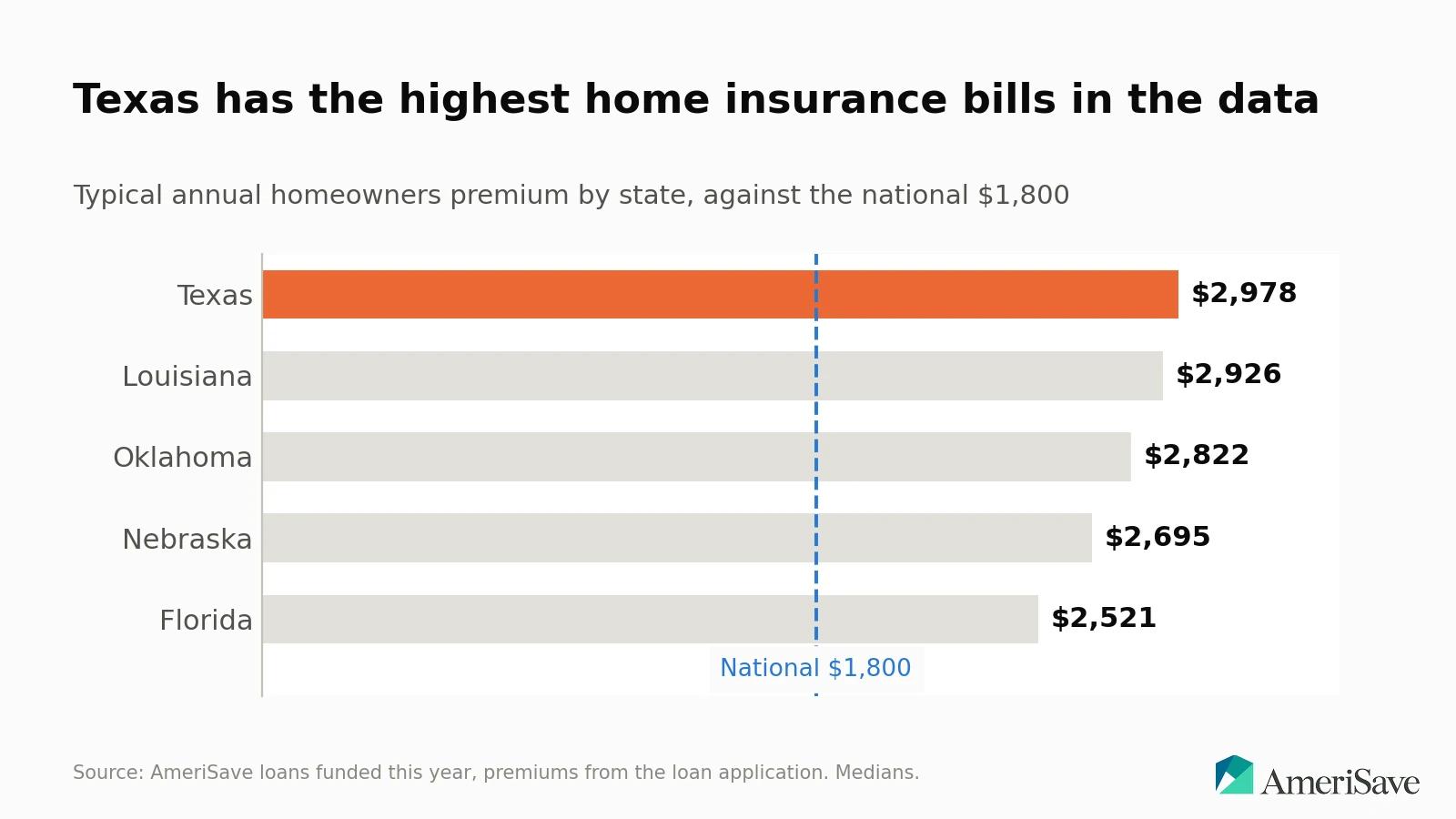
Table 1 lists the twelve most expensive states.
| State | Typical annual premium | Share of home value |
|---|---|---|
| Texas | $2,978 | 0.74% |
| Louisiana | $2,926 | 1.11% |
| Oklahoma | $2,822 | 1.01% |
| Nebraska | $2,695 | 0.84% |
| Rhode Island | $2,549 | 0.45% |
| Florida | $2,521 | 0.62% |
| Colorado | $2,423 | 0.42% |
| Minnesota | $2,385 | 0.64% |
| Mississippi | $2,265 | 0.88% |
| South Dakota | $2,228 | 0.69% |
| Arkansas | $2,215 | 0.79% |
| Kansas | $2,202 | 0.77% |
| National | $1,800 | 0.46% |
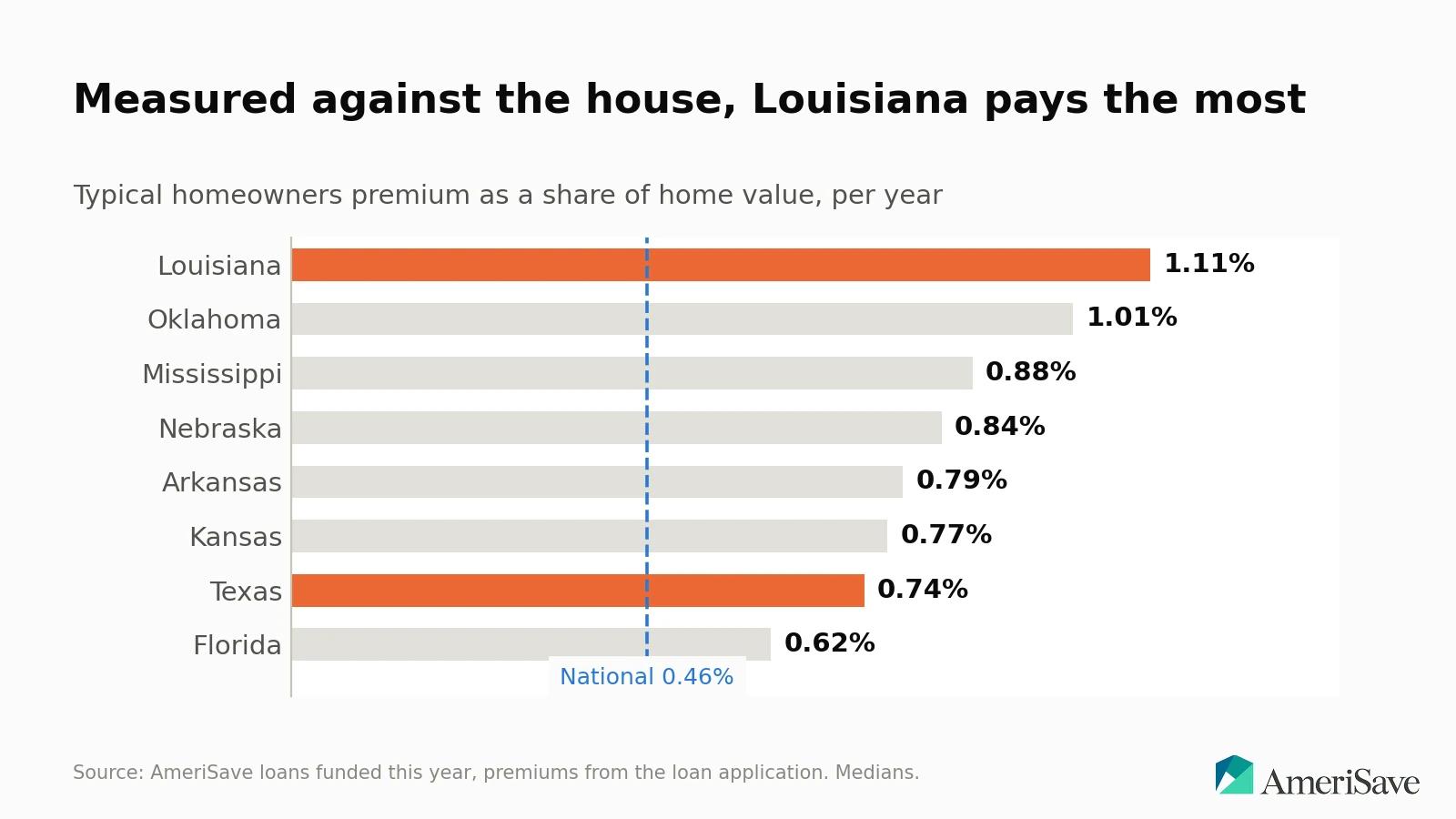
Measured against what the house is worth, the ranking shifts but the lesson doesn't. Louisiana pays 1.11% of home value every year in homeowners insurance, Oklahoma 1.01%, and Texas 0.74%. Florida pays 0.62%. The national figure is 0.46%. The states that get the least coverage in the national conversation are the ones paying the most per dollar of house. Figure 2 ranks them that way.
Texas also has the heaviest total carrying cost of the big states. Among escrowed first mortgages in the data, the typical Texas homeowner pays $583 a month into escrow for taxes and insurance combined, and taxes plus insurance run 1.94% of home value a year, against 1.44% nationally. A quarter of financed Texas homes sit in a county with a declared hurricane in the prior three years.

The Buyer in Fort Worth Who Budgeted From the Estimate
Picture a buyer in Fort Worth with an accepted offer. The loan estimate shows a homeowners premium. The buyer plugs it into the budget, confirms the payment works, and signs.
The premium on that estimate came from the loan application, and in the data the application figure is a floor. When the actual policy is transcribed, its premium runs about 8.5% higher at the center of the data for first mortgages, and about 16% higher for home equity products. The real policy is often bound in the last days before closing, after the inspection period has ended. The buyer sees the real number on the closing disclosure, later than it needed to be, and the gap goes into the escrow payment instead of onto the shopping list.
Then the first escrow analysis arrives a year later and raises the payment again, because the servicer collected on the estimate and paid the policy.
None of this is a reason not to buy, and none of it is the buyer's fault. The fix is simple: move the quote earlier so the number is in hand while it can still shape the decision.
Run the Numbers on a Texas House
Premiums are quoted by the year, but they land in the payment by the month. Table 3 converts the typical premiums in the data into what flows into escrow each month, and adds the 8.5% gap between the application figure and the bound policy.
| Typical annual premium | Per month in escrow | If the bound policy runs 8.5% higher | |
|---|---|---|---|
| Texas | $2,978 | $248 | about $3,231, or $269 a month |
| Louisiana | $2,926 | $244 | about $3,175, or $265 a month |
| Florida | $2,521 | $210 | about $2,735, or $228 a month |
| National | $1,800 | $150 | about $1,953, or $163 a month |
So a Texas buyer who budgeted from a national figure is about $98 a month short on insurance alone, and about $119 a month short if the bound policy comes in at the typical gap. That's the number that shows up in the first escrow analysis.
The whole carrying cost matters more than the premium. Among escrowed first mortgages in the data, taxes plus insurance in Texas run 1.94% of home value a year against 1.44% nationally. On a $300,000 house that's about $5,820 a year, or $485 a month, before principal and interest. On a $400,000 house it's about $7,760 a year, or $647 a month. Put that line in the budget before the offer, not after, and the Texas house is still a sound purchase; it's just a purchase with the full number on the page.
What to Check Tonight
If you're buying, get a bound quote on the specific address during the inspection period, not a generic estimate. Ask for the deductible structure, any separate wind or hail terms, and whether the home is in a flood zone, because that adds a second policy. In Texas, a quote without the wind terms is not a quote.
If you own, pull the declarations page and compare the premium with $2,978 if you're in Texas, or with your state's figure from the full report. Then compare it with what you paid at closing. If the gap is large, the policy was never shopped; it was renewed. Table 2 shows the cheapest end of the data for contrast.
| State | Typical annual premium | Share of home value |
|---|---|---|
| Hawaii | $1,200 | 0.13% |
| Maine | $1,200 | 0.30% |
| Nevada | $1,200 | 0.24% |
| Utah | $1,200 | 0.20% |
| Vermont | $1,215 | n/a |
| Delaware | $1,318 | n/a |
| Oregon | $1,321 | n/a |
| Arizona | $1,340 | 0.30% |
Either way, re-quote the policy before every annual escrow review with matched coverage and deductible. Your servicer must pay a new policy from escrow once you notify it. The insurance line is the one part of the payment that moves with a phone call.
The full report, Texas, Not Florida, Has the Highest Homeowners Insurance Bills, has 49 states plus the District of Columbia, along with the flood zone detail.
Methodology
The premium figures come from all AmeriSave loans funded this year, all products, with the premium taken from the final loan application, which runs below the bound policy and is therefore a floor. States are ranked only where at least 30 loans funded; New York is not in the data. The escrow and carrying-cost figures come from first mortgages funded with an escrow account in the third quarter. Hurricane exposure counts financed homes in a county with a federally declared hurricane in the three years before funding. Data through October 29.
The Bottom Line
Texas, not Florida, has the most expensive homeowners insurance in the data, at a typical $2,978 a year, and the process delivers the real number to buyers after the contract is signed. Get a bound quote on the actual house during the inspection period, compare an existing policy with the state figure, and re-shop before every escrow review. A purchase preapproval through AmeriSave that flags flood status and builds the full payment, insurance included, is the version of this process where the number arrives before the decision instead of after.
AmeriSave internal funded-loan data, Climate Risk and Insurance Report, all loans funded year to date, data through October 29, 2026. Internal, not publicly available.
AmeriSave internal funded-loan data, Escrow Shock Index, first liens funded with escrow, data through October 27, 2026. Internal, not publicly available.
AmeriSave, "Texas, Not Florida, Has the Highest Homeowners Insurance Bills. Louisiana Pays More Than 1% of Home Value Every Year," the full report behind this article.
Consumer Financial Protection Bureau, Regulation X, 12 CFR 1024.17, Escrow accounts; supports cushion and shortage rules:
FEMA, Disaster Declarations Summaries (OpenFEMA); supports the declared-disaster concept:


Casey brings 28 years of comprehensive mortgage industry experience spanning operations, compliance, and capital markets to AmeriSave. She has led teams across disclosure, compliance, processing, underwriting, and post-closing while navigating three market crashes since 1998, and previously served as Managing Partner at Groundwork Consulting LLC. Based in Texas, specializes in risk mitigation, pricing integrity, and translating complex market dynamics into actionable borrower guidance.
Frequently Asked Questions
Because the exposure is broad and the premiums reflect it. A quarter of financed Texas homes in AmeriSave's data sit in a county with a federally declared hurricane in the prior three years, and the state also carries hail and severe storm risk across its interior. The typical Texas premium is $2,978 a year, about 65% above the national $1,800, and the total carrying cost of taxes plus insurance runs 1.94% of home value against 1.44% nationally. Texas policies also commonly carry separate wind and hail deductibles, so the quoted premium understates what a storm would cost out of pocket.
Get a bound quote on the specific address during the inspection period. The premium on your loan estimate comes from the application, and in the data that figure runs about 8.5% below the policy that is actually bound for first mortgages. Ask the agent for the full deductible structure, including any wind or hail deductible, and confirm whether the home is in a FEMA high-risk flood zone, which adds a separate flood policy. Plug the bound figure, not the estimate, into the payment you're approving. If the number changes the decision, you still have the option to walk away.
In AmeriSave's data this year, Hawaii, Maine, Nevada, and Utah share the lowest typical premium at $1,200 a year, followed by Vermont at $1,215, Delaware at $1,318, Oregon at $1,321, and Arizona at $1,340. As a share of home value, Hawaii is lowest at 0.13% and Utah at 0.20%. These are the centers of the data for each state, not quotes, and an individual policy depends on the house, the coverage, and the deductible. The gap between the cheapest states and Texas is more than $1,700 a year on the typical policy.
Your servicer runs an escrow analysis once a year. If the premium it paid was higher than it collected, the account comes up short, and the servicer raises your monthly payment to cover both the shortage and the higher go-forward premium. Federal escrow rules let a shortage be spread over at least twelve months, and the servicer may also hold a cushion of up to one-sixth of the year's disbursements. The increase lands after the money has already been paid out, which is why a premium that was never shopped keeps raising the payment year after year.