


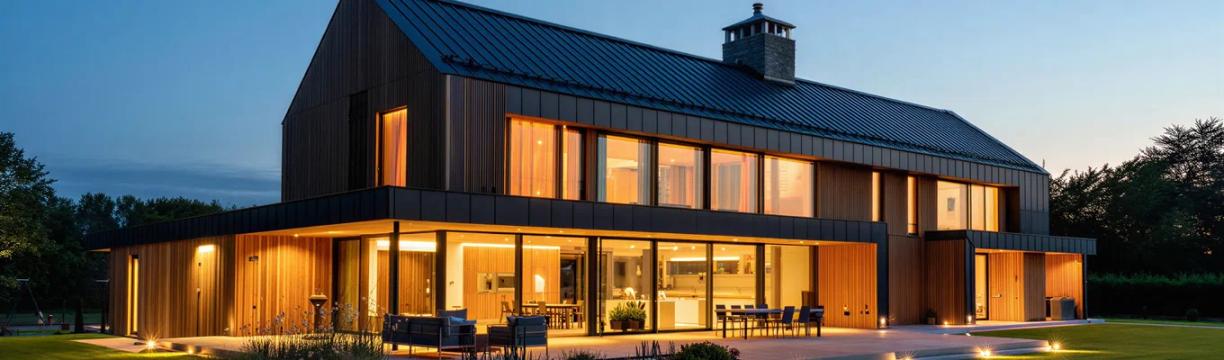
Can You Get a VA Loan for a Barndominium? A 2026 Guide for Veterans


 FACT-CHECKEDFACT-CHECKED
Yes, a VA loan can finance a barndominium, but zoning rules, appraisal comps, and lender overlays create real hurdles you'll want to clear early. If you're weighing this path, this guide covers what the VA actually requires, where the financing options fork, and how you can reach closing without surprises.
Key Takeaways
- If you have full entitlement, there's no hard loan-dollar cap on VA barndominium financing.
- The structure must be classified as residential real property under state law before a VA loan can close.
- No VA minimum square footage exists, though most lenders impose their own 400-square-foot overlay.
- Many VA-approved lenders decline barndominium files through overlays, so ask first if they've closed one before.
- A VA one-time-close construction loan covers land and build in one closing, saving money versus two-time-close.

What Is a Barndominium and Why Veterans Are Drawn to Them
A barndominium is a residential structure built on a steel, metal, or post-frame shell that incorporates living quarters, sometimes alongside a workshop, garage bay, or open agricultural area. The NAHB Housing Market Index builder survey published by NAHB's Eye on Housing found that 7% of single-family builders had constructed barndominiums in the prior twelve months; of those, 70% combined residential space with shop or workshop areas, and 9% converted existing barns into living spaces. That builder-adoption rate has climbed steadily, and for good reason.
The cost advantage is real. HomeGuide's national cost data puts a finished barndominium at $65 to $160 per square foot for basic to mid-range finishes, with a 2,000-square-foot build running $150,000 to $315,000 and a national average near $230,000. Traditional stick-built new construction at comparable finishes runs $150 to $200 per square foot, meaning a mid-range barndominium typically comes in 20 to 35% below the equivalent stick-built home.
For veterans, the appeal layers on top of that cost advantage. If you find the right barndominium parcel in a barndominium-friendly county, a VA loan's zero-down requirement means you can move toward ownership without burning down your savings. The acreage flexibility is another draw: barndominiums typically sit on larger rural lots, which pairs naturally with what a lot of veteran buyers are actually looking for: land, space for a shop, room for hobbies or a small farming operation. If you're searching for that combination in a corridor like North Texas, for example, you'll often find that a barndominium on a few acres costs less to build and own than a conventional home on a quarter-acre suburban lot.

VA Loan Eligibility and What the Conforming Loan Limit Means for You
Before the property conversation, you need to know where you stand on eligibility. VA.gov's eligibility guidance covers the main service categories: active-duty members with 90 continuous days of service, Gulf War era veterans with 24 months of continuous service or the full period they were called, and National Guard members with 90 days of non-training Title 10 active duty or six creditable years of selected reserve service.
Once you establish eligibility, the current conforming loan limit matters if you've used your VA loan benefit before and have remaining rather than full entitlement. The Federal Housing Finance Agency set the standard-county single-family conforming loan limit at $832,750, a figure that affects the partial-entitlement calculation directly. Your VA guaranty equals 25% of the conforming loan limit minus any previously used and unreturned entitlement. If you used $100,000 of entitlement on a prior loan that was never fully restored, your remaining guaranty is 25% of $832,750 minus $100,000, or $108,187.50.
If you have full entitlement, you face no hard dollar cap. The current limit is the ceiling that constrains only partial-entitlement borrowers, something worth confirming with your lender before you fall in love with a property.
If you want a deeper walkthrough of the entitlement math and restoration process, AmeriSave's guide to VA loan entitlement covers the mechanics in full.
Buying an Existing Barndominium with a VA Loan
VA Minimum Property Requirements
VA Pamphlet 26-7, Chapter 12 sets the property standards every VA appraisal checks. For a barndominium, the critical requirements are:
- A permanent foundation meeting state and local standards
- Real-property classification under state law
- Safe, structurally sound, and sanitary conditions
- Functioning utilities (heat, electrical, plumbing)
- Adequate roofing
- Continuous clean water supply
- Safe sewage disposal
- All-weather street access
- Accessible and vented crawl spaces and attics
No VA minimum square footage exists in the rulebook. In practice, however, most lenders have imposed a 400-square-foot overlay on their own programs, meaning even if VA would approve a tiny footprint, the lender won't. For a detailed breakdown of VA appraisal and inspection mechanics, AmeriSave's VA loan inspection and appraisal requirements guide is the right reference.
Zoning Verification Before You Make an Offer
This is the step that kills transactions when buyers skip it, and it's entirely avoidable. Barndominiums sit in a structural zoning conflict: they look like agricultural buildings, but they need to be classified and permitted as residential structures for a VA loan to work. Agricultural zones may restrict buildings to primarily agricultural purposes. Residential zones can require variances for metal-sided exteriors. Either situation can block your loan after a contract is signed.
Before you make an offer on any barndominium (or select a build site), pull the parcel's zoning designation from the county assessor or GIS portal. Confirm that residential use is permitted, and verify that the structure is or can be classified as residential real property on the tax assessment rather than agricultural or commercial. If you pursue a zoning variance after a contract is in place, that's a high-risk move that can void months of work. Alldraft's barndominium zoning and permitting guidance documents this conflict pattern in detail.
A practical step: call the county planning department directly and ask two questions: "Is residential occupancy permitted on this parcel?" and "How is this structure classified on the tax assessment?" Those two answers tell you whether the property is VA-loan eligible before a single dollar changes hands.


The Comparable-Sales Problem and How to Mitigate It
VA appraisers are required to identify three comparable sales to support a barndominium's value. In counties where barndominiums are uncommon, that comp search can come up short, and an insufficient-comps finding delays or kills an appraisal.
The VA Loan Network's barndominium guidance identifies Texas, Oklahoma, Arkansas, Tennessee, and Florida as the states with the deepest barndominium comp pools. Mixed-comp methodology (adjusting traditional rural sales for construction type differences) is acceptable when same-type comps are unavailable, but it introduces appraiser discretion that can compress the final value.
The actionable mitigation is to run your own comp research before you apply. Ask a local real estate agent familiar with rural sales to compile recent barndominium or comparable rural sales within 25 miles of the target property. Bring that research to your loan officer at application so it can be handed to the VA appraiser as supporting material at order. That one step can prevent a comps-gap finding from stalling the deal.
The VA Funding Fee: Exact Numbers for a Barndominium Purchase
The VA funding fee applies to barndominium purchases exactly as it does to any VA purchase loan. The current fee structure for purchase loans is:
- First-time use, less than 5% down: 2.15%
- First-time use, 5% to 9.99% down: 1.50%
- First-time use, 10% or more down: 1.25%
- Subsequent use, less than 5% down: 3.30%
- Subsequent use, 5% or more down: 1.50%
- Subsequent use, 10% or more down: 1.25%
Exemptions apply if you're currently receiving VA service-connected disability compensation, if you're a surviving spouse receiving Dependency and Indemnity Compensation, if you're an active-duty member with a Purple Heart evidenced at or before closing, or if you have a proposed or memorandum disability rating in place before closing.
Worked Example A: Funding fee on a $250,000 barndominium purchase (first-time use, 0% down):
Inputs: $250,000 purchase price; first-time VA loan use; 0% down payment.
Fee calculation: 2.15% × $250,000 = $5,375.
If you finance the funding fee into the loan (the most common approach), your base loan amount becomes $255,375. At an illustrative 7% rate over a 30-year term, the monthly principal and interest payment on $255,375 is approximately $1,699. Without the financed fee, the same $250,000 at 7% produces a monthly payment of approximately $1,663. The difference is about $36 per month, which is the cost of rolling the funding fee into the loan rather than paying it at closing. That math can help you decide whether it's worth bringing $5,375 to the table or absorbing the small monthly premium.
For a full funding-fee table and closing-cost context, AmeriSave's VA loan closing costs guide has the comprehensive breakdown.
Building a Barndominium: OTC vs. Two-Time-Close
If buying an existing barndominium isn't your goal and you want to build instead, the financing structure gets more nuanced. Two main paths exist, and they differ substantially in cost and accessibility.
One-Time-Close Construction Loans
A VA one-time-close (OTC) construction loan covers the land acquisition and the build in a single closing. The rate is locked at the start of construction. Funds draw to the builder in stages as work progresses. When the certificate of occupancy is issued, the loan automatically converts to a permanent VA mortgage with no second closing, no second closing-cost set, and no second appraisal. VA's construction-loan guidelines require the builder to be licensed and insured; owner-builder arrangements are not permitted; lenders may charge up to a 2% construction management fee; and formal draw escrows are required throughout the build.
Two-Time-Close Construction Loans
The two-time-close path uses a conventional construction loan to fund the build, then a standalone VA cash-out refinance to convert the completed structure to permanent VA financing. This path is more accessible because far more conventional lenders participate in construction lending than offer VA OTC programs, but it costs more.
VA's purchase and cash-out refinance program guidance explicitly covers "refinancing of construction loans to permanent loans" under the cash-out program. The refinance can go up to 100% of the appraised value of the completed structure. The net tangible benefit test is satisfied when the new VA loan pays off an interim construction loan. You must own and occupy the home at the time of refinance.
Worked Example B: OTC vs. two-time-close on a $230,000 barndominium build:
Inputs: $230,000 finished build; national average project cost; 12-month construction period for the two-time-close path.
OTC path costs:
- One closing: illustrative closing costs of $6,000
- VA funding fee (first-time use, 0% down): 2.15% × $230,000 = $4,945
- Total OTC path entry costs: approximately $10,945
Two-time-close path costs:
- Conventional construction loan closing: illustrative $4,000
- Construction-period interest: at an illustrative 10% on an average draw balance of $115,000 (half the build cost) over 12 months = $11,500
- VA refinance closing: illustrative $4,000
- VA funding fee on the refi: 2.15% × $230,000 = $4,945
- Total two-time-close path entry costs: approximately $24,445
Differential: in this illustration, the OTC path costs approximately $13,500 less than the two-time-close path, primarily because the two-time-close incurs two closing-cost sets and a full year of construction-period interest on the conventional loan.
The tradeoff is access. If you can't find a lender with an active VA OTC construction desk for barndominiums, you may have no choice but to use the two-time-close path, accepting the higher total cost in exchange for the lender's willingness to fund the project.
The Lender Overlay Problem
Lender overlays are the single most important thing to understand about barndominium VA loans. They tend to surface mid-process, once a buyer is already under contract and has less room to switch lenders.
The VA sets the minimum standards. The lender sets additional requirements (called overlays) that are stricter than VA minimums. And many VA-approved lenders have overlays that effectively exclude barndominiums altogether, regardless of whether the property meets every VA standard.
The VA Loan Network's barndominium guidance documents the most common overlays: blanket exclusion of post-frame or metal-building structures as a property type; 400-square-foot minimums; requirements for three or more recent same-type comparable sales within the county; no active OTC construction desk for this property class. You can receive a Certificate of Eligibility, find a zoning-compliant property, and pass every VA MPR and still get your file declined before it reaches a VA underwriter, all because of a lender-level policy.
Every situation is different, but the screening question is the same for everyone: before you submit a loan application, ask the lender directly: "Have you closed a barndominium VA loan in the last twelve months? What overlays does your program have for post-frame or metal-frame construction?" If a lender can't answer that question specifically, they've probably not done it.
AmeriSave has closed barndominium-type files and can tell you directly whether a specific property type fits the current program guidelines. Have that conversation before your application, while you can still adjust course.
Four Failure Points in Underwriting
Even with a compliant property and a willing lender, four underwriting failure patterns account for the majority of declined barndominium VA files.
1. Appraisal: no comparable sales or value below contract. If an appraiser can't find three recent comparable sales, they may not complete the appraisal, or may assign a value well below the contract price. The mitigation is the comp-research step described above: bring the data to your lender at application.
2. Zoning: agricultural or commercial classification. If the county assessor classifies the parcel or structure as agricultural or commercial, VA loan issuance is blocked. This one has no workaround after the contract is signed. It requires either a successful variance (months of process, uncertain outcome) or walking away. Verify zoning before you make an offer.
3. Foundation: inadequate or non-permanent. A pier-and-beam or skid foundation that doesn't meet state and local permanent-foundation standards will fail the VA MPR check. Get the foundation type confirmed by the listing agent and verified by a structural inspector before you go under contract.
4. Lender overlay rejection before underwriting. The file never reaches a VA underwriter because the lender's own policy excludes the property class. This happens at the application screening stage and is entirely avoidable if you ask the lender screening questions upfront. The VA Loan Network's overlay research shows this is a more frequent cause of file failure than any MPR defect.
Alternative Financing If VA Doesn't Work
Some barndominium transactions don't work as VA purchases, typically because the property can't meet the permanent-foundation or zoning requirements, or because your entitlement situation creates constraints. In those cases, alternatives exist.
USDA guaranteed loans cover rural single-family properties including non-traditional construction types in eligible geographic areas, also with zero down. FHA loans allow 3.5% down and have property standards that parallel VA MPRs, though they add upfront and ongoing mortgage insurance premiums. Conventional financing with a portfolio lender (a bank or credit union that holds loans in-house rather than selling them) can sometimes fund barndominium construction where secondary-market lenders can't, because portfolio lenders set their own property standards.
A conventional construction-to-permanent loan followed by a VA cash-out refinance at completion remains the most common alternative if your property qualifies for VA permanent financing but no VA OTC construction lender is available. The higher entry cost is real, but it keeps you on the VA permanent loan at the end.
The Bottom Line
VA loans and barndominiums can work together, but this is a file type that rewards veterans who do their homework before they fall in love with a property. Verify zoning and real-property classification at the county level before any offer. Run comparable-sales research before you apply. Ask every prospective lender the two questions that separate barndominium-experienced lenders from ones who'll decline the file at screening. Know your funding fee and whether you qualify for an exemption. And if you're building from scratch, run the OTC vs. two-time-close math for your specific project cost before you choose a financing path.
The goal should always be to keep your path to closing as clear as possible. That means answering every question upfront, matching the financing structure to your actual property and entitlement position, and making sure nothing sits waiting for a follow-up that never comes.
If you're ready to find out whether a specific barndominium property fits VA loan guidelines, AmeriSave's VA loan team can walk through the property type, your entitlement, and current program parameters before you're under contract and the clock is running.
Federal Housing Finance Agency: sets the standard-county conforming loan limit used in the partial-entitlement calculation.
U.S. Department of Veterans Affairs, Funding Fee and Closing Costs: supports the VA funding fee rate table and exemption categories.
U.S. Department of Veterans Affairs, Eligibility for VA Home Loan Programs: supports the service-category eligibility requirements.
U.S. Department of Veterans Affairs, Purchase and Cash-Out Refinance Home Loans: supports the two-time-close refinance mechanics and net tangible benefit test.
U.S. Department of Veterans Affairs, VA Offers Construction Loans for Veterans to Build Their Dream Homes: supports the one-time-close construction loan structure.
NAHB Eye on Housing: supports the builder-survey data on barndominium construction adoption.
HomeGuide: supports the barndominium and stick-built cost-per-square-foot figures.
VA Loan Network: supports the lender overlay patterns and the state-level comparable-sales pool data.
BuildBuyRefi: supports background on barndominium construction loan options.


Jerrie leads sales operations in the Dallas-Fort Worth region for AmeriSave, where his entire mortgage career has been spent since being recruited into the industry at age 18. Licensed as a Mortgage Loan Originator in 37 states, he specializes in making complicated loan options accessible and helping borrowers understand what matters most in their individual situations. He brings deep regulatory knowledge and a client-centric approach honed through progression from entry-level to upper management, including successfully onboarding and training 70 people from a closed Cleveland office.
Frequently Asked Questions
Yes. VA Pamphlet 26-7, Chapter 12 requires that any property financed with a VA loan be on a permanent foundation meeting state and local standards. The foundation must be capable of withstanding loads imposed by the structure and must anchor the building to prevent movement. For barndominiums, the most common foundation types that satisfy VA requirements are concrete slab or concrete perimeter foundations. Pier-and-beam systems may qualify if engineered and permitted to local permanent-foundation specifications, but skid foundations (common on agricultural structures) don't meet VA standards. If you're purchasing an existing barndominium, ask for documentation of the foundation type and have a structural inspector confirm it meets local code before you go under contract.
Yes, in most cases. A VA one-time-close construction loan can cover both the land and the build in a single closing. If you already own the land, the equity in that parcel can count toward the overall transaction. The builder must be VA-approved: licensed, insured, and able to provide a detailed construction contract. Owner-builder arrangements aren't permitted under VA construction-loan rules. If you own land outright, an alternative is to finance the build with a conventional construction loan, then refinance to a permanent VA loan using the VA cash-out program once the certificate of occupancy is issued. Either path requires the completed structure to meet all VA minimum property requirements.
Lenders are permitted to impose requirements that go beyond VA minimums (called overlays), and many do. Common barndominium overlays include blanket exclusions of post-frame or metal-building construction as an eligible property type, minimum 400-square-foot requirements, mandatory three recent comparable sales within the county, and the absence of an active one-time-close construction desk. These overlays come from individual lender policy, layered on top of VA's own minimums. If your file is declined by one VA-approved lender, ask for the specific overlay reason, then contact lenders who specialize in rural and non-traditional property types. The VA Loan Network's research confirms that the lender pool for barndominium VA files is narrower than for conventional residential properties, but it exists.
The VA funding fee for a first-time-use purchase with less than 5% down is 2.15% of the loan amount. On a $300,000 barndominium purchase, that equals $6,450, which can be financed into the loan or paid at closing. For subsequent use of your VA loan benefit with less than 5% down, the fee rises to 3.30%. Exemptions eliminate the fee entirely if you're currently receiving VA service-connected disability compensation, if you're a surviving spouse receiving Dependency and Indemnity Compensation, if you're an active-duty member with a Purple Heart documented at or before closing, or if you have a proposed or memorandum disability rating before closing. Your certificate of eligibility will indicate disability status; confirm the exemption with your lender before closing to make sure the fee is properly waived.
Start before you apply. Ask a local real estate agent with rural-property experience to pull recent sold listings within 25 miles of your target property that are either barndominiums or similar rural structures with large shop or workshop components. Aim for at least three sales within the past twelve months. Bring that list to your loan officer at the application stage so it can be provided to the VA appraiser at order. States with the deepest barndominium comp pools are Texas, Oklahoma, Arkansas, Tennessee, and Florida. In thinner markets, an appraiser may use a mixed-comp methodology, adjusting conventional rural sales for construction-type differences, but that approach introduces more appraiser judgment and can result in a lower-than-expected value. Your advance research is the best tool to prevent that outcome.
Yes, if you have remaining entitlement. The current conforming loan limit, set by the Federal Housing Finance Agency at $832,750 for standard-county single-family properties, is the anchor for the partial-entitlement calculation. Your remaining VA guaranty equals 25% of that limit minus the amount of entitlement you've already used and not restored. For example, if you previously used $80,000 in entitlement, your remaining guaranty is (25% x $832,750) minus $80,000, or $128,187.50. That guaranty amount determines how large a loan you can take without a down payment under VA rules. If the required guaranty for your barndominium loan exceeds what remains, a down payment covering the gap may allow the loan to proceed. AmeriSave's VA loan entitlement guide walks through restoration scenarios in full.