


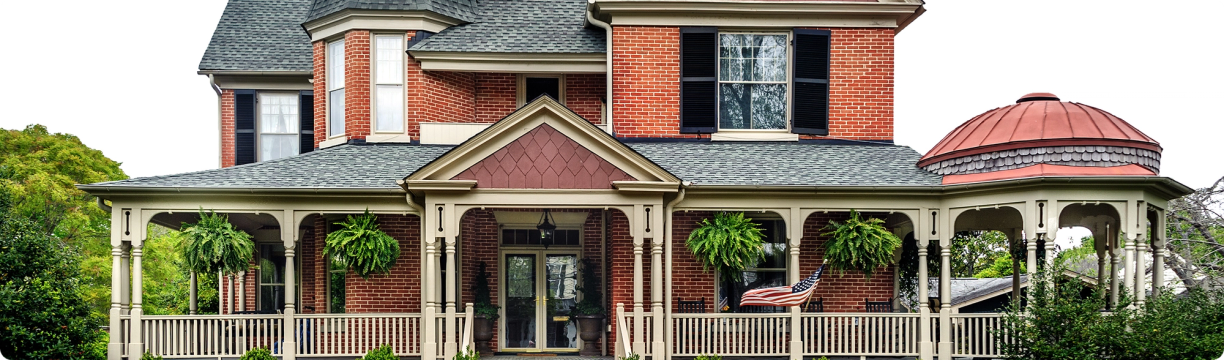
Buying a Historic Home in 2026: How to Match the Right Financing to a One-of-a-Kind Property


 FACT-CHECKEDFACT-CHECKED
Financing the purchase of a historic home is less about the home and more about the paperwork; the financing, appraisal and rehabilitation budget all need to be appropriate for a property that is unlike any other on the street. This article clarifies which incentives really apply, how to match a loan to the real state of a historic home and where buyers run into problems.
Key Takeaways
- A listing on the federal National Register carries no restrictions on a private owner, but local historic-district rules determine what can be changed. Before you buy, be sure what designation applies.
- The hardest part of buying a historic property is the financing. The best solution is not a one-size-fits-all loan, but rather depends on the condition of the house and your plans for rehabilitation.
- Renovation loans, such as the FHA 203(k) and Fannie Mae HomeStyle, are based on the home’s after-repair value and include the purchase price and renovations in one mortgage.
- The 20% federal Historic Rehabilitation Tax Credit applies to non-owner-occupants.
- Owner-occupants should check with state programs and their State Historic Preservation Office. It applies only to revenue producing structures.
- A historic home needs an inspector and assessor who have experience with older homes as a standard home search does not take into consideration the property’s value and risks.
- Specialized homeowners insurance for older or historic homes is usually more expensive, so you want to price it before you submit an offer, not after.
- Have a firm budget and don’t chase a house that the loan won’t cover. Historic houses are fast movers. First, get approval and align your financing.

Why a Historic Home Is a Different Animal
Every borrower is different, and a historic home is an important part of that reality. When someone tells me they have fallen in love with a historic house with amazing bones, the first thing I want to understand is not the house. It’s the big picture, what the buyer plans to do with the house, what it actually needs, how the financing has to be customized to a one-of-a-kind property. Buying a historic home is typically no more difficult than a normal purchase. But it is a different file, and good buyers get caught off guard if they treat it as if it was any other.
The majority of articles on buying historic homes will tell you the same things; you get to own a piece of history and become part of a community that values preservation, but you’ll also have to deal with more restrictive regulations, more expensive repairs, and more difficult financing arrangements. However, the financing component, which gets only one sentence in most guides, is what really determines whether your dream home becomes your home or is a deal that falls apart at closing. That’s the area I want to pay the most attention to since I work on matching the right financing to the right property every day and it’s where a historic purchase is made or lost.
Because buyers often have misconceptions about what makes a home historic, let’s start with what that definition entails, and what it does not require of you. Then we’ll talk money: how do you pay for a house that may need some upkeep, which incentives are valid and which are often misunderstood, and how the appraisal and insurance aspects of an older home work differently. All the figures that you see here come from a primary source, because this is the work that my staff at AmeriSave does every day. If the conventional wisdom is wrong, I will say so. You have every right to ask questions about an old house. You deserve honest answers.

What Actually Makes a Home Historic, and What That Means for You
There is a difference between an old house and a historic one, and the difference matters for your plans. A home being charming or a century old does not make it historic in any official sense. The federal benchmark comes from the National Register of Historic Places, the official list of the country's properties considered worthy of preservation, administered by the National Park Service. To be eligible, a property generally needs to be at least 50 years old, retain its historic integrity, and meet at least one of four criteria: it is connected to significant historical events, it is connected to the lives of significant people, it embodies the work of a master or a distinctive architectural style, or it has the potential to yield important historical information.
The scale here is larger than most buyers realize. The National Park Service reports that more than 95,000 listings are on the National Register, representing over 1.4 million individual resources across nearly every county in the country. So a historic home is not a rare unicorn confined to a few famous neighborhoods; there is likely a pool of them within reach of wherever you are shopping. But listings come in two very different flavors, and confusing them is the single most common mistake I see buyers make about old houses.
Federal Listing Versus Local District: The Distinction That Changes Everything
Here is the part that surprises people. Being listed on the federal National Register, by itself, places no federal restrictions on you as a private owner. The National Park Service is explicit about this: you may do with the property as you wish, within the framework of local laws. A federal listing is largely honorific, and it can open the door to certain preservation programs, but it does not, on its own, tell you what color you can paint your trim.
What does restrict you is a local historic-district designation. Historic districts can be designated at the federal, state, or local level, and the local ones are typically the most demanding. When a property sits in a locally designated district, owners usually must obtain permits for any work affecting the home's exterior, from additions to demolitions to alterations, and the oversight can be stricter than the rules many homeowners associations enforce. This is why I tell buyers to stop asking is this house historic and start asking which designation applies to this specific address. A federally listed home with no local overlay gives you broad freedom. A home inside a local historic district comes with a rulebook you need to read before you write an offer, not after. Every property is a different file, and the designation is the first page of it.
The Financing Playbook Most Guides Skip
Now the part that decides everything. The most common warning you will read about historic homes is that financing can be harder, that some lenders shy away from older properties, and that you should get preapproved early. That is all true, but it is the beginning of the conversation, not the answer. The real question is the same one I ask every borrower at AmeriSave: what does this specific property need, and which loan is built to handle it? With a historic home, the condition of the house and your renovation plans should drive the loan choice, not the other way around.
Start by being honest about the home's state. A well-preserved historic home that is move-in ready is, from a financing standpoint, close to a normal purchase, and a standard conventional or government loan can work. The complication arrives when the house needs work, which historic homes often do, because then you are financing two things at once: the purchase and the repairs. Paying for the house with a mortgage and then scrambling to fund a new roof, updated wiring, or foundation work out of pocket is how buyers drain their savings and stall halfway through a project. This is exactly the situation renovation loans were built for, and they are the most underused tool in the historic-home toolkit. A buyer who knows this option exists can confidently make an offer on a home that needs real work, while a buyer who does not know it tends to either overpay for a move-in-ready home or walk away from a property that a renovation loan would have made entirely workable.
Renovation Loans: One Mortgage for the House and the Work
A renovation loan finances the purchase price and the cost of repairs in a single mortgage, and it sizes the loan against the home's after-repair value rather than its current condition. That last detail is the whole point. On a property that needs work, borrowing against what the home will be worth once the work is done gives you far more room than borrowing against its as-is state. There are two main paths, and which one fits depends on your credit, your down payment, and the type of work the house needs.
The FHA 203(k) is the more forgiving option on credit and down payment. It is a government-backed loan that wraps purchase and renovation into one mortgage with a down payment as low as 3.5% and a credit score floor of 580 under FHA guidelines, though many lenders set their own bar higher because these loans are more complex to manage. It comes in two versions: a Limited 203(k) for non-structural work up to $75,000, and a Standard 203(k) for larger or structural projects, which is often where a historic home lands. The trade-off is that FHA loans carry mortgage insurance, and 203(k) loans are for primary residences only. If your credit and savings are modest and you intend to live in the home, this is frequently the path that fits.
The Fannie Mae HomeStyle loan is the conventional counterpart, and it suits a stronger file. It also combines purchase and renovation into one mortgage, with a minimum credit score around 620, a debt-to-income ratio generally under 45%, and a down payment as low as 3% for qualified buyers. It is more flexible about the type of work allowed, and crucially, if you put down 20% you can avoid mortgage insurance entirely, which a 203(k) cannot offer. For a buyer with good credit and some equity or savings, HomeStyle often beats the 203(k) on long-term cost. This is the classic contrast I walk borrowers through: a 203(k) might be wrong for me personally because I have the credit and the down payment to do better, but for a buyer with a 590 score and limited cash, the 203(k) is exactly the right tool. Neither loan is better in the abstract. The better loan is the one that fits your file and your house.


At AmeriSave, this matching work is the conversation I want to have before a buyer falls in love with a specific property. Knowing in advance that you qualify as a 203(k) candidate or a HomeStyle candidate changes the price range you should be shopping and the level of fixer you can realistically take on. It is far easier to set that upfront than to discover at the appraisal that your financing and your house were never going to fit together.
When a Renovation Loan Is Not the Answer
Sometimes the right move is not a renovation loan at all, and I would rather tell you that than sell you a product. If the historic home is already well preserved and you are buying it to live in as-is, a straightforward conventional or government purchase loan is simpler and usually cheaper than a renovation loan, which carries extra steps, inspections, and oversight. And if you already own a historic home and want to fund improvements over time, tapping your existing equity through a cash-out refinance or a home equity line of credit can make more sense than a purchase-plus-renovation product. The point is not to reach for the fanciest tool. It is to match the financing to what you are actually doing, which is the same principle whether the house is 5 years old or 105.
How a Renovation Loan Actually Works Once You Close
Buyers are often surprised about how a renovation loan works after closing so it’s helpful to understand the structure of a renovation loan before you commit. When it comes to the HomeStyle and the FHA 203 (k), the renovation funds aren’t in your bank account on closing day. That’s paid into an escrow account and, as the work is done and inspected, your contractor is paid in installments, called draws. This structure protects you because funds are released against work done, not given to you upfront. But it also means you have to plan and budget for your renovation before you close, not as you go. You will need formal estimates from a contractor and for larger projects an architect as part of the loan.
So it’s worth getting a historic home ready. The inspection report forms the basis of your loan as the work needs to be planned and costed in advance. It tells you what the house needs which informs the estimates and determines the amount of the renovation portion of the mortgage. A consultant may be needed to verify the scope and keep the drawings on time for a larger Standard 203(k) or a major HomeStyle project. This is not an excuse not to take out a renovation loan for an older home, in fact this is the reason these loans are available. It does say that the borrower who is able to close easily is the one who comes in with a realistic list of projects and a good understanding of the condition of the home. Historic rehabs shot from the hip blow budgets and slide timelines.
There is also the issue of livability that needs to be mentioned right away. The 203(k) and HomeStyle both allow you to roll several months’ worth of mortgage payments into the loan if the house won’t be livable while renovations are done. This way you won't have to pay on a mortgage on a house you can't live in and rent somewhere else at the same time. If it applies, the scope and property will determine, and a renovation lending experienced lender will bring up this particular issue before you are surprised. There is a file for each property. One of the biggest files is for an older house being renovated.
The Incentives That Are Real, and the One That Is Commonly Misread
Historic homes come with a reputation for tax breaks and grants, and there is truth to it, but the details are widely misreported, including in articles that should know better. Getting this right matters, because building a budget around an incentive you do not actually qualify for is a painful way to learn the rules.
Here is the correction that matters most. The federal Historic Rehabilitation Tax Credit is a 20% credit, administered by the National Park Service together with the Internal Revenue Service, for rehabilitating certified historic structures. The catch is the part that gets dropped: it applies only to income-producing buildings. The National Park Service states plainly that owner-occupied residential properties do not qualify for the federal rehabilitation tax credit. So if you are buying a historic home to live in, the famous 20% federal credit is not available to you, full stop. It is a tool for commercial and rental rehabilitation, claimed over five years, not a homeowner benefit. We at AmeriSave have seen buyers anchor their renovation math to that credit and get a hard surprise, so I want you to hear it clearly upfront.
What can actually help an owner-occupant is closer to home. Many states offer their own historic rehabilitation tax credits, and some of those do extend to owner-occupied residences, unlike the federal version. Your first call should be your State Historic Preservation Office, which administers state-specific assistance and can tell you what your particular property and project qualify for. State and local preservation programs, grants, and easements vary widely, and a federal National Register listing is often the prerequisite that unlocks them. The honest summary is that the incentive landscape is real but state-by-state, and the only way to know your actual eligibility is to start with your State Historic Preservation Office rather than a national headline number.
Why the Appraisal and Inspection Need Specialists
Two pieces of the process behave differently on a historic home, and both can derail a purchase if you treat them like a standard transaction. The first is the inspection. A historic property can carry issues a newer home never would: outdated knob-and-tube wiring, plaster instead of drywall, lead paint, foundation settling, or materials that have to be repaired rather than simply replaced. A general home inspector who mostly sees suburban builds may miss what an older-home specialist catches. I tell buyers to include an inspection contingency in the offer and to confirm their inspector has real experience with historic construction, because the inspection report is also what you will use to estimate renovation costs and size a renovation loan correctly.
The second is the appraisal, and this is where historic homes get genuinely tricky for financing. An appraiser establishes value by comparing a property to similar recent sales nearby. On a one-of-a-kind historic home, true comparable sales can be scarce, which makes the appraisal harder to complete and the value harder to pin down. That uncertainty is part of why some lenders are cautious about older properties in the first place. It is also why a renovation loan's after-repair-value appraisal is a different and more specialized exercise than a standard appraisal. None of this is a reason to walk away from a historic home. It is a reason to work with a lender like AmeriSave that handles these properties regularly and knows how to order the right appraisal rather than one who treats a century-old house like brand-new construction.
Insurance and the Ongoing Cost of Owning History
Two more realities belong in your budget before you write an offer. The first is insurance. Because repairs on historic properties can be expensive and often require specific materials or methods, some insurance companies hesitate to write policies on them, and the carriers that specialize in older and historic homes generally charge more. Insurance is not an afterthought you sort out at closing; it is a real line in your monthly cost, and on a historic home it can be a meaningful one. Get an actual quote on the specific property early, the same way you would price taxes, so the number that shapes your budget is real rather than a guess. I have watched buyers treat insurance as a formality and then have to redo their whole budget late in the process when the quote came back far higher than they assumed.
The second reality is ongoing maintenance, which runs higher on a historic home than on a newer one. In a local historic district, you may be required to maintain the property to community standards using historically accurate materials, which usually means hiring professionals rather than doing it yourself and paying more for period-appropriate work. Even the return on investment is genuinely mixed: well-preserved homes in well-maintained historic districts have sometimes outpaced their newer rivals in value, while poorly preserved homes or restrictive districts can see resale value suffer. There is honest debate about whether to treat a historic home as an investment at all, and my own view is the practical one. Buy a historic home because you want to live in it and steward it, build a budget that accounts for the real costs, and let any appreciation be a bonus rather than the plan.
The Questions to Ask Before You Fall in Love
The way I teach this to buyers is to lead with questions, because the right loan comes out of the answers, not the other way around. Before you tour a historic home you are serious about, and certainly before you make an offer, there is a short list worth running with your loan officer and your own research. When borrowers bring these to our team at AmeriSave early, it is what keeps a historic purchase from turning into a scramble.
- What designation does this specific property carry? A federal National Register listing with no local overlay leaves you broad freedom; a locally designated historic district comes with a permit process for exterior work. Confirm which one applies before you commit, because it shapes both your renovation plans and your timeline.
- What condition is the home actually in, and what will it need? Be honest about the roof, the wiring, the foundation, and the systems. The answer determines whether you should shop as a standard-purchase buyer or a renovation-loan buyer, and it sets the realistic budget.
- Which loan fits my file and this house? A 203(k) for a modest credit profile and a property that needs work; a HomeStyle for a stronger file that wants to avoid mortgage insurance; a simple purchase loan for a move-in-ready home. Match the product to the situation rather than forcing the situation to fit a product.
- What incentives genuinely apply to me? Skip the federal 20% credit if you are an owner-occupant, and ask your State Historic Preservation Office what state and local programs your property and project qualify for.
- Does my lender, inspector, and insurer all understand older homes? A historic purchase needs specialists at three points: an inspector who knows old construction, a lender who orders the right appraisal and handles renovation loans, and an insurer who will actually write the policy at a price you can budget.
That list is not meant to scare anyone off. It is meant to do the opposite. A buyer who has answered those five questions before making an offer is calm, prepared, and in a far stronger position than one who falls for the house first and works out the financing later. The whole point of asking upfront is that you never want to be shopping with someone else's assumptions about how an old house works; you want to be shopping with the facts of your own file.
Three Mistakes Historic-Home Buyers Make
Across the buyers I have worked with, the ways a historic purchase goes sideways tend to repeat, and naming them is more useful than another warning. Each one comes back to the same root: treating a one-of-a-kind property like a standard one.
- Budgeting for the purchase and forgetting the rehab. Buyers fall for the house, finance the purchase, and then discover the new roof and updated electrical have to come out of savings. The fix is to decide early whether the home needs a renovation loan, so the purchase and the repairs are financed together against the after-repair value rather than paid for twice.
- Assuming the federal tax credit will help. The 20% federal Historic Rehabilitation Tax Credit is real, but it is for income-producing buildings, and an owner-occupant cannot claim it. Building a renovation budget around a credit you do not qualify for is a costly miscalculation. Start with your State Historic Preservation Office to find the help you can actually use.
- Confusing a federal listing with a local district. Buyers either panic that a National Register listing will dictate their paint color, which it does not, or they assume a charming old home carries no rules and then run into a local historic-district permit process they never checked for. The fix is to confirm the exact designation on the specific address before writing an offer.
Notice the pattern. None of these mistakes is about the architecture or the romance of owning history. They are all about the file behind the house: the financing, the incentives, and the rules. Get those three right, and the rest of the experience is the joy you came for. Get them wrong, and the joy gets buried under surprises. That is the whole reason I push the financing conversation to the front.
Putting It Together Before You Make an Offer
Historic neighborhoods can be competitive and a nice old house doesn’t just sit on the market waiting for you to get organized. So, order is important. With any transaction, the goal is to make the road to closing as simple as possible. That means getting your approval before writing offers, and answering your finance questions upfront. That preparation has an extra layer when it comes to a historic home: you are not only determining how much you can borrow, but also what type of loan is appropriate for the property you are pursuing.
It’s nice to have a logical order of events. First, get your financing evaluated and matched to your circumstances to determine if you are shopping as a regular buyer, 203(k) applicant or HomeStyle candidate. Second, know the rules before you commit. Be sure to check the categorization of any particular property you are serious about; federal listing versus local district. Third, find a lender and inspector who understand older properties. Fourth, the cost of real house insurance. “If you do these four things before you submit an offer, a historic buy will no longer feel like a risk, but the smart decision to purchase something that is important to you.”
Things move quickly in historic markets, so having a plan when you walk in is often the difference between the buyer who gets the house and the buyer who watches it go to someone else. This is all guesswork until you get preapproved, which at AmeriSave means we can get your income and credit reviewed early and turn this into a real plan. This is a one of a kind house. It should be carefully aligned with your funding.
The Bottom Line on Buying a Historic Home
A historic home rewards buyers who treat the financing as seriously as the architecture. Confirm which designation actually applies, because a federal listing frees you while a local district binds you. Match the loan to the property's real condition: a renovation loan like the FHA 203(k) or Fannie Mae HomeStyle when the house needs work, a simple purchase loan when it does not. Know that the 20% federal tax credit is for income properties, not owner-occupants, and let your State Historic Preservation Office point you to the help you can actually use. Line up an inspector and appraiser who know old houses, price the insurance early, and get your approval matched to your plan before you make an offer. Do that, and owning a piece of history becomes a decision you can stand behind for the long haul. No two buyers and no two old houses are quite alike, and a historic home is worth getting yours exactly right.
National Register of Historic Places: Frequently Asked Questions (eligibility, 50-year guideline, no federal restrictions on private owners).
National Park Service · 2026 · nps.gov

National Register Database and Research (more than 95,000 listings; over 1.4 million individual resources).
National Park Service · 2026 · nps.gov
Historic Preservation Tax Incentives: About the Incentives (20% credit for income-producing certified historic structures; owner-occupied residences do not qualify).
National Park Service · 2026 · nps.gov
Rehabilitation Credit (Historic Preservation) (20% of qualified rehabilitation expenditures, claimed ratably over five years).
Internal Revenue Service · 2025 · irs.gov
Section 203(k) Rehabilitation Mortgage Insurance (purchase-plus-repairs financing; Limited and Standard programs).
U.S. Department of Housing and Urban Development · 2024 · hud.gov
HomeStyle Renovation Mortgage (finances purchase and renovation in a single mortgage).
Fannie Mae · 2025 · singlefamily.fanniemae.com
Affordable Mortgage Lending Guide: Fannie Mae HomeStyle Renovation Mortgage.
Federal Deposit Insurance Corporation · 2024 · fdic.gov
Primary Mortgage Market Survey, May 28, 2026 (30-year fixed-rate average 6.53%).
Freddie Mac · 2026 · freddiemac.com

Jerrie leads sales operations in the Dallas-Fort Worth region for AmeriSave, where his entire mortgage career has been spent since being recruited into the industry at age 18. Licensed as a Mortgage Loan Originator in 37 states, he specializes in making complicated loan options accessible and helping borrowers understand what matters most in their individual situations. He brings deep regulatory knowledge and a client-centric approach honed through progression from entry-level to upper management, including successfully onboarding and training 70 people from a closed Cleveland office.
Frequently Asked Questions
That may be true, but it really depends on the loan you get and the shape the house is in. A move-in-ready historic home in good condition is often financed with a conventional or government loan. The problem is some lenders are skittish about older homes and the appraisal might be harder to complete when comparable transactions are hard to come by, or if the property needs renovation or is truly unique. If the house needs repairs, a renovation loan that pays for the purchase and the repairs, such as an FHA 203(k) or Fannie Mae HomeStyle, is generally a better option. Best advice is to speak to a lender that deals with historic properties regularly and have your finances evaluated and tailored to the specific property before you make an offer.
No. The National Park Service is clear that the 20% federal Historic Rehabilitation Tax Credit is for income-producing properties, such as commercial buildings or rental properties, not owner-occupied houses. The credit is administered by the National Park Service and Internal Revenue Service for a period of five years. If you’re buying a historic home to live in, look to your state instead. Many jurisdictions have their own historic rehabilitation credits and some of those credits do apply to owner occupied properties. Because the programs are so different from state to state, your State Historic Preservation Office is the best place to go to find out what your particular property and project qualify for. It’s an expensive idea to plan your renovation budget around a credit you can’t actually claim, so make sure you qualify before you commit.
A federal National Register designation is mainly honorific and places no federal restrictions on a private owner. As long as you abide by local laws, the National Park Service says you can do whatever you want with the property. What really constrains you is a historic district, especially a local designation. Local district rules can be more restrictive than the rules of a homeowners association. Owners usually need to obtain permits for any work that impacts the exterior of the house. That means two historic homes can have widely different responsibilities. So check carefully what designation applies to that particular home before you buy, because it will determine what you can change and how closely your changes will be policed. This is one of the first things to be addressed in any historic home.
More than a comparable newer house, although the exact amount varies by district regulations and by property. Repairs tend to be more expensive, and you will need to hire a professional (rather than the good old DIY) because historic homes usually require specialized labor and, in locally designated historic districts, historically accurate materials. A good rule of thumb is to budget 1 to 4% of a home’s value each year for maintenance; historic homes tend to be at the higher end of that range. And then, on top of that, insurance is usually more expensive, as companies that deal with older properties often charge a premium for actual repairs. It would be wise to get a real insurance quote on that particular house and find out what the upkeep will cost before you make an offer.
Yes. The following problems are found in a recent home (few of them): older wiring, plaster walls, lead paint, sinking foundation, and materials that need fixing rather than replacing. Make sure your inspector has real experience with historic properties and put an inspection contingency in your offer. A general inspector who only inspects modern construction can miss things that an older-home specialist would. An inspection report has two purposes: It gives you the repair estimates you need to size a remodeling loan properly, and it protects you from expensive surprises. Matching a savvy inspector with a lender who has experience with historic houses is key to keeping an old-house acquisition from falling apart between offer and closing. The little extra cost is well worth the protection you get when you hire a specialist.
The 203(k) renovation loan, for instance, allows for a credit score as low as 580 with a 3.5% down payment, and scores from 500 to 579 with a 10% down payment, per FHA rules. Because rehab loan management is complicated, most lenders actually set their own minimums higher, usually between 620 and 640. The 203(k) applies only to owner-occupied homes and combines the purchase price and repairs into one mortgage. The Limited version covers non-structural work up to $75,000, and the Standard version covers larger or structural renovations. If your credit score is higher (around 620+), a Fannie Mae HomeStyle renovation loan may be a better long-term option, as it may allow you to eliminate mortgage insurance altogether with a 20% down payment. Your best option will depend on your full financial picture, so it’s important to discuss both with your lender.