


Termite Inspections for Home Buyers: 8 Things to Know Before You Close


 FACT-CHECKEDFACT-CHECKED
A termite inspection is one of the smallest line items in a home purchase and one of the easiest to overlook. The check itself is quick and inexpensive, but what it finds can shape your closing, your cash, and your first years in the house. Here's what every buyer should know before signing.
Key Takeaways
- A termite inspection looks for wood-destroying insects and the damp, wood-to-soil conditions that invite them. It isn't the same thing as a general home inspection.
- Whether your loan requires one depends on the program. VA and USDA loans require it in most of the country; FHA and conventional loans usually require it only when there's evidence of a problem.
- A standalone inspection commonly costs about $75 to $150, which is small next to the repair bills that hidden termite damage can create.
- The inspection fits inside your option or due-diligence window, before closing, so there's time to act on what it finds.
- If the report shows active termites, you've got options: ask the seller to treat, negotiate a credit, or use your contingency to step back. Standard homeowners insurance usually won't pay for termite damage.

The Cheapest Inspection You'll Order, and the One Buyers Skip Most
Most buyers spend weeks comparing rates and almost no time thinking about termites. That makes sense. The rate follows you for years, and a bug check feels like a formality. But a wood-destroying insect inspection is the rare step that costs almost nothing and can save you thousands, and skipping it has cost buyers more than they expected.
Early in my career on the sales side, the buyers who got caught off guard by a termite finding were rarely the ones who'd asked about it upfront. They were the ones who treated the inspection as paperwork and found out, days before closing, that the home had an active problem nobody had budgeted for. It doesn't take much to avoid that. Understand what the inspection covers, whether your loan requires it, what it costs, and what to do with the result.
Eight things are worth knowing before you close. None of them are complicated. Together they keep a small line item from turning into a closing-week surprise.

What a Termite Inspection Actually Checks
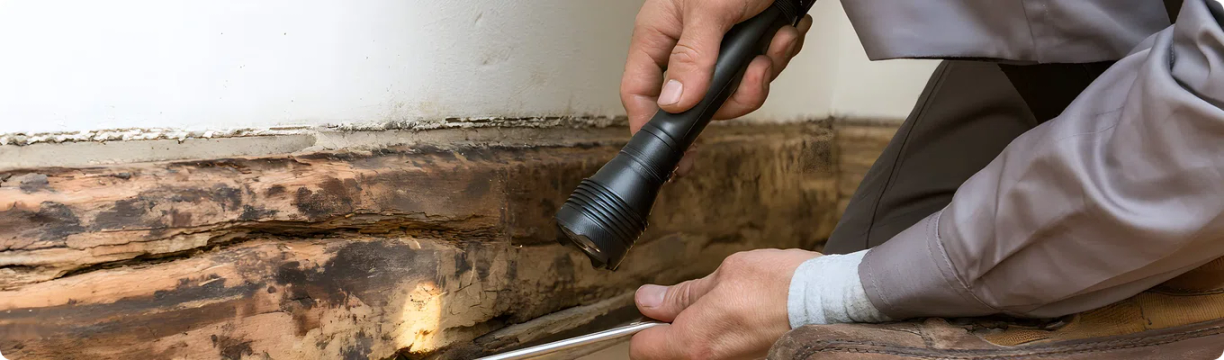
A termite inspection is really a wood-destroying insect inspection. The inspector isn't only hunting for termites. They're looking for any insect that eats or tunnels through wood, plus the damp, contact-with-soil conditions that draw those insects in.
In most of the country the main concern is subterranean termites. They nest in the soil, build pencil-width mud tubes up a foundation, and reach the wood from below. Along warmer coastal and southern areas, drywood termites matter too, since they live inside the wood itself and need no soil contact. A thorough inspection also notes carpenter ants, wood-boring beetles, and wood-decay fungus, because each one damages structure in its own way.
The inspector walks the readily accessible spots: the foundation, the crawl space or basement, the sill plates where wood meets concrete, window and door frames, the garage, and the visible parts of the attic. They probe suspect wood, look for mud tubes and discarded wings, and check for moisture problems that make a home attractive to pests. What they can't see behind finished walls or under flooring stays out of scope, which is one reason the report language matters so much.
You can do a little of this yourself before the pro arrives. Mud tubes running up a foundation wall, small piles of what look like wings near windowsills, wood that sounds hollow when you tap it, or paint that bubbles like there's moisture behind it are all worth a closer look. Spotting one of these doesn't confirm an infestation, and missing them doesn't rule one out, but they tell you to make sure the inspection is a careful one.
The findings land on a standard form, the NPMA-33 Wood Destroying Insect Inspection Report. It's the same form lenders, the VA, and USDA accept across the country, which makes it easy to compare one inspection to the next. When you order an inspection through your own provider or coordinate it with your AmeriSave loan team, ask for that form by name. A clean, well-documented NPMA-33 is the piece of paper that keeps your file moving.
The inspection isn't a general home inspection, and the difference is worth knowing. A home inspector checks the roof, the systems, and overall condition. A wood-destroying insect inspector is a licensed pest specialist looking at one category of risk. You usually want both, and they're often scheduled in the same week.
Whether Your Loan Requires One
Whether you must get a termite inspection depends less on the house and more on the loan. The programs fall into two camps.
VA and USDA loans require a wood-destroying insect inspection in most of the country. Both programs follow termite-risk maps, and across the bulk of the United States the home has to be checked and generally clear of active infestation before the loan closes. If the inspector finds an active problem, it usually has to be treated, and sometimes repaired, before the file moves forward. A small number of low-risk areas are exempt, which is why your loan officer confirms the rule for your specific state.
FHA and conventional loans are different. Neither one requires a termite inspection on every purchase. On an FHA loan, the inspection is triggered when the appraiser sees evidence of active infestation, when state or local rules call for it, or when the lender asks for one. Conventional loans backed by the major investors follow a similar pattern: no blanket requirement, but an inspection becomes necessary if the appraiser flags evidence or your purchase contract calls for it. Plenty of FHA and conventional purchases close with no separate termite report at all.
This is where a myth costs buyers money. A lot of people believe FHA always demands a termite inspection. It doesn't. Believing it does can send you ordering and paying for a report your loan never required. Believing the opposite, on a VA or USDA loan, can stall your closing when the required inspection turns up late.
The cleanest move is to ask early. A quick question to your AmeriSave loan officer about whether your program and your state require a wood-destroying insect inspection takes a minute and removes the guesswork. Get the answer in writing before you're deep into your timeline, and you'll never be surprised by this requirement.
What a Termite Inspection Costs
A standalone wood-destroying insect inspection is one of the least expensive checks in the whole transaction. In most markets it runs about $75 to $150. When the same company handles your general home inspection, the termite portion is often bundled in for less, sometimes at little extra cost. Prices move with your region and the size of the home, so treat those figures as a range, not a quote.
One caution on cost. The cheapest inspection isn't automatically the best one, the same way the lowest rate isn't automatically the best loan. What you want is a licensed inspector who documents the home carefully on the NPMA-33, not just the lowest invoice. A thorough report that catches a problem, or clearly shows there isn't one, is worth far more than the handful of dollars you'd save by going with whoever quotes the least.


Put that number against what it protects. Say the inspection runs $125 on a $350,000 purchase. That's about 0.036% of the price. Divide 125 by 350,000 and you get 0.000357, which is a little over 3 cents for every $100 of home. For the cost of a nice dinner, you learn whether the structure you're about to borrow against is being quietly eaten.
Now compare the inspection to treatment. If the report finds active subterranean termites and a localized treatment runs $900, that's roughly seven times the inspection cost, since 900 divided by 125 is 7.2. Treatment, in turn, costs far less than repairing the damage that termites leave when nobody catches them. Replacing a damaged sill plate or floor joist means demolition, lumber, and labor, and those bills climb fast once the wood is already compromised.
The order of those numbers is the whole point. A small inspection cost sits below a moderate treatment cost, which sits well below a structural repair cost. Spending the smallest amount upfront is what keeps you from facing the largest amount later. That's the trade every buyer is actually making when they decide whether to order the report, even if it never feels that way in the moment.
Where the Inspection Fits in Your Closing Timeline
Timing is what turns a termite inspection from a problem into a non-event. The right window is early, during your option or due-diligence period, right after your offer is accepted and well before closing.
That window exists for a reason. It's the stretch of the contract when you can still investigate the home and act on what you find without losing your earnest money. Order the wood-destroying insect inspection in the first days of that period, not the last. If it comes back clean, you've spent a small amount for real peace of mind. If it doesn't, you've left yourself time to ask the seller to treat the home, to negotiate, or to step back under your contingency while the clock is still on your side.
On a VA or USDA loan, the required inspection has to be scheduled and cleared before the loan can close, so an early order protects your closing date as much as your wallet. Waiting until the final week is the common mistake. A late inspection that turns up active termites forces a scramble: lining up a treatment, waiting for a re-inspection, and asking everyone to push the closing while your rate lock and your moving plans hang in the balance.
Availability is part of this too. In a busy market, good inspectors book up, and a required VA or USDA inspection that you order late can be hard to schedule on short notice. Calling to set the appointment as soon as your offer is accepted keeps you out of that bottleneck.
A good rule is to put the inspection on the calendar the same week you schedule your general home inspection. Coordinate the dates with your real estate agent and your AmeriSave loan team so the report is in the file early. The pace of your purchase is something you control more than you think, and ordering this one check on time is one of the easiest ways to keep that pace comfortable instead of frantic.
Who Pays for the Inspection and Any Treatment
Who pays is among the most common questions buyers ask, and the honest answer is that it depends. It depends on your loan type, on the custom in your state or local market, and on what you negotiate in the contract.
For the inspection itself, the fee is small enough that it rarely becomes a sticking point. On many purchases the buyer simply orders and pays for it as part of due diligence. On a VA loan, the rule around who can be charged for the wood-destroying insect inspection has changed over the years and can vary by state, so this is a question to put directly to your AmeriSave loan officer rather than assume. The amount at stake is roughly $75 to $150, but the right answer for your file depends on current program guidance.
Treatment and repair are where the real dollars live, and that's usually a matter for negotiation. If the report shows active infestation, buyers commonly ask the seller to pay for treatment, to give a closing credit toward the cost, or to handle repairs before closing. None of this is automatic. It's part of the back-and-forth between you and the seller, and a good real estate agent earns their keep here.
Think about a credit this way. Suppose you negotiate a $1,500 seller credit toward treatment and any repair on that same $350,000 purchase. That credit doesn't change your loan amount; it changes your cash. $1,500 is about 0.43% of the price, since 1,500 divided by 350,000 is 0.00429. Small as a share of the deal, real as money you keep at closing. The point of the inspection is to surface the issue early enough that this conversation is even possible.
How to Read the Inspection Report
The NPMA-33 form looks technical, but it answers three plain questions. Is there visible evidence of wood-destroying insects? Are there conditions that invite them? And has any treatment been done? Read it with those three questions in mind and the form gets a lot less intimidating.
The most important distinction on the page is between active and previous activity. A report can note evidence of a past problem that was already treated, with no live insects present. That's very different from active infestation, where the pests are in the home right now. Previous, treated activity is common in older homes and is often not a deal-breaker. Active infestation calls for action before you close. If the wording is unclear, ask the inspector to spell out, in writing, whether what they found is active or historical.
Watch the conducive-conditions section too. Even with no insects found, an inspector may flag earth-to-wood contact, a leaking spigot, poor drainage, or a damp crawl space. Those notes are a gift. They tell you what to fix so you don't invite termites after you move in, and they give you specific items to raise with the seller.
Most NPMA-33 reports also include a simple diagram of the structure with the areas of evidence marked, plus a note on whether the inspector had full access. Glance at that diagram and the access note. If large parts of the home were listed as inaccessible, that's worth a conversation before you lean too hard on the report.
When treatment is performed, you should receive documentation: a treatment receipt and, on government-backed loans, a clearance or soil-treatment record showing the work was done by a licensed company. On VA and USDA files, that paperwork is part of what lets the loan close. Keep copies for yourself, and make sure your AmeriSave loan team has them as well. The report is only useful if the right people are holding it when decisions get made.
What to Do If the Inspector Finds Termites
Finding termites during an inspection feels like bad news, and it isn't the end of the purchase. It's information, surfaced at the one moment when you can still do something about it. Handling it well starts with slowing down instead of panicking.
You generally have a few paths, and they don't have to be either-or:
- Ask the seller to treat. The most common resolution is for the seller to pay a licensed company to treat the home and provide documentation before closing.
- Negotiate a credit or price reduction. Instead of the seller arranging the work, you take a closing credit and handle treatment on your own terms after closing, when the loan allows it.
- Order a follow-up evaluation. If the extent of the damage is unclear, bring in a structural or pest professional to scope the repair before you commit.
- Use your contingency. If the problem is severe and the sides can't agree, your inspection or due-diligence contingency may let you walk away from the contract and recover your earnest money. This is exactly why ordering the inspection early matters.
The right choice depends on how serious the finding is. A small, localized treatment is routine and rarely worth walking away over. Widespread structural damage is a different conversation. Either way, lean on your real estate agent for the negotiation and keep your AmeriSave loan officer in the loop, because on a government-backed loan the treatment and clearance paperwork has to line up with your closing.
The mindset that serves you best is the calm one. Termites are a known, fixable problem with a clear process behind them. Move at a pace you're comfortable with, get the documentation, and let the deal proceed on terms that actually work for you.
How to Protect the Home After You Move In
A clean inspection is a snapshot, not a guarantee for life. Termites can find a home years after a spotless report, so the smart move is to treat prevention as part of owning the place.
Risk isn't the same everywhere. Subterranean termites are active across most of the country, while drywood termites concentrate in warm coastal and southern areas, so the pressure you face depends on where you buy. If you're moving into a higher-risk region, an annual inspection and a transferable bond are worth more than they would be in a colder, lower-pressure market.
Most of prevention is about denying termites what they want, which is moisture and easy access to wood. Keep soil and mulch from piling against siding and wood trim. Fix leaks, direct downspouts away from the foundation, and keep crawl spaces dry and ventilated. Store firewood and lumber away from the house rather than against it. None of this is expensive, and all of it removes the conditions an inspector would otherwise flag.
A regular schedule helps. Many owners arrange a wood-destroying insect inspection every year or two, especially in higher-risk regions, to catch a problem while it's still small and cheap to treat. The same math from earlier still holds, since a routine inspection costs far less than the repair you avoid by catching activity early.
If your home came with a termite bond or warranty from a pest company, learn what it covers. Some agreements cover re-treatment only, and others cover repair as well. Read the terms so you know whether you're buying re-treatment, repair coverage, or both, and whether the coverage transfers to you as the new owner. And remember the insurance point from the start of this piece: standard homeowners policies treat termite damage as a preventable maintenance issue and generally won't pay for it, which is exactly why the modest, ongoing attention pays for itself.
The Smallest Line Item, Handled Well
A termite inspection asks very little of you. It's inexpensive, it fits neatly into your timeline, and it answers a question you really want answered before you borrow against a house. The buyers who treat it as a quick, deliberate step almost never look back on it. The ones who skip it sometimes do.
Three things are within your control here, and they're the three that matter. First, find out early whether your loan and your state require a wood-destroying insect inspection. Second, order it at the start of your option period, not the end. Third, read the report for the difference between active and previous activity, and act on what it shows. Get those three right and a termite finding becomes a manageable negotiation instead of a closing-week emergency.
This is the part I'd tell my own family. The home decision is a big one, and the small steps around it are what keep it from going sideways. A modest inspection, ordered on time and read carefully, is one of those steps. At AmeriSave, the aim is to get a buyer to a clean closing quickly and at a fair cost, and a well-handled wood-destroying insect inspection is one less thing standing between you and the keys. Move at a pace you're comfortable with, ask your questions early, and let the process work for you.
Department of Veterans Affairs. VA Lenders Handbook (VA Pamphlet 26-7), Minimum Property Requirements and wood-destroying insect inspection. 2024.
U.S · benefits.va.gov

Department of Housing and Urban Development. FHA Single Family Housing Policy Handbook 4000.1, Appraiser and Property Requirements. 2024.
U.S · hud.gov
Department of Agriculture, Rural Development. Single Family Housing Guaranteed Loan Program Technical Handbook (HB-1-3555), property and inspection requirements. 2024.
U.S · rd.usda.gov
Environmental Protection Agency. Termites and Other Wood-Destroying Pests: Prevention and Control. 2024.
U.S · epa.gov
Buying a House: Inspections and the Closing Process. 2024.
Consumer Financial Protection Bureau · consumerfinance.gov
NPMA-33 Wood Destroying Insect Inspection Report. 2024.
National Pest Management Association · pestworld.org

Carl leads sales operations at AmeriSave, where he has served since August 2015. He holds a BBA in Business Administration & Management from the University of Kentucky and previously served as Director of Sales at Discover Financial Services. Based in Louisville, KY with his family, Carl brings a practical, solution-focused approach to mortgage sales that emphasizes transparency and reducing buyer anxiety.
Frequently Asked Questions
Not on every loan. FHA calls for a wood-destroying insect inspection when the appraiser sees evidence of active infestation, when state or local rules require it, or when the lender asks for one. Many FHA purchases close with no separate termite report. When an inspection is ordered, a standalone wood-destroying insect inspection commonly costs about $75 to $150.
In most markets, a standalone wood-destroying insect inspection runs about $75 to $150. When the same company performs your general home inspection, the termite portion is often bundled for little extra. The price varies with your region and the size of the home, so use that figure as a range rather than a fixed quote.
It depends on current program guidance and your state. The rule around who can be charged for the wood-destroying insect inspection on a VA loan has changed over the years, so confirm it with your loan officer rather than assume. What does hold across most of the country is that the home must be inspected and generally clear of active infestation before a VA loan can close, and the inspection itself usually costs about $75 to $150.
You've got options, and none of them is automatic. The most common paths are to ask the seller to treat the home before closing, to negotiate a closing credit or price reduction so you handle treatment yourself, to order a follow-up structural evaluation if the damage is unclear, or to use your inspection contingency to step back if the sides can't agree. Because the inspection happens during your option or due-diligence window, you still have room to act. A localized treatment often runs in the few-hundred-dollar range, while whole-structure treatment can run from about $1,200 to $2,500 or more.
Usually not. Standard homeowners policies treat termite damage as a preventable maintenance problem rather than a sudden, accidental loss, so repairs typically come out of your own pocket. That's a large part of why a $75 to $150 inspection is worth ordering before you buy, and why many owners keep up a regular inspection schedule afterward.
For a real estate transaction, the report is generally treated as current for a limited window, often about 30 to 90 days, depending on the lender and your state. If your closing is delayed well beyond that window, you may be asked for an updated wood-destroying insect inspection before the loan funds. Ordering the inspection early in your option period, rather than at the last minute, keeps the report from going stale before closing.