


How Much Does It Cost to Build a House in 2026? A Complete Cost Breakdown


 FACT-CHECKEDFACT-CHECKED
Average construction costs run $323,026 for a 2,000 sq ft home (construction only) or $665,298 including land and all costs, with massive regional variation from $100 to $150/sq ft in the Midwest to $220 to $280 on the West Coast. Construction loans need 20 to 25% down, a 620+ credit score, and charge 6.7 to 8.8% interest.
Key Takeaways
- Average construction costs: $323,026 for a 2,000-square-foot home (construction only), or $665,298 including land and all costs
- Cost per square foot ranges: $150 to $200 for basic builds, $200 to $280 for mid-range, $280 to $450+ for high-end custom homes
- Regional cost differences are massive: $100 to $150 per square foot in the Midwest versus $220 to $280 on the West Coast
- Construction loans require: 20 to 25% down payment, minimum 620 credit score (740+ for best rates), and charge 6.7% to 8.8% interest
- Timeline expectations: 7 to 12 months for construction, 10 to 16 months total including planning and permits
- Budget for contingency: Add 15 to 20% extra for overruns, change orders, and unexpected costs
- Buying existing is often cheaper: Typically 5 to 10% less expensive than building new when you factor in all costs

National Average Costs to Build a House in 2026
Let's start with the numbers that matter. According to the National Association of Home Builders' 2024 Construction Cost Survey, construction costs now account for a record-breaking 64.4% of a new home's sales price, up from 60.8% in 2022. This marks the highest construction cost share since NAHB started tracking this data in 1998.
For a typical newly constructed home with around 2,647 square feet of finished space, here's what you're looking at:
- Construction costs alone: $428,215 (64.4% of total)
- Finished lot: $91,146 (13.7% of total)
- Builder profit margin: $73,183 (11.0% of total)
- Overhead and general expenses: $37,922 (5.7% of total)
- Sales commission: $18,628 (2.8% of total)
- Financing costs: $9,980 (1.5% of total)
- Marketing costs: $5,322 (0.8% of total)
Total average sales price: $665,298
But here's the thing. That's just an average. HomeAdvisor data shows the cost range typically spans from $138,937 on the low end to $531,294 on the high end, not including land. Your actual costs? They'll depend on a bunch of factors we'll dig into.

Cost Per Square Foot: What You Actually Pay
From a capital markets perspective, I always break things down to per-square-foot costs because it gives you a baseline for comparison.
In 2026, you're looking at:
- Basic builder-grade home: $150 to $200 per square foot
- Mid-range custom home: $200 to $280 per square foot
- High-end custom home: $280 to $450+ per square foot
Source: HomeAdvisor 2025 data and Angi construction cost analysis
Regional Cost Variations: Location Changes Everything
One of the first things I learned in capital markets? Location drives pricing more than almost anything else. Building costs vary wildly across the country because of labor availability, material transport costs, local building codes, and market demand.
According to U.S. Census Bureau and NAHB data, here's what you can expect by region:
Northeast: $155 to $200 per square foot
- High labor costs and strict building codes
- Limited construction season due to weather
- Higher material costs due to transportation
- States like Massachusetts and New York at the top end
West Coast: $220 to $280 per square foot
- Highest labor costs in the nation
- Strictest building codes, especially seismic requirements
- California and Hawaii leading the price charts
- Environmental regulations add complexity and cost
Midwest: $100 to $150 per square foot
- Lower labor and material costs
- More available land
- Fewer regulatory hurdles
- States like Kansas and Nebraska on the lower end
South: $109 to $160 per square foot
- Affordable land and materials
- Growing demand driving prices up
- Longer construction season
- Texas, Georgia, Florida seeing increased activity
I had a client relocating from San Francisco to Dallas who nearly fell over when I showed them the cost difference. Building the same 2,500-square-foot home would cost them roughly $700,000 in the Bay Area versus $300,000 in suburban Dallas. Same house. Different zip code. Massive savings.
The Complete Cost Breakdown: Every Stage Explained
Let me walk you through each construction phase with actual 2024 numbers from the NAHB survey. This is where the rubber meets the road.
Stage 1: Site Work and Preparation ($32,719 average)
Site work accounts for 7.6% of construction costs. This is everything that happens before you actually start building.
What's included:
- Architectural and engineering fees: $6,606 on average, or 5 to 20% of project cost
Building permits: $500 to $2,000 depending on location
- Site surveys: $1,600 to $6,200
- Land clearing and grading: varies by property condition
- Utility connections for water, sewer, electric: $1,500 to $5,000 each
- Soil testing and geotechnical reports: $1,000 to $5,000
- Environmental impact assessments if required: $3,000 to $10,000
Here's what people don't realize. Permits aren't one-and-done. You'll need separate permits for electrical, plumbing, HVAC, and sometimes even separate ones for things like decks or sheds you plan to add later. Each one costs money and adds time to your timeline.
Stage 2: Foundation ($44,748 average)
Your foundation represents 10.5% of construction costs. This is literally what your entire house sits on, so you want it done right the first time.
Foundation types and costs:
Concrete Slab (most economical)
- Cost: $4 to $7 per square foot
- Total for 2,000 sq ft home: $8,000 to $14,000
- Best for: Warm climates, flat terrain
- Pros: Quick installation, lower cost
- Cons: No storage space, difficult repairs
Crawl Space
- Cost: $7 to $14 per square foot
- Total for 2,000 sq ft home: $14,000 to $28,000
- Best for: Areas with mild winters, uneven terrain
- Pros: Access to utilities, some storage
- Cons: Moisture issues, pest concerns
Full Basement
- Cost: $20 to $50 per square foot
- Total for 2,000 sq ft home: $40,000 to $100,000
- Best for: Cold climates, need for extra space
- Pros: Additional living space, storage, shelter
- Cons: Most expensive, longer construction time
The choice between these isn't just about cost. I always tell clients to think about resale value in their area. In the Midwest, basements add significant value. In Texas? Not so much. Nobody wants to dig through our clay soil, and the cost rarely pays off.
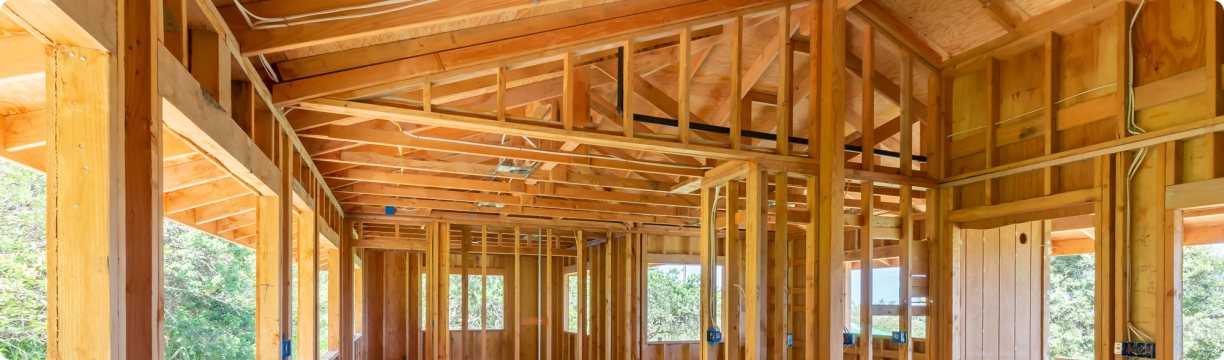
Stage 3: Framing ($70,982 average)
Framing represents 16.6% of your construction budget and is when your house really starts to take shape. This is the skeleton that everything else attaches to.
What framing includes:
- Floor systems and subflooring: $20,000 to $30,000
- Wall framing, interior and exterior: $25,000 to $40,000
- Roof trusses and framing: $15,000 to $25,000
- Sheathing with plywood or OSB: $8,000 to $15,000
Lumber pricing reality check:
According to Random Lengths Framing Lumber Composite data, lumber prices hit $1,284.20 per thousand board feet during the 2021 peak, but settled back to $567 in February 2025. Still, that's 35% higher than pre-pandemic prices of $419.20 in January 2019.
One thing I've learned watching market volatility: material prices can shift dramatically during your build. Smart builders lock in lumber prices early or include price escalation clauses in contracts. You don't want to be halfway through framing when lumber costs spike 20%.
Stage 4: Exterior Finishes ($57,289 average)
Exterior work accounts for 13.4% of construction costs and is your home's first line of defense against the elements.
Roofing costs:
- Asphalt shingles: $5,500 to $11,500 (most common)
- Metal roofing: $12,000 to $25,000 (growing in popularity)
- Clay or concrete tile: $18,000 to $35,000
- Slate: $25,000 to $50,000+
Siding options:
- Vinyl siding: $3.17 to $6.19 per sq ft, or $12,000 to $24,000 total
- Fiber cement: $6 to $12 per sq ft, or $24,000 to $48,000 total
- Wood siding: $8 to $15 per sq ft, or $32,000 to $60,000 total
- Brick veneer: $12 to $18 per sq ft, or $48,000 to $72,000 total
- Stone veneer: $15 to $25 per sq ft, or $60,000 to $100,000 total
Windows and doors:
- Standard windows: $300 to $700 each
- Energy-efficient windows: $500 to $1,500 each
- Front entry door: $500 to $2,500
- Garage doors: $800 to $2,500 each
Your exterior finish choices have a huge impact on long-term costs. That cheap vinyl siding might save you $15,000 upfront, but fiber cement lasts twice as long and adds more to resale value. It's the kind of trade-off I help clients think through all the time.
Stage 5: Major Systems Rough-In ($82,066 average)
Major systems represent 19.2% of construction costs. Actually, wait. Let me correct that. They're the second-largest category after interior finishes. This is all the behind-the-walls infrastructure that makes your house function.
Plumbing rough-in:
- Cost: $4.50 per square foot on average
- Total for 2,000 sq ft home: $9,000 to $18,000
- Includes: Supply lines, drain lines, vent stacks
- Fixture costs added later: $3,000 to $8,000
Electrical rough-in:
- Cost: $4 to $9 per square foot
- Total for 2,000 sq ft home: $8,000 to $18,000
- Includes: Wiring, junction boxes, panel installation
- Does not include: Light fixtures, switches, outlets (added during finishing)
HVAC system:
- Central air and heating: $5,000 to $9,000 for basic
- High-efficiency systems: $8,000 to $15,000
- Zoned systems: $12,000 to $20,000
- Geothermal systems: $20,000 to $40,000
According to Bureau of Labor Statistics data, residential construction worker wages jumped from $28.32 per hour in December 2019 to $34.05 in December 2024. That's a 20% increase that directly impacts these labor-intensive stages.
One thing that surprises people: you're basically paying for work you'll never see. All those pipes and wires get covered up by drywall. But trust me, this is not where you want to cut corners. Shoddy plumbing or electrical work will haunt you for years.
Stage 6: Interior Finishes ($103,259 average)
This is the big one. Interior finishes represent 24.1% of your construction budget, making it the single largest cost category. It's also where your personal choices have the most impact.
Drywall installation:
- Cost: $1.50 to $3 per square foot
- Total for 2,000 sq ft home: $10,000 to $20,000
- Includes: Hanging, taping, mudding, sanding, priming
Flooring:
- Carpet: $2 to $8 per sq ft, or $4,000 to $16,000 for whole house
- Vinyl or LVP: $3 to $7 per sq ft, or $6,000 to $14,000
- Laminate: $3 to $8 per sq ft, or $6,000 to $16,000
- Hardwood: $6.90 to $9.68 per sq ft, or $13,800 to $19,360
- Tile: $7 to $15 per sq ft, or $14,000 to $30,000 for select areas
Kitchen finishes:
- Stock cabinets: $75 to $150 per linear foot, or $3,000 to $6,000 total
- Semi-custom cabinets: $150 to $300 per linear foot, or $6,000 to $12,000
- Custom cabinets: $300 to $600+ per linear foot, or $12,000 to $24,000+
- Countertops: $202 to $657 per cabinet (varies wildly by material)
- Laminate: $20 to $50 per sq ft
- Granite: $50 to $100 per sq ft
- Quartz: $60 to $120 per sq ft
- Marble: $80 to $150 per sq ft


Bathroom finishes:
- Basic bathroom: $5,000 to $10,000
- Mid-range bathroom: $10,000 to $20,000
- Luxury bathroom: $20,000 to $50,000+
Interior doors:
- Hollow-core: $75 to $150 each
- Solid-core: $150 to $350 each
- Custom or solid wood: $350 to $1,000+ each
Paint:
- Basic paint job: $2 to $4 per sq ft, or $8,000 to $16,000
- Premium paint with prep work: $4 to $7 per sq ft, or $16,000 to $28,000
Lighting and electrical fixtures:
- Basic light fixtures: $50 to $200 each
- Ceiling fans: $100 to $400 each
- Chandeliers or statement pieces: $300 to $2,000+
This is where I see the most budget creep. You walk into a showroom with a $15,000 kitchen cabinet budget and walk out having signed for $28,000 worth of soft-close drawers and fancy hardware. Happens constantly. My advice? Pick your splurges carefully and be ruthless about staying in budget everywhere else.
Stage 7: Final Steps ($27,710 average)
Final steps represent 6.5% of construction costs and include all the finishing touches that make your house move-in ready.
What's included:
- Driveway paving: $4,500 for concrete or $1,500 for gravel
- Landscaping: $2,000 to $10,000 for basic sod and plants
- Deck or patio: $4,150 to $11,190 for basic outdoor space
- Walkways and hardscaping: $2,000 to $8,000
- Final inspections and certificates of occupancy: $500 to $1,500
- Punch list items and touch-ups: $1,000 to $3,000
- Final cleaning: $300 to $600
Optional upgrades that drive up final costs:
- Above-ground pool: $1,500 to $5,000
- In-ground pool: $19,000 to $130,000 (yes, really)
- Outdoor kitchen: $5,000 to $16,307 average
- Pergola or gazebo: $3,000 to $10,000
- Fencing: $15 to $50 per linear foot
- Irrigation system: $2,000 to $5,000
A Real-World Cost Example: Breaking Down the Numbers
Let me show you how these costs add up in practice. I'll use a 2,000-square-foot home in the Dallas suburbs (my market) as an example:
Land purchase: $75,000
Site work and permits: $32,000
Foundation (slab): $12,000
Framing: $68,000
Exterior finishes: $55,000
Major systems: $80,000
Interior finishes: $95,000
Final steps: $25,000
----------------------------
Subtotal: $442,000
Contingency (15%): $66,300
----------------------------
Total project cost: $508,300
So our theoretical $300,000 build? Actually closer to $510,000 when you do the math. And that's assuming no major surprises or change orders. This is why I'm always harping on realistic budgeting.
Hidden Costs People Always Forget
In my years helping families navigate construction financing, these are the expenses that blindside people:
Temporary housing during construction: $1,200 to $2,500 per month
If you sold your previous home or your build timeline extends beyond expectations (which happens more often than not), you'll need somewhere to live. Budget for at least 7 to 12 months.
Storage costs: $50 to $300 per month
All your furniture and belongings have to go somewhere during construction.
Utility hookup fees: $3,000 to $10,000 Some municipalities charge substantial connection fees for water, sewer, gas, and electric service.
Impact fees: $3,000 to $20,000+
Many communities charge impact fees to fund infrastructure improvements necessitated by new development.
Builder's risk insurance: $1,000 to $5,000 Protects your investment during construction. Absolutely essential.
Soil tests beyond initial survey: $1,000 to $3,000 If your initial excavation reveals unexpected soil conditions, you'll pay for additional testing and potentially soil remediation.
Retaining walls: $3,500 to $10,000
Sloped lots often require retaining walls that weren't in the original scope.
Tree removal: $400 to $1,500 per tree If your lot has mature trees that need to come down, costs add up fast.
Extended builder warranties: $500 to $2,000 Many builders offer extended warranties beyond the standard coverage. Worth considering.
Homeowner association fees: Varies widely
Some developments require HOA membership with monthly or annual fees starting immediately.
Mortgage rate lock extension fees: $500 to $2,000 If construction takes longer than your original rate lock period (typically 6 months), you'll pay to extend the lock.
Change order fees: 10 to 20% markup on changes
Every time you change your mind about something, the builder charges extra. Those "small" changes to move a window or upgrade a faucet add up shockingly fast.
I can't tell you how many times I've watched clients blow through their contingency budget on change orders. One couple spent $18,000 moving interior walls to create a more open floor plan after framing was already complete. That's an expensive afterthought.
Land Costs: The Foundation of Your Investment
Before you build anything, you need somewhere to build it. Land costs vary more dramatically than any other factor.
National land cost averages:
- Rural land: $4,000 to $10,000 per acre
- Suburban land: $50,000 to $150,000 per acre
- Urban land: $150,000 to $500,000+ per acre
Per-lot costs in subdivisions:
- Rural subdivisions: $15,000 to $50,000 per lot
- Suburban subdivisions: $50,000 to $150,000 per lot
- Urban or high-demand areas: $150,000 to $500,000+ per lot
State-by-state land cost examples (per acre):
- Wyoming: $2,000 to $5,000
- Arkansas: $3,000 to $8,000
- Texas: $8,000 to $15,000
- North Carolina: $10,000 to $25,000
- Florida: $15,000 to $35,000
- Colorado: $25,000 to $75,000
- California: $50,000 to $200,000+
Buildable versus raw land costs:
Here's something that trips people up. There's a huge difference between raw land and buildable lots. Raw land might be cheaper per acre, but you'll pay $50,000 to $150,000+ making it buildable:
- Road access construction: $15,000 to $50,000
- Well drilling: $5,000 to $15,000 if no municipal water
- Septic system: $10,000 to $30,000 if no municipal sewer
- Electric line extension: $10,000 to $30,000 per pole
- Clearing and grading: $5,000 to $20,000
- Fill dirt if needed: $10 to $50 per cubic yard
One lesson I learned the hard way (through a client's experience): Always get a perc test before buying land if you'll need a septic system. If the soil doesn't perk (meaning water doesn't drain properly), you either can't build or you're looking at $50,000+ for an engineered septic system.
Construction Loan Financing: What You Need to Know
Unlike a traditional mortgage where you get a lump sum at closing, construction loans work completely differently. Let me break down what you need to understand.
Types of Construction Loans
Construction-to-Permanent Loan (Most Popular)
- Converts automatically from construction loan to mortgage after completion
- Single closing means lower costs
- Interest-only payments during construction
- Typically converts to 15 or 30-year fixed mortgage
Current rates: around 6.7% to 8.8%
Stand-Alone Construction Loan
- Covers only the construction period
- Requires second closing and new loan for permanent mortgage
- Higher overall closing costs
- More flexibility if you want to shop for better mortgage rates later
- Shorter term: typically 6 to 18 months
Owner-Builder Construction Loan
- For experienced builders acting as their own general contractor
- Stricter qualification requirements
- Potentially lower costs if you can do substantial work yourself
- Higher risk if timeline extends or costs overrun
Construction Loan Requirements
From a lender's perspective, construction loans carry more risk than traditional mortgages because there's no completed property to use as collateral. That means tighter requirements.
Credit score minimums:
- Minimum for most lenders: 620
- For best rates: 740+
- With strong builder relationship and substantial down payment, sometimes 680 is acceptable
Down payment requirements:
- Standard: 20 to 25% of total project cost
- Sometimes as low as 10% with strong credit and builder relationship
- Can use owned land as part of down payment (lender-specific)
Debt-to-income ratio:
- Generally must be below 43%
- Some lenders allow up to 50% with strong compensating factors
- Include estimated mortgage payment, not just interest-only construction payment
Required documentation:
- Detailed construction plans and specifications
- Builder's resume and license verification
- Itemized cost breakdown from builder
- Construction timeline
- Proof of builder's insurance
- Last two years' tax returns
- Recent pay stubs and bank statements
- Credit report
- Appraisal on planned property (as-completed value)
How Construction Loan Payments Work
This is where it gets interesting. During construction, you typically pay interest-only payments on the amount actually disbursed, not the full loan amount.
Example scenario:
- Total construction loan: $400,000
- Interest rate: 7.5%
- Month 1: $50,000 disbursed gives you $312.50 interest payment
- Month 3: $150,000 disbursed gives you $937.50 interest payment
- Month 6: $300,000 disbursed gives you $1,875 interest payment
- Month 10: $400,000 fully disbursed gives you $2,500 interest payment
Draw schedule (typical breakdown):
- Foundation completion: 15%
- Framing complete: 20%
- Exterior work complete: 20%
- Plumbing and electrical rough-in: 15%
- Interior finishes: 20%
- Final completion: 10%
The lender inspects at each stage before releasing funds. If work isn't completed to their satisfaction, they won't disburse. This protects you from a builder taking money and not finishing work, but it can also create cash flow challenges if there are disputes about completion.
Current Construction Loan Rates
According to multiple lender sources, here's what rates look like right now:
Residential construction loans:
- Standard rates: 6.7% to 8.8% APR
- Well-qualified borrowers: 6.5% to 7.5%
- Higher-risk borrowers: 8.0% to 9.75%
Construction-to-permanent loans:
- 30-year conversion: 6.9% to 8.2%
- 15-year conversion: 6.5% to 7.8%
FHA construction loans:
- More lenient credit requirements
- Rates typically: 6.5% to 8.0%
- Down payment as low as 3.5%
VA construction loans:
- For eligible veterans
- No down payment required
- Rates typically: 6.25% to 7.75%
Market watchers expect rates to stabilize or potentially decrease slightly if inflation continues cooling. But I always caution clients: don't try to time the market. If you're ready to build and the numbers work at current rates, move forward. Waiting for a perfect rate that may never materialize costs you time and potentially higher construction costs.
Build vs. Buy: The Real Cost Comparison
This is the question I get asked most: Is it actually cheaper to build or to buy?
Current Market Data
According to National Association of Realtors, the average existing home price in January 2025 was $419,200. Meanwhile, the NAHB 2024 Construction Cost Survey puts the average new construction home price (with land) at $665,298. And NAHB analysis of Census Bureau data shows the median new home price in Q1 2025 was $416,900.
Wait. Those numbers seem contradictory, right? Here's the deal: The "average" new construction includes high-end custom builds that skew the numbers upward. The "median" new construction price is much closer to existing home prices because it represents the actual middle of the market.
Breaking Down the Math
Let's look at a real scenario: 2,000-square-foot home in the South
Building New:
- Land: $50,000
- Construction: $300,000 at $150 per sq ft
- Site work and permits: $35,000
- Landscaping and finishing: $15,000
- Total: $400,000
Buying Existing:
- Purchase price: $380,000
- Immediate repairs needed: $15,000
- Updates and renovations: $25,000
- Total: $420,000
In this scenario, building new actually saves money. But change any of these variables (location, finishes, land cost, existing home condition) and the calculation flips.
The Real Advantages of Building New
Complete customization
You get exactly what you want, where you want it. No compromises on layout, finishes, or features.
Modern systems and efficiency
Everything is brand new. HVAC, plumbing, electrical, appliances. No surprise failures for at least 5 to 10 years. Plus, you can build to current energy codes, potentially saving 30 to 50% on utilities compared to older homes.
Warranty protection
Most builders offer 1-year workmanship warranty, 2-year systems warranty, and 10-year structural warranty. That peace of mind has real value.
No bidding wars T
he housing market has been brutal. Building new means no competing offers, no emotional decisions, no paying over asking price.
Exactly your timeline
Once construction starts, you know roughly when you'll move in. No waiting for sellers to find their next home or dealing with delayed closings.
The Real Disadvantages of Building New
Time commitment
Building takes 7 to 24 months from breaking ground to move-in. Buying existing can close in 30 to 60 days.
Complexity and stress
Building requires hundreds of decisions. Some every single day during peak construction. It's exhausting. And mistakes are expensive.
No established neighborhood
New subdivisions lack mature trees, established schools, proven home values, and community character. You're betting on the neighborhood developing well.
Hidden costs everywhere
I mentioned hidden costs earlier. They're real and they add up. Most people underbudget by 10 to 20%.
Construction delays
Weather, material shortages, labor issues, permit delays. Any of these can extend your timeline and increase costs. According to NAHB Chairman Buddy Hughes, elevated inventory and construction concerns are making builders cautious in 2026.
Financing complexity
Construction loans are more complex than traditional mortgages, require more documentation, and typically have higher rates.
Smart Ways to Control Construction Costs
After watching hundreds of builds, here's what actually works to keep costs manageable.
Before You Start
Choose stock plans over custom designs
Custom architectural plans cost $10,000 to $50,000. Stock plans modified to your needs? $500 to $5,000. That's an immediate $10,000 to $45,000 savings. Plus, builders are more familiar with common layouts, which means fewer mistakes and faster construction.
Build up, not out Adding a second story costs 10 to 30% less per square foot than building the same square footage on one level. You save on foundation costs and roof costs (the two most expensive components).
Select your lot carefully
Level lots cost less to build on than sloped lots. Municipal water and sewer cost less than wells and septic. Established subdivisions cost less than raw land. These aren't sexy decisions, but they're the ones that save you $30,000 to $75,000.
Lock in material costs early
With 2025 volatility in lumber and other building materials, negotiate fixed-price contracts or material cost locks when possible.
Choose a smaller footprint
Every additional 100 square feet costs $15,000 to $40,000. Do you really need that 2,800-square-foot house, or will 2,400 square feet meet your needs? That's $60,000 to $160,000 in savings.
During Construction
Limit change orders
Every change you make after plans are finalized costs 10 to 20% more than if you'd included it originally. Make your decisions upfront and stick to them.
Do the finish work yourself Painting, landscaping, and simple fixtures are DIY-friendly if you have the skills and time. You could save $10,000 to $25,000 in labor costs.
Choose mid-range finishes strategically
You don't need granite everywhere. Use it in the kitchen where it makes an impact; go with quartz or laminate in less-visible bathrooms.
Skip the add-ons initially Build the deck, install the pool, add the outdoor kitchen later. Get into the house first, then add amenities as budget allows.
Negotiate better
Get three bids for everything. Builders often work with preferred subcontractors, but you can sometimes select your own if you find better pricing.
Smart Timing
Build during winter in warm climates
Contractors are less busy, potentially offering better rates. In cold climates, building during prime season (spring through fall) ensures no weather delays.
Don't rush Taking an extra month to properly plan and bid out work saves more money than rushing into construction.
Common Mistakes That Cost Thousands
From my capital markets seat, I've seen these mistakes repeatedly:
Underestimating total costs by 10 to 20%
Always (and I mean always) budget an extra 15 to 20% for overruns. It's not pessimism; it's reality. Costs increase, unexpected issues arise, you make changes. Plan for it.
Not getting everything in writing
Verbal agreements with your builder mean nothing when disputes arise. Everything (every single specification, timeline, cost) needs to be in the contract.
Choosing the cheapest builder
Low bid doesn't mean best value. Check references. Visit previous builds. Verify licenses and insurance. A cheap builder who cuts corners or goes out of business mid-project costs you way more than hiring a reputable pro.
Making emotional decisions in showrooms
That $4,000 chandelier looks amazing. But so will the $400 version after you're not stressed about money. Make a list before shopping and stick to it.
Not inspecting at each stage
Hire an independent inspector to review work at major milestones: foundation, framing, rough-ins, final. It costs $2,000 to $4,000 total but catches problems before they're covered up.
Skipping the builder's insurance verification
If your builder doesn't carry proper insurance and someone gets hurt on your property, you're potentially liable. Verify coverage before signing anything.
Poor communication with builder
Establish a regular communication schedule. Weekly is good. Don't let weeks go by without site visits and updates.
Not reading the contract thoroughly
Pay a real estate attorney $500 to $1,000 to review your builder contract. They'll catch red flags you'd miss.
How AmeriSave Can Help
Here at AmeriSave, we understand that securing financing for a new home build feels overwhelming. While we don't currently offer construction loans, we specialize in helping homeowners once their construction is complete.
When your build is finished, we offer:
- Competitive mortgage rates for your permanent financing
- Streamlined refinancing if you started with a construction-only loan
- Purchase loans if you're buying new construction from a builder
- Expert guidance on transitioning from temporary to permanent financing
I tell every client the same thing: Building a home is one of the most rewarding experiences you'll have. But it requires careful planning, realistic budgeting, and the right financial partners. Whether you're breaking ground next month or just starting to explore the possibility, understanding these costs upfront sets you up for success.
And here's my honest take after years in this business. If you're going to build, do it for the right reasons. Build because you want something truly custom. Build because you can't find what you need in existing homes. Build because you love the process of creating something from nothing.
Don't build just because you think it'll save money. Sometimes it does. Often it doesn't. But if you're building for the right reasons with your eyes wide open about costs? You'll end up with a home you absolutely love.
Summary: Key Takeaways Before You Build
Before diving into the detailed questions below, here are the critical points to remember about building a house:
Building costs average $323,026 for construction alone, but total project costs including land typically reach $665,298. Regional variations are massive, from $100 per square foot in the Midwest to $280 per square foot on the West Coast. Construction loans require 20 to 25% down, credit scores of 620+, and charge interest rates of 6.7% to 8.8%. Budget at least 15 to 20% contingency for overruns and unexpected costs. Building typically takes 7 to 24 months from start to finish. Buying existing homes is often 5 to 10% cheaper than building new.
The single biggest mistake? Underestimating total costs and timeline. Plan conservatively, get everything in writing, and verify your builder's credentials and insurance before signing anything.
Cost of Construction Survey 2024.
National Association of Home Builders · 2025 · nahb.org

Cost to Build a House.
HomeAdvisor · 2025 · homeadvisor.com
How Much Does It Cost to Build a House?
Angi · 2025 · angi.com
Cost of Constructing a Home in 2024.
National Association of Home Builders · 2025 · eyeonhousing.org
Home Prices Rose 37% in the Last Five Years: Why?
Green Builder Media · 2025 · greenbuildermedia.com
Gap Between New and Existing Home Prices Narrows.
National Association of Home Builders · 2025 · nahb.org
New Home Sales Flat as Affordability Concerns Persist.
National Association of Home Builders · 2025 · nahb.org

Casey brings 28 years of comprehensive mortgage industry experience spanning operations, compliance, and capital markets to AmeriSave. She has led teams across disclosure, compliance, processing, underwriting, and post-closing while navigating three market crashes since 1998, and previously served as Managing Partner at Groundwork Consulting LLC. Based in Texas, specializes in risk mitigation, pricing integrity, and translating complex market dynamics into actionable borrower guidance.
Frequently Asked Questions
The answer depends entirely on your market and specifics, but generally, buying an existing home is 5 to 10% cheaper per square foot than building new. The median existing home price is $419,200 compared to $416,900 for new construction, but that new construction price often doesn't include land. When you factor in land purchases averaging $50,000 to $150,000, building typically costs more upfront. However, you might save long-term through lower maintenance costs, modern energy efficiency, and warranty coverage. In rapidly appreciating markets where existing homes sell over asking price, building can sometimes be more economical. The calculation really comes down to your specific situation, location, and what compromises you're willing to make. I've seen clients save $50,000 building in markets with inflated existing home prices, and I've seen others pay $100,000 more than they would have buying existing. Do the math for your specific market before deciding.
Building a house typically takes 7 to 12 months once construction begins, but this timeline varies significantly based on home size, complexity, weather, material availability, and contractor scheduling. The complete process including planning, permitting, and design work extends this to 10 to 16 months. Simple, smaller homes in good weather can finish in 6 to 8 months, while large custom homes or those in areas with difficult weather may take 18 to 24 months. According to NAHB data, delays have become more common in 2024 and 2025 due to labor shortages and supply chain disruptions. I always advise clients to add 20 to 30% buffer time to whatever estimate your builder provides. If they say 10 months, plan for 12 to 13 months realistically. Construction rarely finishes early, but it frequently finishes late. Budget both your time and money accordingly, because every month of delay adds to your temporary housing costs and construction loan interest.
Most construction lenders require a minimum credit score of 620, but that's really just the floor. You'll get much better rates with a score of 740 or higher. Construction loans are riskier for lenders than traditional mortgages because there's no completed property to use as collateral, so they're more conservative with credit requirements. With a score between 620 and 680, expect higher interest rates (potentially 1 to 2% more) and stricter down payment requirements (25% versus 20%). If your score is below 620, you'll struggle to find conventional construction loan approval, though FHA construction loans may accept scores as low as 580 with a 10% down payment, or 500 with 20% down. The best strategy? Get your score above 740 before applying. Even a half percentage point reduction in rate saves you thousands over the loan term. From a risk pricing perspective, I've watched the same borrower get quoted 7.2% with a 745 score and 8.8% with a 665 score on identical loan terms. That's $200 per month difference during construction on a $400,000 loan.
Yes, you can use your current home's equity through a home equity loan, HELOC, or cash-out refinance to fund new construction, but timing and financial management get complicated quickly. The main challenge is that you'll be carrying two mortgages simultaneously: your existing home's mortgage plus the construction financing. Most people use this strategy for one of three scenarios: (1) They plan to sell their current home once construction is complete, (2) They'll keep the current home as a rental property, or (3) They're building on land adjacent to their current property. Lenders will underwrite you based on carrying both payment obligations, which means you need strong income and low debt-to-income ratios. A safer approach many clients use is selling the current home first, using proceeds for land purchase and down payment, then securing construction financing. This eliminates the double-payment burden but requires temporary housing during construction. I've guided clients through both approaches, and the equity-first method works beautifully if you have substantial income and can qualify for both payments. Otherwise, sell first and simplify your life.
A comprehensive builder contract should specify everything: the exact materials by brand and model number, detailed specifications for every system and finish, complete timeline with milestones, payment schedule tied to completion stages, warranty details, procedures for change orders, and who's responsible for permits and inspections. The contract should also address what happens if materials become unavailable (substitution procedures), weather or other delays, and dispute resolution. Unfortunately, I've seen plenty of builder contracts that are vague or missing critical details, which leads to conflicts later. Before signing, verify the contract includes: foundation type and specifications, framing materials (not just "standard framing"), exterior finish materials with brand names, roofing material and warranty, HVAC brand, model and efficiency ratings, plumbing fixture allowances, electrical fixture allowances, flooring specifications by room, cabinet specifications and hardware, countertop materials, appliances included, paint brands, and landscaping scope. Have a real estate attorney review it. That $500 to $1,000 expense saves you from $50,000 problems later.
Budget an absolute minimum of 10% contingency, but 15 to 20% is much safer and more realistic. That means if your construction costs are $400,000, set aside $60,000 to $80,000 for overruns and unexpected costs. This contingency isn't pessimism; it's preparation. In my experience, about 85% of builds exceed the original budget by at least 5 to 10%, and roughly half exceed by 10 to 15%. Common reasons include: material price increases during construction, previously unknown site conditions requiring additional foundation work, necessary change orders to fix design issues, upgraded selections when you see material samples in person, permit or inspection delays requiring additional financing costs, and finishing touches you didn't originally budget for. If you don't end up needing the full contingency (which would be wonderful), you can use remaining funds for furnishings or save it. But having that cushion means you're not scrambling to find money mid-build when you discover the foundation needs $15,000 in additional work. I've watched too many clients stress over finding extra funds because they budgeted to the penny with no buffer.
Yes, you can, and you might save 10 to 20% of construction costs (the general contractor's markup), but only if you have construction knowledge, substantial time availability, and strong project management skills. Acting as owner-builder means you're responsible for hiring all subcontractors, scheduling trades in the right sequence, ordering materials with correct lead times, managing inspections, ensuring code compliance, solving problems that arise, and managing payment schedules. Mistakes can cost more than you save. For example, if you schedule drywall before the HVAC inspection and work gets red-tagged, you'll pay to rip out and replace drywall. Or if you order windows with the wrong measurements, that's on you. Most lenders also have stricter requirements for owner-builder construction loans, including higher down payments and proof of construction experience. My honest assessment: If you have construction experience and are building a simpler home, owner-builder can work. If you're building your first house or a complex design, hiring a reputable general contractor is worth the markup. I've seen successful owner-builds save $60,000, and I've seen failed owner-builds cost $80,000 more than they would have with a GC.
Rural construction costs run $100 to $150 per square foot compared to $200 to $280 per square foot in urban areas, but that raw cost difference doesn't tell the whole story. Rural areas have cheaper land ($5,000 to $15,000 per acre versus $150,000+ in urban areas) and lower labor costs, but you'll pay more for material transportation, utility connections might require wells and septic systems adding $15,000 to $45,000, and you'll have fewer contractor options. Urban and suburban areas have expensive land and higher labor costs due to wage competition, but utilities are readily available, material delivery is cheaper, and you have more contractor choices for competitive bidding. Building codes tend to be stricter in urban areas, potentially adding costs, but inspection and permitting processes are often more streamlined. The break-even point often depends on land cost. If you can find affordable land in a suburban area with municipal utilities, you get the best of both worlds. Remote rural construction might save on labor but the utility connection costs can eliminate any savings. Run the complete numbers before assuming rural is automatically cheaper.
Start by verifying their license with your state's contractor licensing board. This is non-negotiable. Check for complaints with the Better Business Bureau and your state's attorney general office. Ask for references from their three most recent builds and actually call them. Visit completed projects if possible and talk to homeowners about their experience. Verify they carry proper insurance: general liability ($1 million+ coverage) and worker's compensation. Check how long they've been in business (at least 5 years in your local market is ideal). Review their contract thoroughly for completeness and have an attorney examine it. Search for them online to read reviews on Google, Houzz, and local building sites. Ask about their subcontractors. Do they use the same reliable crews or hire whoever's available? Find out if they belong to local or national builder associations like NAHB. And here's an important question that reveals a lot: Ask what happens if they go over budget or experience delays. Their answer tells you how they handle problems. If they say it never happens, run. It always happens. A good builder explains their process for managing overruns and timeline issues, has insurance to protect you, and gives you references who'll tell you about problems they successfully resolved.
At minimum, you'll need a building permit covering the overall construction, which typically costs $500 to $2,000 depending on your municipality and home value. But that's rarely the only permit. Most builds also require: electrical permit ($150 to $500), plumbing permit ($150 to $500), HVAC permit ($150 to $500), grading and excavation permit ($100 to $1,000), septic system permit if applicable ($200 to $1,000), well permit if applicable ($200 to $500), and potentially additional permits for things like driveway connection ($100 to $500) or demolition if removing existing structures ($200 to $1,000). Many municipalities also charge impact fees (separate from permits) to fund infrastructure improvements, which can range from $3,000 to $20,000+ depending on location. Your builder should handle permit applications, but verify this is included in their contract and budget. Some municipalities require licensed architects or engineers to stamp plans before issuing permits, adding $2,000 to $5,000 to your costs. Permit timeframes matter too. Some municipalities issue permits in 2 to 4 weeks, others take 2 to 3 months, which affects your construction timeline and financing costs.
If you're ready to build now and rates are in the 6.5 to 8% range, I typically advise locking in rather than trying to time the market. Construction loan rate locks usually last 6 months with options to extend for fees, but predicting rate movements is nearly impossible. Even economists get it wrong constantly. Consider this: If rates drop 0.5% while you wait 6 months, you might save $50 to $75 per month during construction, but construction costs themselves are rising about 0.5 to 1% per month in many markets due to labor and material inflation. Waiting could cost you more in increased construction costs than you save in interest. Plus, if rates rise instead of falling, you're worse off on both fronts. The one exception: If you're still in early planning stages and won't break ground for 6 to 12 months anyway, there's no point locking now. Wait until you're closer to actual construction start. Rate locks are expensive to extend beyond the initial period. And remember, once construction is complete, you can refinance your permanent mortgage if rates have dropped significantly, so your construction loan rate isn't forever. From a capital markets perspective, rate timing is speculation. Build when you're ready with rates you can afford.
This is genuinely one of the worst scenarios in homebuilding, and unfortunately, it happens more often than you'd think, especially with smaller builders during economic downturns. If your builder goes under mid-project, you face several immediate problems: construction stops, subcontractors may file liens against your property for unpaid work, materials suppliers may reclaim materials they weren't paid for, and you're stuck finding a new builder willing to take over a partially completed project. This is exactly why vetting builders carefully upfront is so critical. To protect yourself: Verify the builder's financial stability before signing, never pay more than the value of work completed (most draws should slightly lag completion), confirm builder's insurance covers this scenario, consider builder's risk insurance which protects you during construction, and ensure your lender is involved in inspecting work before each draw release. If it does happen, immediately contact your construction lender. They have experience handling these situations and will work with you on solutions. Document everything, consult an attorney, get a full assessment of work completed versus paid, and understand you'll likely need additional financing to complete the project with a new builder. It's expensive and stressful, but it's solvable. I've guided three clients through this nightmare, and all eventually got into their completed homes, but it added $30,000 to $75,000 and 4 to 8 months to their projects.
Building an energy-efficient or green home typically costs 5 to 15% more upfront than standard construction, so figure an additional $20,000 to $60,000 on a $400,000 build. However, these costs pay back through lower utility bills (30 to 50% reduction) and potentially higher resale value. Specific energy-efficient upgrades include: spray foam insulation instead of fiberglass ($5,000 to $15,000 extra), high-efficiency HVAC systems ($3,000 to $8,000 extra), energy-efficient windows and doors ($5,000 to $12,000 extra), tankless water heater or heat pump water heater ($1,500 to $4,000 extra), LED lighting throughout ($500 to $1,500 extra), solar panels ($15,000 to $40,000 before incentives), and advanced air sealing ($2,000 to $5,000). If you're pursuing LEED certification or similar standards, add $10,000 to $50,000 in certification and consulting fees. The good news is many of these upgrades qualify for federal tax credits and local utility rebates. Solar installations can qualify for 30% federal tax credit through 2032, and many utilities offer rebates for high-efficiency HVAC systems. Energy-efficient construction also often qualifies for lower insurance premiums and some lenders offer better mortgage rates for certified green homes. Calculate total cost of ownership over 5 to 10 years, not just upfront costs, and the premium often pays for itself.
Many builders offer semi-custom options on spec homes that give you customization flexibility without full custom construction costs. Typically, if you're buying early in the construction process (before framing is complete), you can make selections on flooring, cabinets, countertops, fixtures, paint colors, and sometimes even adjust floor plans slightly by moving walls or adding features. This middle ground saves you the 10 to 20% premium that full custom construction commands because the builder already has plans approved, has ordered major materials, and has subcontractors scheduled. However, your customization options are limited to the builder's established relationships and material choices. Full custom construction means you (and your architect) design everything from scratch. Floor plan, elevations, every material choice. This gives you complete control but adds $50,000 to $100,000+ in architectural fees, engineering, and the builder's premium for one-off construction. Most first-time builders are happier with semi-custom. You get meaningful personalization without the complexity and cost of full custom. Save full custom for your second build when you really know what you want and have the budget to match your vision. In my experience, 80% of what people want to customize can be accomplished in semi-custom for 30% of the cost premium.
The ideal construction start time depends on your climate. In warm climates like the South and Southwest, starting construction in fall or winter means you're finishing during spring or summer, avoiding the hottest months when outdoor work is most difficult. You might also get better contractor rates during their slower season. In cold climates like the Northeast and Midwest, starting in spring means most construction happens during warm weather, avoiding winter delays from frozen ground, snow, and shorter working days. You definitely don't want to pour foundation or do exterior work in January in Chicago. The worst time in cold climates is starting in fall. You'll hit winter mid-construction, causing months of delays and weather-related problems. In moderate climates, timing matters less, but starting construction in spring or early summer remains most popular. Beyond weather, consider your personal timeline: If you have kids, timing your move-in for summer break makes sense. If you're selling an existing home, coordinate that closing with construction completion. And remember that construction loans have finite terms. If you expect delays, don't start so late in the year that weather will force you to extend your construction loan into another year. Each extension costs money and adds complexity.