


Duplex vs. Townhouse: Your Complete 2026 Buyer's Guide


 FACT-CHECKEDFACT-CHECKED
Duplexes have only one wall in common, while townhouses have walls on both sides. This affects privacy, outdoor space, and who is responsible for maintenance. Townhouse homeowners association (HOA) fees usually range from $200 to $400 per month and cover maintenance on the outside of the building. Duplex owners, on the other hand, take care of everything themselves but have more yard space.
Key Takeaways
- Duplexes typically have only one shared wall while townhouses share walls on both sides, which affects privacy, outdoor space, and maintenance responsibilities
- According to the U.S. Census Bureau's 2024 American Community Survey, about 21.6 million American homeowners pay HOA or condo fees, with the national median at $135 per month
- Townhouse HOA fees typically range from $200-$400 monthly and often cover exterior maintenance, landscaping, and amenities that duplexes require you to handle yourself
- Duplex owners generally have more outdoor space (potentially front, back, and side yards) compared to townhouses which typically have limited front and back access only
- The National Association of REALTORS® reported in September 2025 that median existing-home prices reached $415,200, making property type choice particularly important for affordability
- Both property types can work as investment opportunities, but duplexes offer unique rental income potential if you purchase the entire building

Understanding Your Options in the 2026 Housing Market
Sometimes first-time home buyers need help deciding between a duplex and a townhouse, and it can be confusing. Makes complete sense to me. These two property types seem similar on the surface, but they're actually quite different in ways that can dramatically affect your daily life, your budget, and your long-term satisfaction with your home.
Think of it like this: choosing between a duplex and a townhouse is like deciding between two cars that both get you from point A to point B, but one has a manual transmission and more cargo space while the other has automatic transmission and gets better gas mileage. Neither is inherently better, but one might be exactly what you need based on your lifestyle, budget, and priorities.
The housing market in 2026 continues to present both challenges and opportunities. With mortgage rates stabilizing and inventory levels improving compared to pandemic lows, understanding different property types helps you make informed decisions that align with your financial goals and lifestyle needs.

What Exactly Is a Duplex?
A duplex is essentially two separate homes built within a single structure, sharing one common wall (or sometimes a floor and ceiling if it's a stacked duplex). Each unit has its own entrance, utilities, and living spaces. From the street, a duplex often looks like a regular house that's been mirrored down the middle.
The key thing that distinguishes duplexes is that structural division. You might share a wall with your neighbor, but everything else about your living space is independent. You'll have your own electric meter, your own HVAC system, your own water heater, and typically your own yard space.
Duplexes can be configured two main ways:
Side-by-side duplexes have the two units next to each other, separated by a vertical shared wall running through the center of the building.
Stacked duplexes (sometimes called vertical duplexes) have one unit on top of the other, with the shared surface being the floor of the upper unit and the ceiling of the lower unit.
When you buy a duplex unit, you're purchasing your half of the structure plus a portion of the land it sits on. If you purchase the entire duplex building, you own both units and can live in one while renting out the other, creating what many investors call "house hacking."
What Is a Townhouse?
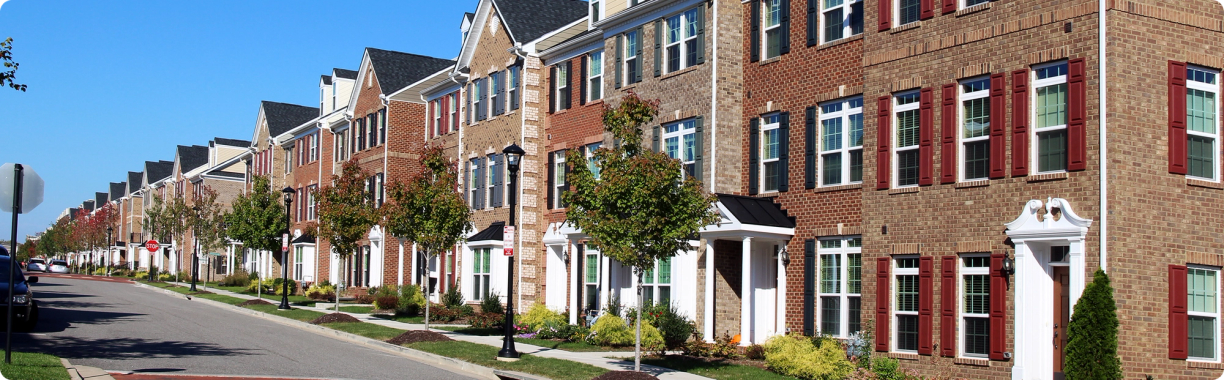
A townhouse is one unit within a row of attached homes, typically sharing walls on two sides with neighboring units. The exceptions are the end units in a townhouse row, which only share one wall and often command slightly higher prices because of that extra exterior exposure.
Townhouses are almost always part of a planned community with a homeowners association overseeing the property. According to NAR's research from September 2025, existing-home sales have been increasing as mortgage rates stabilize, with many buyers considering townhouses as an affordable entry point into homeownership.
What makes townhouses distinctive is that combination of private ownership and shared responsibility. You own your interior living space and typically a small amount of outdoor space immediately adjacent to your unit, but the HOA owns and maintains the exterior of the building, the roof, and the common areas throughout the community.
The typical townhouse spans two or three stories, allowing for more living space on a smaller footprint of land. Since most townhouses share both side walls, your windows and doors are concentrated on the front and back of the home, which affects natural light and ventilation patterns compared to a freestanding single-family home.
The Real Differences That Matter for Your Daily Life
Outdoor Space and Privacy Considerations
Let me simplify this for you. When you're looking at outdoor space, duplexes generally give you more options. Since only one wall is shared, you potentially have access to front, back, and side yards. This means more room for gardening, kids to play, pets to roam, or even parking additional vehicles.
I've worked with families who chose duplexes specifically because they wanted a substantial backyard for their kids without the full maintenance burden of a large single-family home. The side yard access in many duplexes provides practical benefits like being able to access your backyard without walking through your house, storing lawn equipment outside, or creating a side entrance.
Townhouses typically restrict your outdoor space to the front and back of your unit only, since both sides are attached to neighboring homes. This doesn't mean you can't have outdoor living space though. Many townhouses feature small patios, balconies, or rooftop decks that maximize the available area. Some newer townhouse developments are designed with surprisingly thoughtful outdoor spaces, including private courtyards or extended back patios.
The privacy factor matters too. With only one shared wall, duplex residents often report feeling more isolated from neighbors compared to townhouse living where you're sandwiched between other families. That said, I've seen townhouse communities with excellent sound insulation where noise rarely becomes an issue.
HOA Fees and What You're Actually Paying For
Here's where the financial picture gets interesting. Duplexes may not have HOA fees at all, or if they do, those fees tend to be minimal because there aren't extensive common areas to maintain. You're responsible for your own exterior maintenance, landscaping, and repairs, which gives you more control but also more work.
According to the U.S. Census Bureau's 2024 American Community Survey, approximately 21.6 million of the nation's 86.6 million owned households paid condo or HOA fees in 2024, with the national median at $135 per month. However, townhouse fees typically run higher than this national median.
Townhouse HOA fees usually range from $200 to $400 per month, though they can be lower or significantly higher depending on your location and amenities. These fees typically cover:
Exterior building maintenance including siding and roofing
Landscaping of common areas and sometimes individual yards
Snow removal and seasonal maintenance
Trash collection services
Insurance for common areas and building exteriors
Amenities like pools, fitness centers, and clubhouses
Reserve fund contributions for future major repairs
The textbook answer is that HOA fees are an added expense, but really, you're outsourcing tasks you'd otherwise do yourself. For working professionals or people who travel frequently, paying someone else to mow the lawn and shovel snow can be worth every penny. At AmeriSave, we help buyers understand the true cost of homeownership, including how HOA fees affect your debt-to-income ratio and borrowing capacity.
Maintenance Responsibilities and Long-Term Costs
This is where duplexes and townhouses really diverge in terms of your time commitment and future expenses.
As a duplex owner, you're essentially maintaining half of a single-family home. You'll need to handle:
Roof repairs and replacement on your side
Exterior painting and siding maintenance
Gutter cleaning and repair
Yard work and landscaping
Driveway and walkway maintenance
Foundation inspections and repairs
The advantage? You control the timing, the contractors, and the quality of work. You're not waiting for an HOA board to approve repairs or dealing with neighbors who want to delay necessary maintenance. The disadvantage? All of these costs come directly out of your pocket when they arise, and you need to stay on top of preventive maintenance to avoid bigger problems later.


Townhouse living flips this equation. Your HOA handles most exterior maintenance, which means you're not spending weekends on a ladder cleaning gutters or getting estimates from roofing contractors. The HOA's reserve fund should cover major repairs, spreading that financial burden across all homeowners over time.
The downside? You're subject to the HOA's schedule and standards. If you want to repaint your front door a different color or replace your windows with upgraded models, you might need HOA approval. Some associations are flexible and reasonable, while others strictly enforce every detail of their covenants.
Architectural Character and Design Freedom
Duplexes often display more individual character because each half can be customized independently over time. You might see duplexes where one side has different shutters, a different front door style, or even slightly different exterior colors within any neighborhood guidelines that exist.
This design freedom extends to your interior as well. Without an HOA's restrictions, you generally have more latitude to modify your property. Want to add a deck? Install solar panels? Create a workshop in your garage? As long as local building codes allow it and you get any necessary permits, you're typically free to proceed.
Townhouses, by contrast, usually maintain uniform exteriors across the entire community. Your HOA typically controls exterior colors, materials, landscaping choices, and even things like mailbox styles and holiday decorations. This creates a cohesive, maintained appearance that many buyers appreciate, but it limits your ability to express personal taste on the outside of your home.
Inside your townhouse, you generally have more freedom, though some HOAs still restrict things that affect the building's structure or exterior appearance, such as replacing windows, installing through-wall air conditioning units, or modifying balconies.
Windows, Natural Light, and Ventilation Patterns
Let me explain something that doesn't get enough attention in these comparisons. The number and placement of windows significantly affects how your home feels to live in daily.
Duplexes, with only one shared wall, have windows on three sides of the building. This creates better cross-ventilation, allowing natural breezes to flow through your home. You'll also get natural light from multiple directions throughout the day, which can reduce your dependence on artificial lighting and create a more open, airy feeling.
Many duplex designs feature windows on the side walls that townhouses simply can't have. These side windows often serve secondary bedrooms, hallways, or stairwells, preventing those spaces from feeling dark or closed in.
Townhouses typically have windows only on the front and back of the unit, with those two solid shared walls on either side. This doesn't mean townhouses are dark, but it does change the ventilation and lighting patterns. Townhouse designers compensate by using larger windows, skylights, or open floor plans that allow light to penetrate deeper into the home.
End-unit townhouses split the difference, offering windows on three sides just like duplexes, which is why they often sell faster and command premium prices within townhouse communities.
The Financial Picture: Costs Beyond the Purchase Price
Understanding the full cost of ownership helps you make decisions that won't strain your budget down the road.
Initial Purchase Price Considerations
According to the National Association of REALTORS®' September 2025 report, the median existing-home price reached $415,200, up 2.1% year-over-year. However, prices vary significantly based on property type, location, and market conditions.
Duplexes and townhouses often sit at different price points even in the same neighborhood. Duplexes sometimes carry lower purchase prices than single-family homes but higher prices than townhouses, though this varies considerably by market. The investment potential of duplexes (buying both units and renting one out) can make them attractive even at higher purchase prices.
Townhouses typically offer a lower entry point into homeownership compared to single-family homes in the same area. This makes them particularly popular with first-time buyers who want to build equity but aren't ready for the full financial commitment of a detached home.
Financing Considerations
At AmeriSave, we work with buyers exploring all property types, and the financing process has some important distinctions you should understand.
For duplexes, if you're purchasing just one unit, the financing works similarly to buying a condo or townhouse. If you're buying the entire duplex building, lenders view this as an investment property even if you plan to live in one unit. You'll typically need a larger down payment (20-25% versus the 3-5% possible for primary residences) and will face higher interest rates, but you can often use the rental income from the second unit to qualify for the mortgage.
Townhouse financing usually follows conventional lending guidelines for primary residences. Lenders will want to review the HOA's financial health as part of the approval process. A poorly managed HOA with inadequate reserves or pending litigation can make obtaining financing difficult or impossible.
Insurance and Property Tax Differences
Insurance costs differ between these property types. Duplex owners need to insure their entire unit, including the structure, which typically costs more than townhouse insurance where the HOA's master policy covers the building's exterior and common areas.
Property taxes depend primarily on assessed value and local tax rates rather than property type, but there's an important consideration for duplex investors. If you purchase an entire duplex, you're taxed on the full value of both units, which could push you into a higher tax bracket compared to owning just one unit.
Long-Term Appreciation Potential
Both property types can appreciate in value, but the factors driving that appreciation differ. Duplex values tend to follow single-family home trends more closely, particularly in markets where single-family inventory is limited. The ability to rent out the second unit if you own the whole building provides income that can help you weather economic downturns or personal financial challenges.
Townhouse appreciation depends heavily on the HOA's management quality, the community's amenities, and how well the neighborhood maintains its appeal over time. Well-managed townhouse communities in desirable locations can see strong appreciation, but a poorly managed HOA can drag down values even in good markets.
From January 2025 to December 2025, home prices remained relatively stable across the country.
Which Property Type Fits Your Lifestyle?
You Might Prefer a Duplex If You:
Want more control over your property and maintenance decisions
Value having outdoor space on multiple sides of your home
Don't mind handling your own exterior maintenance and repairs
Prefer fewer neighbors in immediate proximity
Are interested in house hacking by renting out the second unit
Like having more windows and natural light from multiple directions
Want the feeling of a single-family home at a potentially lower price
Enjoy yard work and outdoor projects
You Might Prefer a Townhouse If You:
Want minimal exterior maintenance responsibilities
Value having amenities like pools and fitness centers without individual ownership costs
Prefer predictable monthly costs through HOA fees
Like living in a community with organized activities and neighbor connections
Travel frequently or have a busy schedule that limits time for home maintenance
Don't need extensive outdoor space
Want the security of knowing the HOA maintains reserve funds for major repairs
Appreciate the uniform, well-maintained appearance of planned communities
The Potential for Investment: Making Money with Real Estate
Duplexes and townhouses can both be used as investments, but they are not the same way to build wealth.
Strategies for Investing in Duplexes
Many people like the duplex investment strategy because it can be used in many ways. You can do the following if you buy a whole duplex building:
You can live in one unit and rent out the other. The money you make from renting out the other unit can help you pay your mortgage. Many first-time investors like this strategy, which is often called "house hacking," because it lets you become a landlord while lowering your risk and costs.
If you decide to move, rent out both units to make a real passive income stream. Duplexes in good areas often make a lot of money for landlords because they give tenants more space and privacy than apartments do.
Sell one unit later while retaining the other, if your duplex has been properly subdivided with separate legal parcels. Not all duplexes can use this exit strategy, but if yours can, it gives you options if your needs change.
The problem with investing in duplexes is that you have to take care of all the maintenance, repairs, tenant problems, and property management yourself unless you hire a management company. You only have one or two tenants, so a vacancy has a big effect on your cash flow.
The potential for townhouse investment
Investing in townhouses is different. You're buying one unit that you can rent out, but you don't have to worry about things like roofs and siding or outside maintenance. Those duties are handled by the HOA, which can make things a lot easier for landlords.
Things to think about when investing in a townhouse include:
The HOA may have rules about rentals, such as minimum lease lengths, rental caps that limit the number of units that can be rented in the community, or requiring board approval for tenants.
Your tenants pay rent, but you still have to pay the HOA fees even if the unit is empty.
Good townhouse communities in good areas can get good long-term renters who want more space than an apartment can give them.
Investors who own more than one property or live far away from their rental units like that the outside maintenance is done for them.
Making Your Choice: Useful Steps to Take
Instead of just thinking about it, let me give you a plan for how to make this choice.
Step 1: Figure out how much money you really have.
Do more than just pay the mortgage. For duplexes, figure out how much it will cost to maintain the property each year. This is usually 1–3% of the property's value for repairs, landscaping, and maintenance on the outside. Add the HOA fees to your mortgage payment for townhouses and see if that monthly total fits with your income.
When you look for a house, AmeriSave offers rate locks that keep you safe from changes in the market. This means you can be sure of your monthly payment no matter what type of property you choose.
Step 2: Check how much time you have
Be honest about whether or not you will really take care of the outside of a duplex or if you will just let things go until they get worse. If you travel for work a lot, work long hours, or have young kids who take up your weekends, the HOA fees for a townhouse might be worth it because it requires less upkeep.
Step 3: Do a lot of research on specific HOAs
If you're thinking about townhouses, ask for copies of the HOA's rules, financial statements, and meeting minutes from the past year. Check for:
Having enough money in reserves (usually 25–30% of the yearly budget)
A history of reasonable fee increases (2–5% a year is normal, but 10% or more raises red flags)
There are no lawsuits or special assessments that are still open.
Rules that are easy to understand and follow
Management that is active but not too much
Step 4: Think about your plans for the next 5 to 10 years.
Do you think you might want to rent this place out? Do you think your family will grow? Are you likely to move for work? Duplexes are easier to turn into rental properties because they are more flexible. Townhouses might have rental restrictions, but they are cheaper and might be easier to sell when the market goes down.
Step 5: Look at more than one property of each type.
Don't just look at the descriptions to make this choice. Visit a few duplexes and townhouses in the neighborhoods you want to live in. Take note of:
How loud it is between units
The actual outdoor space that can be used
How well the properties are taken care of
The quality of the finishes and the building
How the spaces make you feel personally
Step 6: Get Preapproved Before You Get Serious
Knowing exactly how much you can afford, including how lenders look at different types of property, will save you from getting your heart set on a property you can't afford. Getting preapproved with AmeriSave is easy thanks to their online application process. We can also tell you how different types of properties might affect your buying power.
The Bottom Line: There Isn't One "Best" Choice
I've helped a lot of buyers make this exact choice, and to be honest, I've seen happy homeowners in both duplexes and townhouses. The key is to find the right type of property for your needs, not to try to figure out which one is better in general.
Duplexes are great for people who want more space, don't mind taking care of the outside, and value their privacy. If you want to make money by renting out the second unit, these are especially appealing. In terms of responsibility and freedom, owning a duplex is like living in a townhouse and owning a single-family home at the same time.
People who want predictable costs, little maintenance, and community amenities without the high price of a single-family home should look into townhouses. They're great for first-time buyers, busy professionals, people who travel a lot, or anyone who is moving from an apartment to a house.
Both choices are worth thinking about given the state of the market in 2025. You have more negotiating power and options than buyers did in recent years because mortgage rates have stabilized and the number of homes for sale has gone up since the pandemic.
Are you ready to look into your financing options for either type of property? Today is the day to start your AmeriSave application and begin your search for the perfect home.
Census Bureau (September 2025). "Nearly a Quarter of Homeowners Paid Condo or HOA Fees in 2024." American Community Survey 2024 1-Year Estimates.
U.S · census.gov

"Existing-Home Sales Data." Research and Statistics.
National Association of REALTORS® (September 2025) · nar.realtor
"Housing Hot Spots 2025." Research Reports.
National Association of REALTORS® (December 2024) · nar.realtor

Mike brings over a decade of mortgage operations experience to AmeriSave, starting in Applied American Politics before transitioning to mortgages in 2008. He holds a Bachelor's in Finance from Florida State University and Google certifications in Digital Sales and Ads. Based in Louisville, KY with his wife and three children, he specializes in operational excellence and making the mortgage process accessible and efficient for everyday borrowers.
Frequently Asked Questions
The main difference is the number of shared walls and how the property is owned. A duplex only has one wall (or floor/ceiling in stacked duplexes) that it shares with another unit. Townhouses, on the other hand, usually have walls on both sides. This simple difference leads to many practical differences in your daily life.
Duplex owners usually have more windows, better natural light from more than one direction, and possibly more outdoor space because they can access three sides of their building. You will own your unit and part of the land it sits on. You are also responsible for all outside maintenance on your side.
Townhouses usually only have windows on the front and back of the unit because they share walls with other units. The HOA owns the land and the outside of the building, but you own the inside. You pay monthly fees to the HOA, and in return, they take care of the outside of your home, the landscaping, and the amenities. With this shared responsibility model, your relationship with the property is very different from when you own a duplex, where you are basically your own landlord for outside things.
The monthly costs of these two types of properties will be very different, so knowing the whole picture will help you avoid financial surprises. Your mortgage payment (principal, interest, taxes, and insurance), utilities, and money set aside for maintenance and repairs are all part of your base costs for a duplex. Most financial experts say you should set aside 1% of your home's value each year for maintenance. However, for duplexes, this number can be higher because of costs related to the outside. If you have a $300,000 duplex, you should be saving about $250 a month for repairs in the future, but the costs won't be the same for everyone. You might not have to pay anything for six months, but then you might have to pay $5,000 to fix your roof.
You will have to pay your mortgage, utilities, and HOA fees for townhouses. According to studies of average HOA fees, townhouse HOA fees usually range from $200 to $400 per month. However, they can be lower or much higher depending on where you live and what amenities are available. The good thing is that you can count on it. You know exactly how much you'll pay each month, and the HOA's reserve fund should cover big repairs on the outside of the building without needing extra money (though that can happen if the HOA isn't well-run). The total monthly cost of a duplex and a townhouse may be similar, but the way the payments are set up and how predictable they are very different.
Both types of property can be rented out, but there are different rules and things to think about for each. Duplexes are the most flexible when it comes to turning into rentals. You usually don't need anyone's permission to rent out one unit of a duplex. You just have to follow local landlord-tenant laws and any rules that apply to your neighborhood. If you own the whole duplex building, you have even more choices. For example, you could live in one unit and rent out the other, or you could rent out both units if you move somewhere else.
You can rent out townhouses, but you have to follow the rules set by your HOA. Some common restrictions are minimum lease lengths (usually six months to a year to stop short-term vacation rentals), limits on the total percentage of units in the community that can be rented at any time, requirements for HOA board approval of potential tenants, or fees for rental applications. Some HOAs don't allow rentals at all for a certain amount of time after you buy. Before you buy a townhouse with the intention of renting it out, you should read the HOA's covenants, conditions, and restrictions (CC&Rs) very carefully to see what restrictions there are. It's very important to follow the rules about renting because breaking them can lead to fines or even having to sell the property.
The type of property you have doesn't matter as much as the level of coverage and where you live when it comes to insurance costs. However, there are some general trends. Duplex insurance usually costs more because you're protecting more of the property yourself. You need insurance for the whole structure of your unit, including the roof, outside walls, and any structures in the yard, like fences or sheds. If you own a whole duplex building, you're really insuring two separate homes, which raises your premiums. But you have full control over how much coverage you want and can shop around for the best rates without any limits.
Because the HOA's master policy covers the outside of the building, the roof, and common areas, townhouse insurance is often cheaper. Your individual policy, which is often called a HO6 policy for condos and some townhouses, mostly covers your personal property, improvements to the inside of your home, and liability. That being said, you have to pay for this coverage with your HOA fees, so the cost is still there, but it's spread out in a different way. It's important to know exactly where the HOA's coverage ends and yours begins so that there aren't any gaps that could leave you unprotected. Some townhouse HOAs have great master policies that cut down on the amount of insurance you need, while others have very little coverage and make you buy a lot more protection.
This question brings up a valid worry about living in a duplex that doesn't apply to people who live in townhouses. You are basically tied to your neighbor's choices about how to take care of the shared wall and any other parts of the duplex that you both own, like the foundation or the main water and sewer lines. If your neighbor doesn't take care of their side, a number of problems can arise over time.
If you don't take care of the outside of your building, it could get water damage that affects the shared wall or foundation, pests that don't care about property lines, or roof problems that eventually affect your side of the building. In the worst cases, serious neglect can even lower the value of your property because buyers will see the duplex as one building and be worried about how it looks overall. How you can deal with your neighbor's neglect depends on how your duplex is owned. Some duplexes are on different lots and owned by different people. This means you can only ask them to fix problems or, if their neglect causes damage to your property, you may have to take legal action. If you own a duplex with someone else, you might have more power to make them do repairs because you both own it.
The best way to avoid problems is to carefully choose your duplex when you buy it, if you can, look at both sides, and have honest talks with your potential neighbors about what they expect from you in terms of maintenance and what your responsibilities are. Living in a townhouse avoids this problem completely because the HOA makes sure that all units are kept up to the same standards. However, you have to pay HOA fees and follow their rules.
The resale value of a property depends much more on where it is, how the market is doing, and how well it is maintained than on whether you bought a duplex or a townhouse. However, there are some patterns that are worth knowing about. People see duplexes as a step up from attached housing, so they tend to go up in value like single-family homes in the same neighborhood. Duplexes can be very appealing to buyers who want some yard space and more privacy than a townhouse offers but can't afford or don't want a fully detached home. This is especially true in markets where there aren't many single-family homes for sale or where prices have gone up a lot.
Duplexes that can be rented out tend to keep their value even when the economy is bad because investors are always looking for properties that make money. The possible rental income gives the property a value floor that homes that are only for owners don't have. The value of townhouses goes up mostly because of how desirable the neighborhood is and how well the HOA runs things. A well-run HOA that keeps the property in great shape, keeps fees low, and builds up enough reserves can see a lot of value growth. On the other hand, a poorly run HOA with deferred maintenance, fees that go up quickly, or special assessments can make values go down or even stop them from going up.
The NAR's research shows that home prices are rising more slowly now than they were in the past, at a rate of about 2% per year. This normalization affects all types of property, but it has the biggest effect on markets where prices had gotten too far away from local income levels. When looking for a duplex or townhouse, don't just look at recent price increases. Instead, focus on homes in stable neighborhoods with good schools, job centers, and community amenities.
Instead of what marketing materials say, let me tell you the real story. There will always be some noise between duplexes and townhouses because they share walls. How much and if it bothers you personally is the question. Duplexes with one shared wall usually block out more noise than townhouses because you have fewer neighbors nearby. Staggered studs, insulation in the shared wall cavity, and resilient channels are all modern building methods that greatly reduce noise transmission. If the duplex is well-built, you might only hear your neighbors during loud events like parties or fights, or if the shared wall is between two bedrooms where people are sleeping, when sounds seem louder.
If you live in a townhouse with two shared walls, you might hear noise from both sides. However, end units with only one shared wall are similar to duplexes. The amount of noise you hear depends a lot on how well the building was built and how your neighbors live. There are townhouses where the people who live there can't hear their neighbors at all, and there are others where every conversation, footstep, or TV show can be heard. The design of the floor plan is also important. People who live in townhouses with bedrooms on the top floor often have fewer noise problems because their bedrooms don't share walls with their neighbors' living rooms, which is where most daytime noise happens.
Privacy isn't just about noise; it also includes visual privacy and outdoor space. Duplexes usually give you more privacy because you have some yard space that keeps you away from neighbors and people who walk by. Townhouses, especially those that face each other across narrow lanes or courtyards, can feel more open. Before buying either type, go to the property at different times of the day to get a better idea of how much noise and privacy you can expect. If you can, talk to people who live there now about their experiences.
It's understandable to be worried about liquidity, especially when you're buying something big. Duplexes and townhouses can both sell quickly or slowly, depending on the state of the market, the price, and the condition of the property. Duplexes may not be as popular with buyers because they don't meet everyone's needs. Some buyers are looking for duplexes because they want the investment potential or the extra space and privacy. Others are specifically avoiding shared-wall properties and won't buy duplexes at any price.
Duplexes can sell quickly in hot markets with few homes for sale because they offer more space than condos or townhouses and are cheaper than single-family homes. This is a sweet spot for many buyers. They might sit for longer in slower markets, but if the price is right, buyers will come around. Townhouses are usually more appealing to buyers, especially first-time buyers, empty nesters who are downsizing, and people who want to live in a place that doesn't need a lot of upkeep. Even in slow markets, buyers are drawn to the lower entry price compared to single-family homes in the same area. That being said, townhouses in neighborhoods with poorly run HOAs, very high fees, or pending special assessments can be hard to sell because buyers' lenders may not want to lend money to people who live in financially troubled HOA communities.
To get the most money for your property when you sell it, no matter what type it is, keep it in good shape, keep track of major repairs and improvements, stay up to date on HOA fees if you have them, and set a realistic price when you decide to sell. The best way to make sure your sale goes smoothly when the time comes is to work with experienced real estate agents who know the local market for your type of property.