


7 Critical Steps to Getting a HELOC with Bad Credit in 2026


 FACT-CHECKEDFACT-CHECKED
Most lenders want a credit score of 620 to 680 to approve a HELOC. A score of 740 or higher gets you the best rates. Only about 3.4% of HELOCs originated in early 2026 went to borrowers with scores below 620, according to Equifax data. As of September 9, 2026, the national average HELOC rate is 7.26%, according to Bankrate.
Key Takeaways
- RefiGuide's HELOC credit score analysis says that most lenders will only give you a HELOC if your credit score is between 620 and 680. If your score is 740 or higher, you'll get the best interest rates and terms.
- According to Bankrate's September 9, 2026 survey of the country's biggest home equity lenders, the national average HELOC interest rate was 7.26%.
- According to Equifax data, only about 3.4% of HELOCs originated in January and February 2026 went to clients with subprime credit scores below 620. Subprime borrowers continue to represent only a small share of total HELOC originations.
- As of September 2026, the average HELOC interest rate is 7.26%, according to Bankrate's survey of the country's biggest home equity lenders. HELOC rates are variable, so your actual rate depends on your credit score, loan-to-value ratio, and lender rather than a single rate that applies to everyone.
- Most lenders let borrowers borrow up to 85% of the value of their home through combined loan-to-value ratios. This means that homeowners must have at least 15% to 20% equity in their home to be able to get a HELOC.
- According to ICE Mortgage Technology's Mortgage Monitor report, mortgage holders had an average of about $212,000 in tappable equity as of July 2026 data.
- Total tappable home equity across all mortgage holders reached $11.7 trillion as of July 2026 data, according to ICE Mortgage Technology, showing that home equity access continues to expand.
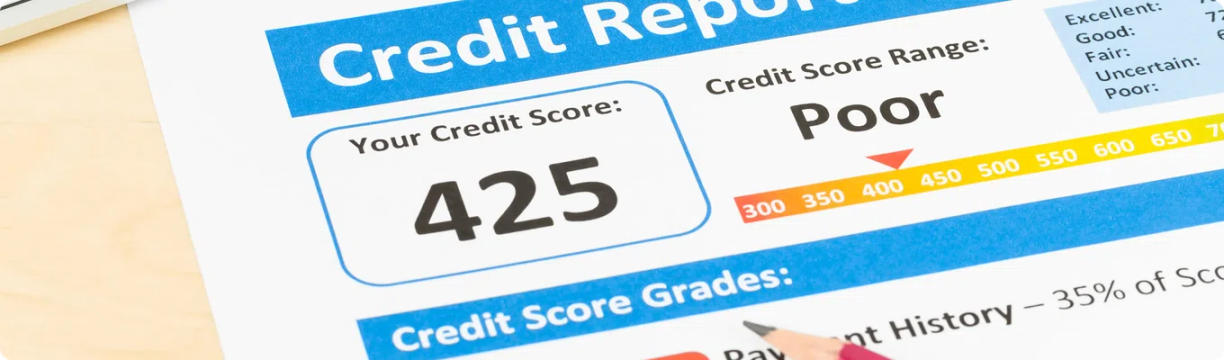
- Payment history makes up 35% of FICO credit scores, so making payments on time every month is the most important thing you can do to improve your credit so you can qualify for a HELOC.


One of the biggest misconceptions I run into is that a rough credit history puts your home equity off limits until your score recovers. If you've built up equity in your home through mortgage payments and property appreciation, that value can still fund home improvements, consolidate high-interest debt, or cover other financial and lifestyle goals. A low score makes the path harder, and it's a fair reason for caution, but it's not a permanent black mark against your borrowing ability. You can work steadily toward qualifying for a home equity line of credit even with less-than-perfect credit by making strategic progress on multiple fronts.
AmeriSave’s HELOC options provide a starting point for comparing home equity financing. The steps below can help you understand which parts of your financial profile may need work before you apply. Ask a loan officer about the current requirements for your situation; a lower credit score can limit the options available, and approval is not guaranteed.

Understanding HELOCs and Credit Score Requirements in 2026
Can you realistically get a HELOC with bad credit? A credit score that falls below 580 is generally considered bad credit by most industry standards. Most lenders require a credit score of at least 620 to qualify for a HELOC, with many preferring to see scores of 680 or higher. With these requirements in mind, it's genuinely difficult to qualify for this type of loan with bad credit. However, qualifying for a HELOC with a fair credit score between 620 and 680 is definitely possible if you meet other requirements.
In addition to a credit score that passes muster with lenders, they expect borrowers to meet other requirements related to their home equity amount, stable income verification, manageable debt-to-income ratios, and clean credit report history. Those are the variables that decide the answer, so it's worth knowing exactly what lenders look for when evaluating HELOC applications.
According to RefiGuide's HELOC credit score analysis, most lenders require minimum credit scores between 660 and 700 for traditional prime-rate HELOCs offered by banks and credit unions. Borrowers with credit scores above 740 typically receive the most favorable interest rates and flexible terms. However, alternative financing options exist for those with lower credit. Non-QM lenders may approve borrowers with credit scores as low as 620, especially if compensating factors like low loan-to-value ratios, high cash reserves, or strong rental income exist.
You'll likely need at least fair credit to apply for a HELOC successfully. The statistics tell an interesting story: just 3.4% of HELOCs originated in the first two months of 2026 went to clients with subprime credit scores, according to Equifax data. Scores below 620 are considered subprime in this analysis. While lower credit scores represent a small percentage of approved applications, the data proves it's possible to qualify with challenged credit if you meet other stringent requirements.
What is the absolute lowest credit score you can have for HELOC approval? There's no universal HELOC standard for bad credit because every lender maintains different underwriting standards and risk tolerances. While some more flexible lenders will let you qualify with a credit score of 620, you may find you have significantly more options in the marketplace if your score reaches 680 or better. At that level, more mainstream lenders become accessible and rate competition improves.
Current HELOC Market Conditions for 2026
The broader market environment for HELOCs in 2026 presents opportunities for qualified borrowers. According to Bankrate's September 9, 2026 survey, the national average HELOC interest rate stood at 7.26%. The Federal Reserve held the federal funds target range at 3.50% to 3.75% at its July 2026 meeting, with its next meeting scheduled for September 15-16, 2026.
Home equity lines of credit feature variable interest rates that fluctuate based on the prime rate, which in turn ties directly to changes in the Federal Reserve's monetary policy decisions. As of September 9, 2026, the national average HELOC interest rate is 7.26%, according to Bankrate, though your actual rate will depend on your credit score, loan-to-value ratio, and lender.
The Federal Reserve began cutting the federal funds rate in September 2024. As of its July 2026 meeting, where it held steady, the target range stood at 3.50% to 3.75%. Whether the Fed cuts, holds, or raises at its next meeting on September 15-16, 2026 will shape where HELOC rates head next, including the introductory offers some lenders extend for the first six to twelve months.
Home equity levels have reached historic highs, providing more borrowing capacity for qualified homeowners. As of July 2026 data, the average mortgage-holding homeowner held about $212,000 in tappable equity relative to their remaining mortgage balance, and total tappable equity across all mortgage holders reached $11.7 trillion, according to ICE Mortgage Technology's Mortgage Monitor report.
Critical Factors That Can Disqualify You for A HELOC
Before we get into everything you need to know to qualify successfully, it's helpful to understand both the red flags that lenders actively look for and the warning signs that a HELOC may not be right for your specific situation.
Your credit score falls too low for most lenders. Although you can sometimes receive approval with a score on the lower side, you generally want a score of 680 or better to give yourself meaningfully more lending options. Borrowers with credit scores of 720 or higher generally receive preferential treatment from most HELOC lenders.
You have negative events on your credit report that create waiting periods. Some items appearing on your credit, like a bankruptcy filing or foreclosure completion, are usually associated with mandatory waiting periods before you can be approved for new mortgage debt. These waiting periods typically range from two to four years depending on the severity of the event and the specific lender's overlay requirements.
Low equity makes HELOC impractical for your goals. When you have a HELOC, lenders require that you retain a minimum amount of equity in the house for financial cushion. This equity buffer could be as much as 35% to 40% depending on the lender, so you have to make absolutely certain that the equity you can actually access is enough to accomplish your goals. If you need $50,000 but can only access $15,000 after lender restrictions, a HELOC won't solve your problem.
According to multiple lender analyses, the standard DTI cutoff for HELOCs remains around 43%, though lower is always better for qualification and rate purposes. If your total monthly debts including mortgage, car loans, credit cards, and other obligations total $4,000 and you earn $10,000 monthly before taxes, your DTI calculates to 40%, which generally falls within acceptable ranges.
Should You Get a HELOC If You Have Bad Credit?
If you have bad credit, it might genuinely be a better idea to wait before applying for a HELOC and focus first on credit improvement. Even if you manage to get approved for a HELOC with bad credit, you'll almost certainly face a relatively high interest rate compared to borrowers with good credit. Depending on the specific details of your loan, the higher interest rate could translate into thousands of extra dollars in interest payments over the life of your credit line.
Run the numbers on a $50,000 HELOC. A borrower with excellent credit might receive an 8% interest rate, while a borrower with fair credit around 640 might face a 10% or higher rate. On a $50,000 balance, that 2-percentage-point difference costs approximately $1,000 per year in additional interest. Over a typical 10-year draw period, that's $10,000 in extra costs just due to credit score differences.

Instead of jumping immediately into the application process, seriously consider spending six to twelve months improving your credit score through strategic actions. A higher credit score could help you tap into significantly lower interest rates, which makes a massive difference to your borrowing costs and monthly payment obligations.
If you genuinely can't wait to improve your credit score due to urgent financial needs, explore your other financing options carefully. Even with a lower credit score, you can potentially tap into financing solutions like personal loans and credit cards. For borrowers with a clear plan to pay off the loan relatively quickly, these alternatives might work better because you won't take the substantial risk of using your home as collateral. Keep in mind, though, that unsecured loans typically come with higher interest rates than secured home equity products.
The Seven Critical Steps to Getting a HELOC with Bad Credit
If you've decided to pursue a HELOC despite credit challenges, use these specific steps as your strategic roadmap.
Step 1: Check Your Credit Report and Understand Your Starting Point
Start by checking your complete credit report from all three major bureaus to determine exactly where you stand. Depending on your situation, you might be pleasantly surprised by your credit score if you've been making consistent progress. Or you might realize that your credit score is lower than you anticipated due to items you weren't aware of.
Regardless of the number you discover, it's critically important to understand your precise starting point before developing your improvement strategy. You can access free credit reports from all three bureaus through AnnualCreditReport.com, and many credit card issuers now provide free FICO score access to their customers.
Step 2: Take Strategic Action to Improve Your Credit Score
If you discover that your credit score falls on the lower end of acceptable ranges, it's an excellent time to take focused action to improve it before applying. Here are the most effective strategies to help you boost your score within six to twelve months.
Commit to making every single payment on time without exception. Your payment history accounts for 35% of your FICO credit score calculation. With that massive weight, making on-time payments consistently represents the single most important action to improve your credit score over time. Set up automatic payments for at least minimum amounts to ensure you never miss due dates.
Pay down revolving credit card debt aggressively. If you carry large amounts of credit card debt, make a concrete plan to pay it off ahead of schedule. Lowering your credit card debt balances directly impacts your credit utilization rate, the ratio of balances to credit limits, which can help improve your credit score significantly. Aim to keep utilization below 30% on each card and below 10% overall for maximum score benefit.
Dispute any inaccuracies on your credit report promptly. Mistakes on your credit report often drag down your credit score unfairly. Carefully comb through your credit report to find any reporting errors, incorrect account information, or outdated negative items. If you spot a mistake, report it immediately to all three credit bureaus for investigation and correction. The bureaus must investigate within 30 days.
Individuals who actively manage their credit ratings often qualify for more advantageous HELOC lending rates, underscoring the significance of proactive financial management. As of September 2026, the average HELOC rate is 7.26% according to Bankrate, highlighting the need for improved credit scores to access better terms.
While improving your credit score definitely takes time and sustained effort, it's absolutely worth it. An improved credit score can help you tap into meaningfully lower interest rates on a HELOC, which could save you thousands of dollars over the life of your credit line.
Step 3: Determine How Much You Can Realistically Borrow
Tapping into your home equity depends entirely on having sufficient home equity built up to lean on after meeting lender requirements. Most lenders cap the amount of home equity you can borrow at 80% to 85% of your home's appraised value through combined loan-to-value calculations. With that restriction, you'll often need to leave 15% to 20% of your home's value untapped as a financial cushion.
A concrete example shows how this works. Say your home appraises at $500,000 in current market value, and your current mortgage balance stands at $300,000. With those numbers, your current home equity equals $200,000. If the lender only allows you to borrow up to 80% of the home's total value, that would mean your maximum combined debt can reach $400,000. Since you already owe $300,000 on your first mortgage, you could only borrow $100,000 through a HELOC.
Take the time to run these numbers carefully for your specific situation. You can determine how much you can potentially borrow and whether that amount will adequately suit your financial needs. If the accessible amount falls short of your goals, you'll need to either adjust your plans or explore alternative financing options.
Lenders usually require homeowners to have at least 15% to 20% equity in their property before they'll issue a HELOC. Most lenders cap HELOCs at 80% of total home equity, adding another layer of risk protection for the lender.
Step 4: Shop Around for the Right Lender Who Will Work with Your Credit Profile
The right lender can make all the difference in your HELOC experience and costs. Some lenders are genuinely willing to work with borrowers who have challenged credit. Others maintain strict underwriting standards and won't accommodate borrowers below specific credit thresholds.
Beyond simply finding a lender willing to work with you, it's extremely helpful to explore the different interest rates and fee structures available across multiple lenders. Locking in even a slightly lower interest rate, perhaps 0.25% to 0.5% less, can make a substantial difference to your finances over a 10 to 20 year HELOC term. It's absolutely worth the effort to shop around and compare at least three to five lenders.
Promotional rates, more streamlined application processes, and innovative offers have become increasingly common with HELOCs as demand and lender competition have increased. This competitive environment benefits borrowers willing to shop around.
Step 5: Gather All Necessary Documentation Before Applying
A HELOC is classified as a type of second mortgage, which means you'll encounter a lengthy list of paperwork requirements during the application process. You can make things considerably smoother for yourself by pulling together all necessary documents in advance of starting your application.
Be prepared to provide comprehensive documentation including full legal name, Social Security number, date of birth, government-issued photo ID like driver's license or passport, most recent paystubs covering at least 30 days, complete tax returns for the last two years including all schedules, recent bank statements from all accounts for the past two months, recent real estate appraisal or broker price opinion, current homeowners insurance policy declarations page, and complete mortgage statements showing current balance and payment history.
Step 6: Submit Your HELOC Application and Respond Promptly
After choosing the lender that offers the best combination of rates, fees, and service for your situation and gathering all required documents, it's time to submit your HELOC application. Be mentally prepared to go back and forth with the lender a bit during underwriting. For example, the lender might require additional information about your income sources, request updated paystubs if time has passed, or require a new appraisal for your home if your existing valuation is outdated.
As you sort through the ongoing paperwork requirements, responding quickly to any lender questions can make the process go more smoothly and prevent unnecessary delays. Most lenders can complete HELOC approval and funding within two to four weeks if you provide all requested information promptly.
Step 7: Use Your HELOC Responsibly and Make Every Payment On Time
Once approved, use your HELOC responsibly to avoid jeopardizing your home. Make every single payment on time without exception, even during the interest-only draw period. Keep your outstanding balance reasonable relative to your credit limit, ideally below 30% utilization. Only borrow what you genuinely need rather than maximizing your available credit. And develop a clear repayment plan before the repayment period begins and payments increase substantially.
Weighing the Pros and Cons of Getting a HELOC with Bad Credit
Every significant financial decision involves both advantages and disadvantages that deserve careful consideration. Both sides of getting a HELOC with bad credit are laid out below so you can weigh them against the two numbers that matter most: your monthly payment and the total interest you'll repay.
The Advantages of HELOC Financing
Some genuine pros of getting a HELOC include several valuable features.
Flexible use of funds for virtually any purpose. A HELOC offers a highly flexible way to tap into your home equity on an as-needed basis rather than taking a large lump sum upfront. If you need to cover ongoing costs over an extended period, like a multi-phase renovation or college tuition payments, the flexibility can help you avoid unnecessary borrowing and interest costs.
Flexible repayment terms during the draw period. The initial period of a HELOC often involves interest-only repayment options, which can give you meaningfully more room in your monthly budget during the draw period. This flexibility helps if your income fluctuates or you're managing other major expenses simultaneously.
Potential tax-deductible interest under specific circumstances. If you use your HELOC funds to cover certain qualifying expenses outlined by the Internal Revenue Service, specifically substantial home improvements that increase your property's value, you can potentially write off your interest payments on your tax return. Consult with a tax professional to understand how this applies to your situation.
Opportunity for credit score growth through responsible use. If you commit to making on-time payments to your HELOC without exception and keep your utilization ratio reasonable, you could eventually see a higher credit score over time. This credit building aspect can help you qualify for better rates when you refinance or apply for other credit in the future.
The Disadvantages and Risks
Of course, there are also some meaningful disadvantages to taking out a HELOC with poor credit that deserve serious consideration.
Significant risk of losing your home to foreclosure. When you use your home as collateral for a HELOC, you risk losing the house through foreclosure proceedings if you cannot keep up with your payment obligations. This represents the most serious risk of home equity borrowing.
Higher variable interest rates that can increase unexpectedly. When compared to other financing options, HELOCs typically come with variable interest rates that adjust based on prime rate movements. A changing interest rate can be difficult to fit into your budget, and rates could potentially rise substantially if economic conditions change.
Additional debt obligation to manage long-term. If you take on a HELOC, you're adding another significant debt to your balance sheet beyond your first mortgage. For most homeowners, this puts meaningful pressure on your budget for the long term and reduces your financial flexibility.
Risk of overborrowing due to convenient access. The convenience of a HELOC allows you to tap into available funds at any time through checks or a linked debit card. While this provides helpful flexibility for some borrowers, it can mean dangerous overborrowing if you aren't extremely disciplined.
Exploring Alternative Financing Options If You Have Bad Credit
A HELOC isn't the right financing solution for everyone's situation. The good news is that you have several other options if you need to borrow money with bad credit. Consider these alternatives carefully.
Home equity loan with fixed rate and predictable payments. A home equity loan involves taking out a lump sum loan and using your home as collateral, similar to a HELOC. The fixed monthly payments and stable interest rate could be a better solution for those looking for a truly budget-friendly option with no payment surprises.
Cash-out refinance combining first mortgage and equity access. If you qualify for a cash-out refinance, you can stick to a single mortgage payment rather than managing both a first mortgage and a HELOC, and you get your funds as a one-time cash payment at closing. The decision usually comes down to whether the money is already spent. If you've hired contractors or the bills are already coming due, a cash-out refinance's lower, fixed rate typically beats paying variable HELOC interest on money you're committed to repaying anyway. If your plans are still taking shape and you don't have a firm number yet, a HELOC lets you draw only what you actually use. The exception is size: if you'd only need a small draw against a large first mortgage, refinancing the whole loan to access it rarely makes sense, and a HELOC can still be the better fit even when the money is already spent.
Personal loan without collateral requirement. An unsecured personal loan doesn't require any collateral, which means your home won't be at risk if you cannot keep up with the payment schedule. For many borrowers, eliminating collateral risk makes a personal loan worth pursuing despite higher interest rates.
Credit card with promotional interest rate. Credit cards offer another unsecured borrowing option with no collateral requirement. Most credit cards come with high interest rates that could create serious debt problems. But if you can find a low interest rate option or promotional 0% APR period and commit to paying off the balance during the promotion, a credit card could be the right solution for your spending needs.
Loan from family and friends with clear terms. If you have family members or friends willing to offer you a loan with a better interest rate than commercial lenders, that's an opportunity worth considering carefully. But make absolutely sure to get everything in writing including repayment terms, interest rate if any, payment schedule, and consequences for missed payments to avoid putting unnecessary strain on important relationships.
The Bottom Line on HELOCs with Bad Credit in 2026
Home equity financing options can help you tap into the substantial equity funds you need for important goals. In general, it's genuinely worthwhile to spend some focused time improving your credit score before submitting your loan application. The potential savings from better rates easily justify a six to twelve month delay in most circumstances.
But don't forget to carefully consider alternative financing options to determine if a home equity line of credit or similar loan type truly represents the best solution for your specific situation. Sometimes other options like home equity loans, cash-out refinancing, or even unsecured personal loans make more sense depending on your needs and financial profile.
If you are ready to explore home equity financing, compare AmeriSave’s HELOC options with a home equity loan or cash-out refinance. Ask a mortgage specialist to review the products available for your property and financial profile, including eligibility requirements, rates, fees, monthly payments, and total borrowing costs. The option that fits your goals depends on the terms you qualify for and how long you expect to keep the loan.
Bankrate. (2026). Home Equity Line of Credit (HELOC) Rates.
Experian. "What You Need to Know About HELOCs in 2026." Experian Market Analysis, 2026.
RefiGuide. (2026). HELOC Credit Score Requirements.
MBA NewsLink. (2026). ICE: Mortgage Holder Equity Hits Record $18 Trillion.
Federal Reserve. (2026). Federal Reserve issues FOMC statement, July 29, 2026.
HEL News. (2026). HELOC Utilization Climbs as Line Sizes Grow.


Jon brings extensive experience in loan origination, sales leadership, and operations to AmeriSave, based in Waikiki, HI. Starting as a Loan Originator, he was promoted to Manager after 13 months and to VP eight months later, eventually managing 330 direct reports and establishing AmeriSave's Spanish lending channel. Married with three children, he specializes in transparent, technology-enabled lending that prioritizes client relationships and consumer empowerment.
Frequently Asked Questions
Most lenders want you to have a credit score of at least 620 to 680 in order to get a HELOC. The exact number varies from lender to lender. Experian says that most mainstream lenders will only give a HELOC to people with a FICO score of at least 680. However, some lenders are more flexible and will accept scores as low as 620. For the best rates and terms, lenders may want credit scores of 720 or higher.
RefiGuide's research shows that big banks and other lenders offer rates as low as 6.99% APR, as of May 2026, to borrowers with excellent credit (740 or higher), while borrowers with scores below 620 may pay 9% or more. The wider your credit gap, the more you pay. On a $50,000 HELOC, a 2-percentage-point rate difference costs about $1,000 more in interest every year.
It is very hard to get a HELOC from a traditional lender if your credit score is 580. But hard money lenders might be able to help you get a HELOC or an equity-based credit line that is based more on the value of your property than your credit score. A lot of the time, these other options let you have a credit score as low as 500 or even no score at all. But the interest rates are much higher, usually in the double digits, and the repayment terms are much shorter, usually one to three years.
Most important credit improvements take six to twelve months of consistently good behavior. For six months, paying all your bills on time shows lenders that you are responsible. If you pay off your credit card balances to less than 30% of their limit, your scores may go up in one to two billing cycles. Once you dispute and get rid of false negative items, your scores can go up in 30 to 60 days.
Market research shows that the standard DTI cutoff for HELOCs is around 43%. However, lower ratios always make it more likely that you will be approved and get better rates. Most lenders will accept your 40% debt-to-income ratio if your total monthly debts are $4,000 and your monthly income before taxes is $10,000.
HELOC rates move with the prime rate, which tracks the Federal Reserve's federal funds rate. The Fed began cutting rates in September 2024, and at its July 2026 meeting it held the federal funds target range steady at 3.50% to 3.75%. Its next meeting is scheduled for September 15-16, 2026, so whether rates move further this year depends on that meeting and the ones after it. Even if the Fed cuts again, HELOC rates are unlikely to return to the ultra-low levels seen during the pandemic.
Yes, most of the time. If you wait six to twelve months to raise your credit score from 640 to 680 or higher, you could save thousands of dollars in interest and have many more lenders to choose from. But if you have real financial emergencies that can't wait, you may need to look into HELOC options with your current credit, even though they cost more.